

If you are experiencing sharp, stabbing pain at the base of your skull, you may have been told you have occipital neuralgia.
The pain can feel:
• Electric
• Shooting
• Burning
• Throbbing
• One-sided
• Radiating into the scalp
For many patients in Lakewood Ranch, this pain becomes chronic and frustrating.
Medications may dull it.
Injections may temporarily quiet it.
Massage may help briefly.
But the pain keeps returning.
The question is:
Why is the occipital nerve irritated in the first place?
👉 Call 941-259-1891 to schedule your FREE consultation
Or click here to book online.
What Is Occipital Neuralgia?
Occipital neuralgia is irritation or compression of the occipital nerves.
These nerves originate in the upper cervical spine, primarily from C2 and C3.
They travel upward through the muscles at the base of the skull and provide sensation to the back of the head and scalp.
When irritated, they can produce:
• Sharp shooting pain from the neck upward
• Tenderness at the base of the skull
• Scalp sensitivity
• Pain behind the eye
• Headaches that mimic migraines
But the nerve itself is rarely the primary cause.
It is often reacting to something mechanical.
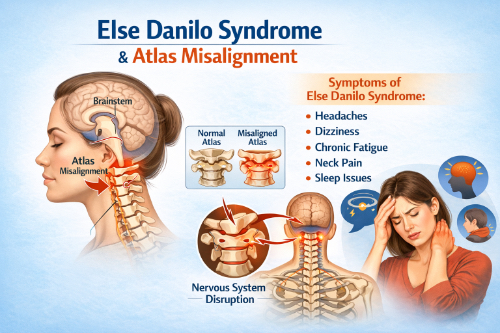
The Atlas (C1) and Upper Cervical Relationship
The atlas (C1) is the top bone of the spine.
It supports the skull and allows for a large range of motion.Because the atlas is highly mobile and ligament-dependent, it is especially vulnerable to trauma.
When the atlas becomes misaligned due to:
• Car accidents
• Slip and falls
• Sports injuries
• Whiplash
• Concussions
• Poor posture over time
It can alter the mechanics of the upper cervical spine.
How Atlas Misalignment Leads to Tight Occipital Muscles
When C1 loses proper alignment:
• The joint capsule becomes irritated
• Motion becomes restricted
• Instability develops
• The nervous system senses imbalance
In response, the small muscles at the base of the skull — known as the suboccipital muscles — tighten to protect the joint.
These muscles include:
• Rectus capitis posterior major
• Rectus capitis posterior minor
• Obliquus capitis superior
• Obliquus capitis inferior
They are small but neurologically powerful.
They contain a high density of proprioceptive receptors and communicate constantly with the brainstem.
When they become chronically tight:
• Circulation decreases
• Inflammation increases
• The occipital nerves can become compressed or entrapped
The nerve is not randomly irritated.
It is being mechanically stressed.
Occipital Nerve Entrapment
The greater occipital nerve travels through these suboccipital muscles as it ascends toward the scalp.
If the muscles are in chronic spasm due to atlas misalignment, they can:
• Compress the nerve
• Irritate the nerve sheath
• Trigger shooting pain
• Create scalp tenderness
This is why patients often feel:
• Pain when brushing hair
• Sensitivity to touch
• Shooting pain when turning the head
• Relief when lying down
• Increased pain with stress
The muscle tension is secondary.
The joint dysfunction is primary.
Why Treating Only the Nerve Isn’t Enough
Occipital nerve blocks may temporarily reduce inflammation.
Pain medications may suppress nerve firing.
But if the atlas remains misaligned:
• Muscle guarding continues
• Nerve irritation returns
• The cycle repeats
True healing requires restoring structural balance at the top of the spine.
The Brainstem Connection
The upper cervical spine sits directly beneath the brainstem.
The brainstem regulates:
• Pain processing
• Muscle tone
• Autonomic nervous system function
• Sensory input
When atlas misalignment creates mechanical stress near this region, it may increase sensitivity in pain pathways.
The trigeminocervical nucleus integrates signals from both the trigeminal nerve and upper cervical nerves.
This is why occipital neuralgia can sometimes feel like a migraine.
The systems overlap neurologically.
Correcting the atlas can reduce both mechanical compression and neurological irritation.
Precision Upper Cervical Correction
Upper cervical chiropractic focuses specifically on C1 and C2 alignment.
The goal is to restore proper joint position so that:
• Suboccipital muscles can relax
• Joint motion improves
• Nerve irritation decreases
• Brainstem stress reduces
This is not full-spine manipulation.
It is precise correction of the top of the spine.
👉 Call 941-259-1891 to schedule your FREE consultation
Or click here to book online.
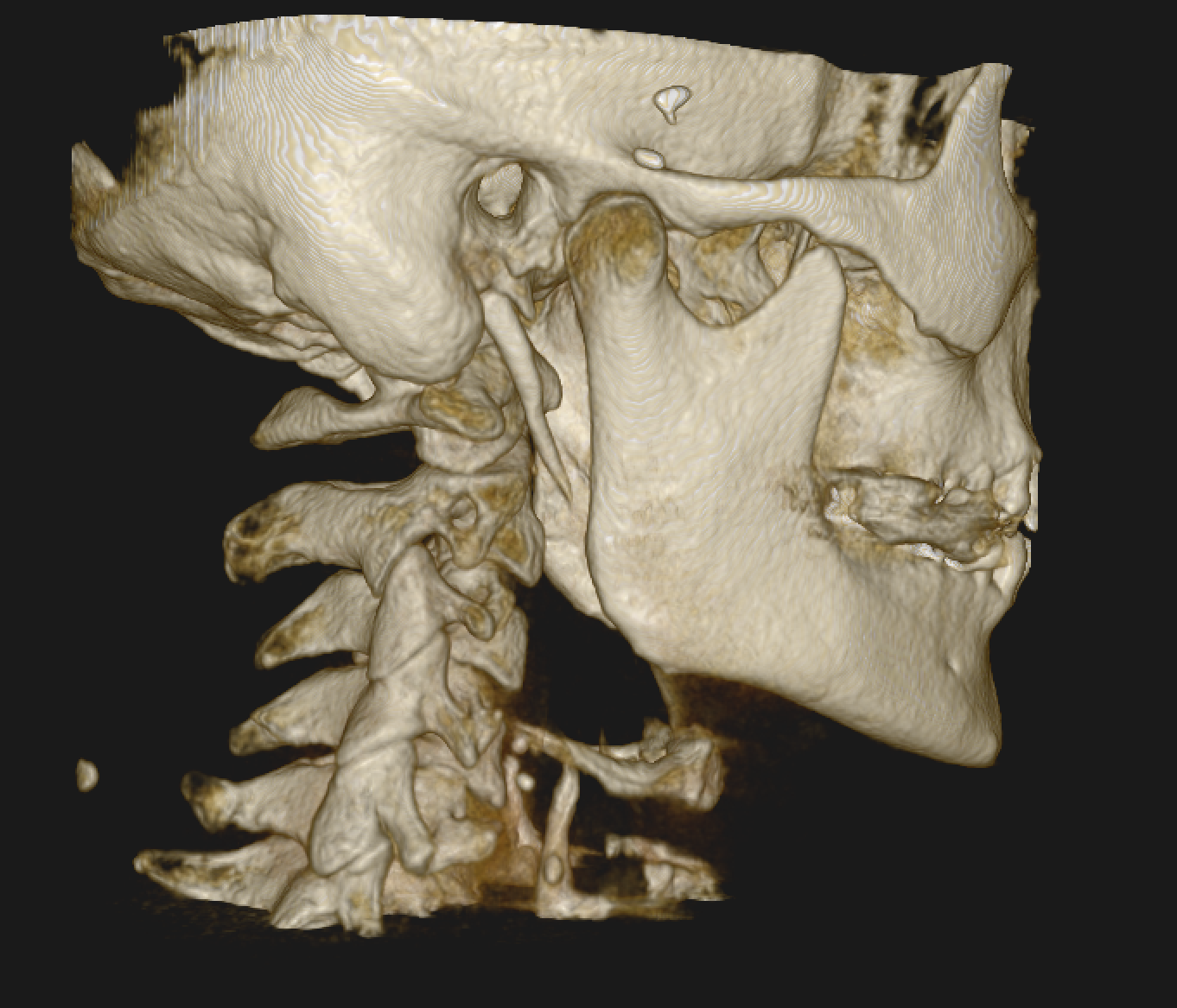
The Importance of 3D CBCT Imaging
Every misalignment is unique.
No two patients have the same atlas position.
That is why advanced 3D Cone Beam CT (CBCT) imaging is critical.
CBCT allows us to measure:
• Exact rotational displacement
• Lateral deviation
• Angular misalignment
• Skull-to-atlas relationship
• Structural asymmetry
Without imaging, adjustments are generalized.
With CBCT imaging, the correction is tailored precisely to your anatomy.
Precision reduces risk and improves stability.
No Twisting, Popping, or Pulling
Many patients fear aggressive neck manipulation.
Upper cervical care is gentle.
There is:
• No forceful twisting
• No aggressive cracking
• No yanking or pulling
Adjustments are:
• Low-force
• Specific
• Measured
• Designed to restore alignment with minimal stress
Especially in nerve-related pain, gentle precision matters.
Objective Testing: When to Adjust
We use objective testing to determine if misalignment is present and whether correction is needed.
This includes:
Leg Balance Analysis
Subtle neurological imbalance may show up as asymmetry in leg patterns.
Infrared Thermography
Thermal scanning detects heat differences along the spine, indicating nervous system irritation.
Adjustments are based on measurable findings — not routine schedules.
This protects healing tissue and allows stability to develop.
Signs You May Have Atlas-Related Occipital Neuralgia
You may benefit from evaluation if:
• Pain began after trauma
• You have chronic neck tightness
• The pain is one-sided
• You feel tenderness at the base of the skull
• Turning your head triggers pain
• You have tried medications without lasting relief
Your occipital nerve may not be the root cause.
It may be reacting to upper cervical instability.
Occipital Neuralgia Treatment in Lakewood Ranch and Venice
If you are suffering from sharp pain at the base of your skull, upper cervical care may be the missing link.
We focus on:
• Precision 3D CBCT imaging
• Gentle, specific correction
• Objective neurological testing
• No twisting, cracking, or pulling
• Long-term structural healing
👉 Call 941-259-1891 to schedule your FREE consultation
Or click here to book online.
Occipital neuralgia is not random.
It is often mechanical.
Let’s evaluate the alignment where your head meets your spine — and restore the balance your nervous system needs to function properly.
We serve Lakewood Ranch, Northport, Venice, Sarasota, Longboat Key, Punta Gorda, and Port Charlotte
Leave a comment