

Why Your Ear Pain May Not Be Coming From Your Ear
Ear pain can be incredibly frustrating. It can feel like pressure, fullness, sharp stabbing, or a deep ache that just won’t go away. Many people in Sarasota dealing with ear pain are told it’s an ear infection, sinus issue, or even allergies. But what happens when medications don’t work… when antibiotics don’t help… and when imaging of the ear looks completely normal?
Schedule Your Appointment
Schedule appointmentIn many of these cases, the true source of the problem may not be the ear at all.
It may be coming from the neck—specifically the upper cervical spine.
The Overlooked Cause of Ear Pain: The Upper Neck
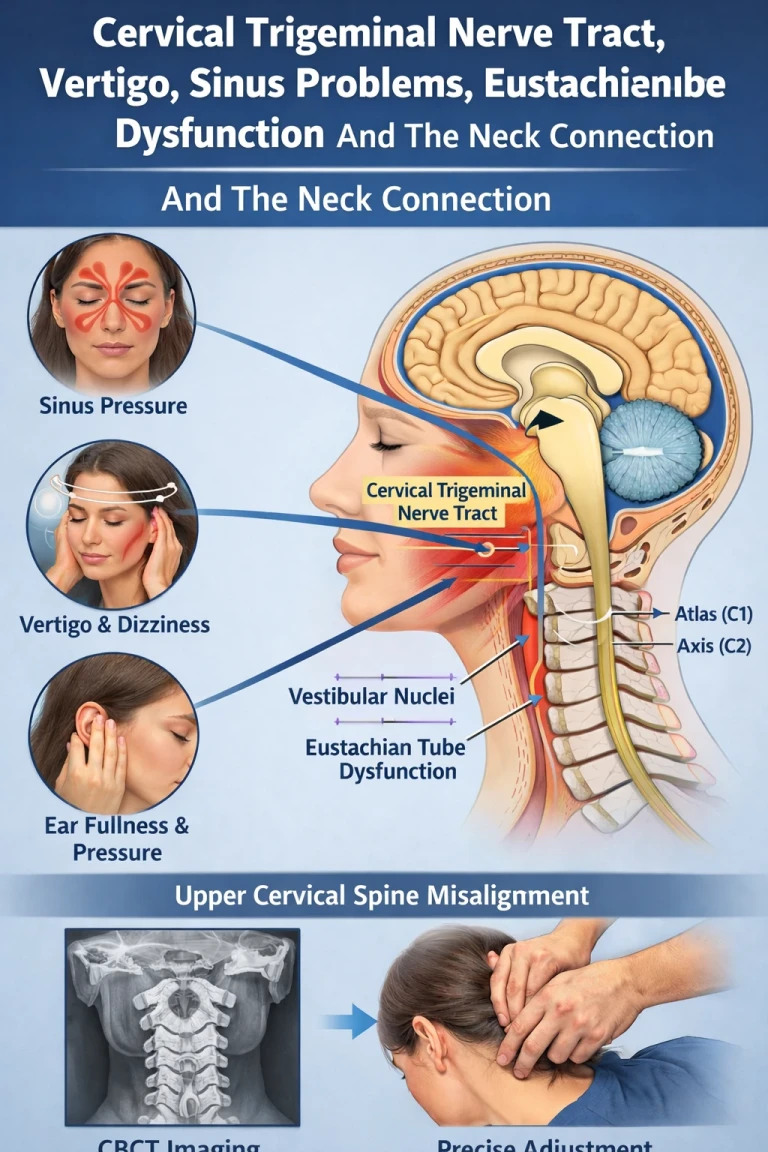
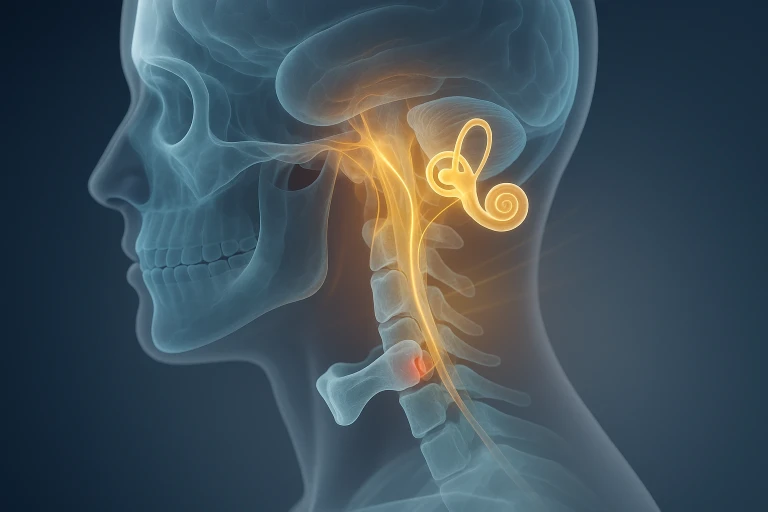
The upper cervical spine—made up of the atlas (C1) and axis (C2)—sits directly beneath the skull and surrounds the lower portion of the brainstem. This region is one of the most neurologically important areas in the body.
Why?
Because it influences:
The brainstem (which controls vital functions)
Cranial nerves (including those affecting the face and ear)
Muscle tone around the jaw and skull
Balance and pressure regulation within the head
When this area becomes misaligned—even slightly—it can create a cascade of neurological and muscular dysfunction that can present as ear pain.
Click here to schediule a FREE consultation.
The Eustachian Tube and Its Neurological Control
The Eustachian tube connects the middle ear to the back of the throat. Its job is to:
Equalize pressure in the ear
Drain fluid from the middle ear
Maintain proper ear function
The opening and closing of this tube is controlled by small muscles in the throat and jaw, including:
Tensor veli palatini
Levator veli palatini
These muscles are influenced by cranial nerves that originate in the brainstem.
Here’s where it gets interesting:
If there is dysfunction in the brainstem or altered nerve signaling due to upper cervical misalignment, it can lead to:
Related article
Poor Eustachian tube drainage
Ear pressure and fullness
Crackling or popping sensations
Chronic fluid buildup without infection
This is why so many patients experience “ear problems” with no clear ear pathology.
The TMJ Connection: Jaw, Muscles, and Ear Pain
The temporomandibular joint (TMJ) sits just in front of the ear. It shares close anatomical and neurological relationships with the structures of the ear.
When the upper cervical spine is misaligned, it can alter muscle tone throughout the head and neck. This includes:
The muscles of mastication (chewing muscles)
The muscles surrounding the TMJ
Suboccipital muscles at the base of the skull
This can lead to:
TMJ dysfunction
Jaw tightness or clicking
Referred pain into the ear
Increased pressure around the ear canal
The trigeminal nerve—which supplies sensation to the face and jaw—also plays a major role here. Its nucleus extends into the upper cervical spine (down to about C2–C3), creating what is known as the trigeminocervical complex.
This means:
Dysfunction in the neck can be perceived as pain in the ear or face
Muscle Tension Around the Ear
Another major contributor to ear pain is muscle tension at the base of the skull.
The suboccipital muscles:
Attach from the upper neck to the skull
Help control head movement and posture
Are packed with neurological receptors
When the atlas (C1) is misaligned, these muscles can become tight and imbalanced.
This can:
Pull on surrounding tissues
Irritate nearby nerves
Create referred pain into the ear
Many patients with chronic ear pain also report:
Neck stiffness
Headaches at the base of the skull
Pain that worsens with posture or head movement
Click here to schedule a FREE consultation.
The Brainstem: The Control Center Behind It All
The brainstem sits directly above the atlas and axis.
It regulates:
Cranial nerve function
Muscle tone
Balance and coordination
Autonomic functions (like pressure regulation)
When there is irritation or dysfunction in this region—often due to structural misalignment—it can disrupt normal communication between the brain and body.
In the case of ear pain, this may result in:
Improper signaling to the Eustachian tube
Increased muscle tension in the jaw and neck
Heightened sensitivity in the trigeminal system
Why Traditional Treatments Often Fall Short
Many patients with chronic ear pain go through a long list of treatments:
Antibiotics
Decongestants
Steroids
Allergy medications
These may provide temporary relief—but if the underlying issue is structural and neurological, the problem often returns.
That’s because: The root cause has not been addressed
A Different Approach: Upper Cervical Chiropractic Care
Upper cervical chiropractic focuses on correcting misalignments of the atlas (C1) and axis (C2) to restore proper neurological function.
The goal is not to treat the ear directly—but to correct the underlying structural issue that may be affecting the nervous system.
The Role of 3D Imaging in Precision Care
One of the most advanced tools used in upper cervical care is Cone Beam CT (CBCT) imaging.
Why this matters:
Every misalignment is unique.
3D imaging allows doctors to:
See the exact position of the atlas and axis
Measure misalignment in three dimensions
Identify rotations, tilts, and shifts
Create a precise correction plan specific to the patient
This level of detail removes guesswork and ensures accuracy.
Objective Testing to Determine Misalignment
In addition to imaging, upper cervical offices often use:
Postural analysis
Leg length inequality assessments
Infrared thermography (to detect nerve interference patterns)
These tests help determine:
If a patient is out of alignment
When a correction is needed
When the body is holding the correction
The Difference: Precision vs. Force
One of the biggest misconceptions about chiropractic care is that it involves twisting, cracking, or forceful manipulation.
Upper cervical care is completely different.
Corrections are:
Gentle
Specific
Calculated based on imaging
Performed without twisting or popping
The focus is on precision and finesse, not force.
The correction is designed to:
Restore proper alignment
Reduce stress on the brainstem
Normalize nerve signaling
What Happens When the Body Starts to Heal
When the upper cervical spine is properly aligned, many patients begin to experience:
Reduced ear pressure and pain
Improved Eustachian tube function
Less jaw tension and TMJ discomfort
Decreased headaches and neck stiffness
Overall improved nervous system function
The body is given the opportunity to heal—without interference.
Is Your Ear Pain Really Coming From Your Neck?
If you are experiencing chronic or unexplained ear pain, ask yourself:
Have you been told your ears look “normal”?
Do you also have neck pain or stiffness?
Do you experience jaw tension or TMJ issues?
Does your ear pain worsen with posture or head movement?
If so, your ear pain may not be an ear issue at all.
Sarasota Ear Pain Relief: A Root Cause Approach
For patients in Sarasota seeking real answers, it’s important to look beyond symptom-based care.
Understanding the connection between:
The upper cervical spine
The brainstem
The trigeminal system
The Eustachian tube and TMJ
…can open the door to a completely different level of healing.
Final Thoughts
Ear pain is often treated as a localized problem—but in many cases, it’s a neurological and structural issue originating in the neck.
The upper cervical spine plays a critical role in how the brain communicates with the body. When that communication is disrupted, symptoms can show up in surprising places—including the ear.
By using advanced 3D imaging and precise, gentle corrections, upper cervical chiropractic care offers a unique and powerful approach to addressing the root cause of chronic ear pain.


Leave a comment