

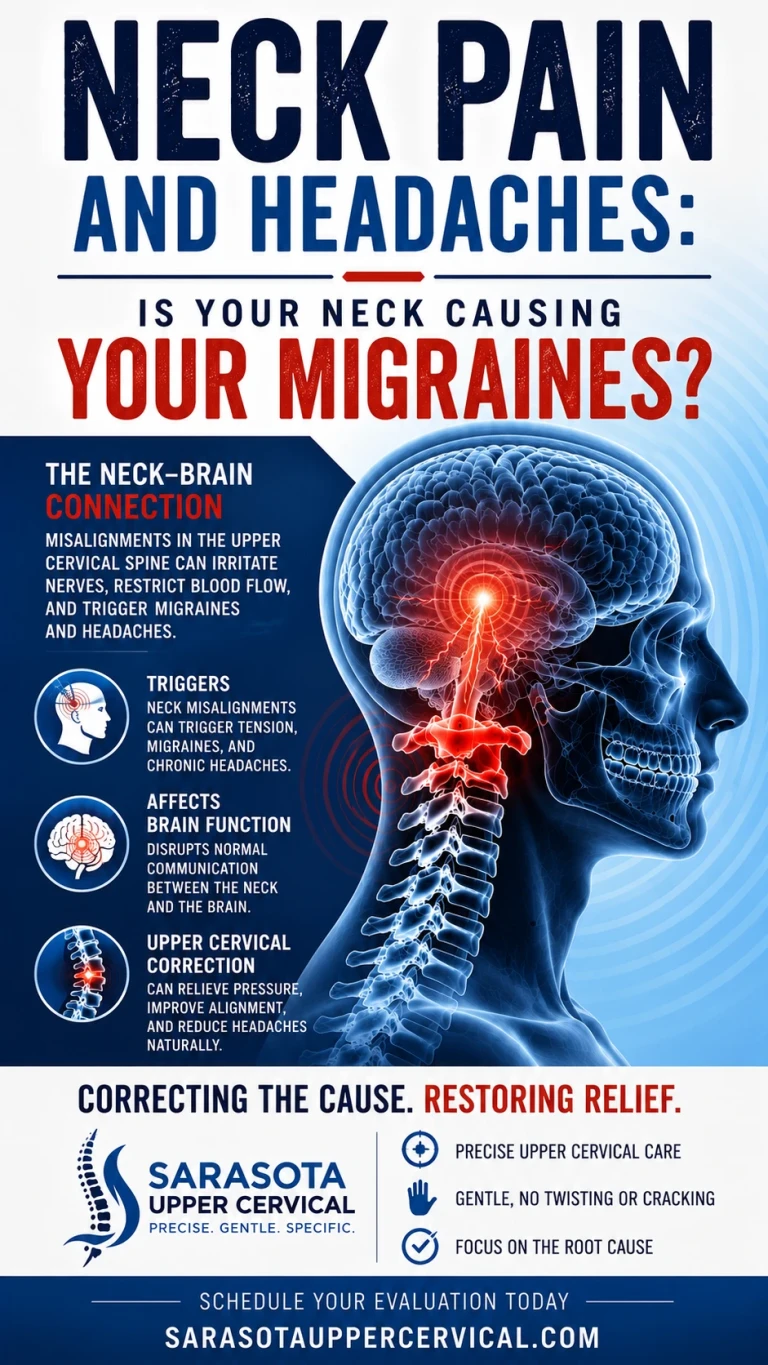
If you've noticed that your headaches almost always show up alongside neck stiffness — or that pressing on the back of your neck seems to trigger the same pain that radiates into your head — you may be picking up on a real, well-documented neurological connection, not a coincidence.
The Trigeminocervical Nucleus: Where Neck and Head Pain Meet
The reason neck problems and headaches are so often linked comes down to a structure in the brainstem called the trigeminocervical nucleus. This is the point where sensory nerve fibers from the trigeminal nerve — which carries pain signals from the face and head — physically converge with sensory input from the top three nerves of the cervical spine (C1, C2, and C3), right at the base of the skull.
Schedule Your Appointment
Schedule appointmentBecause these two nerve pathways funnel into the same pool of neurons, the nervous system doesn't always cleanly distinguish between "this pain is coming from my neck" and "this pain is coming from my head." Irritation or dysfunction originating in the upper cervical spine can be perceived as pain in the head — typically at the base of the skull, but often radiating toward the forehead, temples, or behind the eyes.
Cervicogenic Headache vs. Migraine: An Important Distinction
It's worth being precise here, since the two conditions get conflated often. A cervicogenic headache is a headache caused directly by a disorder of the cervical spine — the joints, discs, muscles, or ligaments innervated by the C1–C3 nerves. Migraine, by contrast, is a distinct neurological disorder with its own diagnostic criteria, though it frequently overlaps with neck symptoms.
Related article
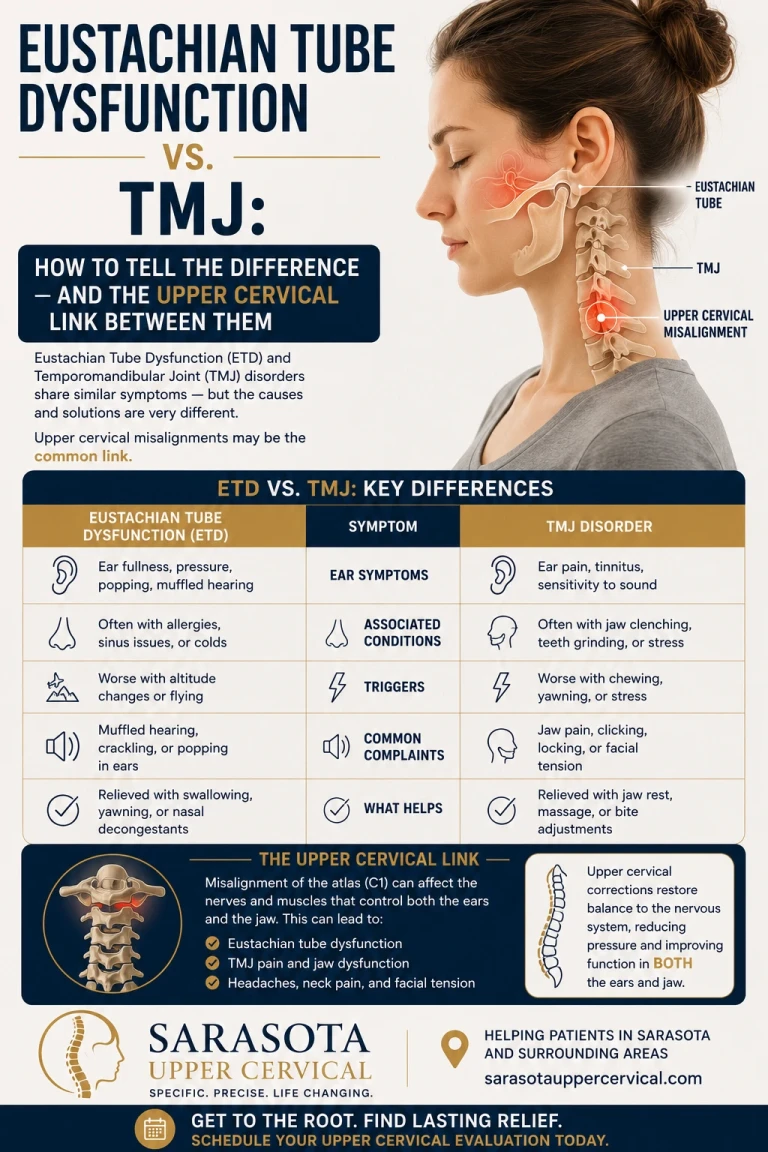
Research using diagnostic nerve blocks has found a more complicated picture than a simple one-to-one relationship: in one study, only about a third of headache patients with neck pain got significant relief from cervical nerve blocks, while some patients diagnosed with migraine also responded to those same blocks. The takeaway isn't that neck involvement explains every headache — it's that for a meaningful subset of chronic headache and migraine sufferers, the cervical spine is a real contributing factor that's worth ruling in or out with a proper clinical exam, rather than being overlooked in favor of head-only explanations.
Why the Upper Cervical Spine Specifically
Anatomically, the C1 and C2 segments carry an outsized share of the responsibility here. They're the most mobile part of the cervical spine, they sit closest to the brainstem, and dysfunction in this specific region has been repeatedly linked in the research literature to referred pain toward the back of the head, temples, and eyes. Studies have also found that patients with cervicogenic headache tend to show measurable clinical signs — reduced neck range of motion, tenderness at the C1/C2 level, and heightened pain sensitivity — that can be identified on physical exam.
This is where upper cervical chiropractic care fits into the conversation. Because a misalignment of the atlas or axis can create chronic, low-grade irritation right at the same brainstem junction where head and neck pain signals converge, addressing that mechanical stress is a reasonable and research-supported piece of the puzzle for people whose headaches track closely with neck symptoms.
Related article
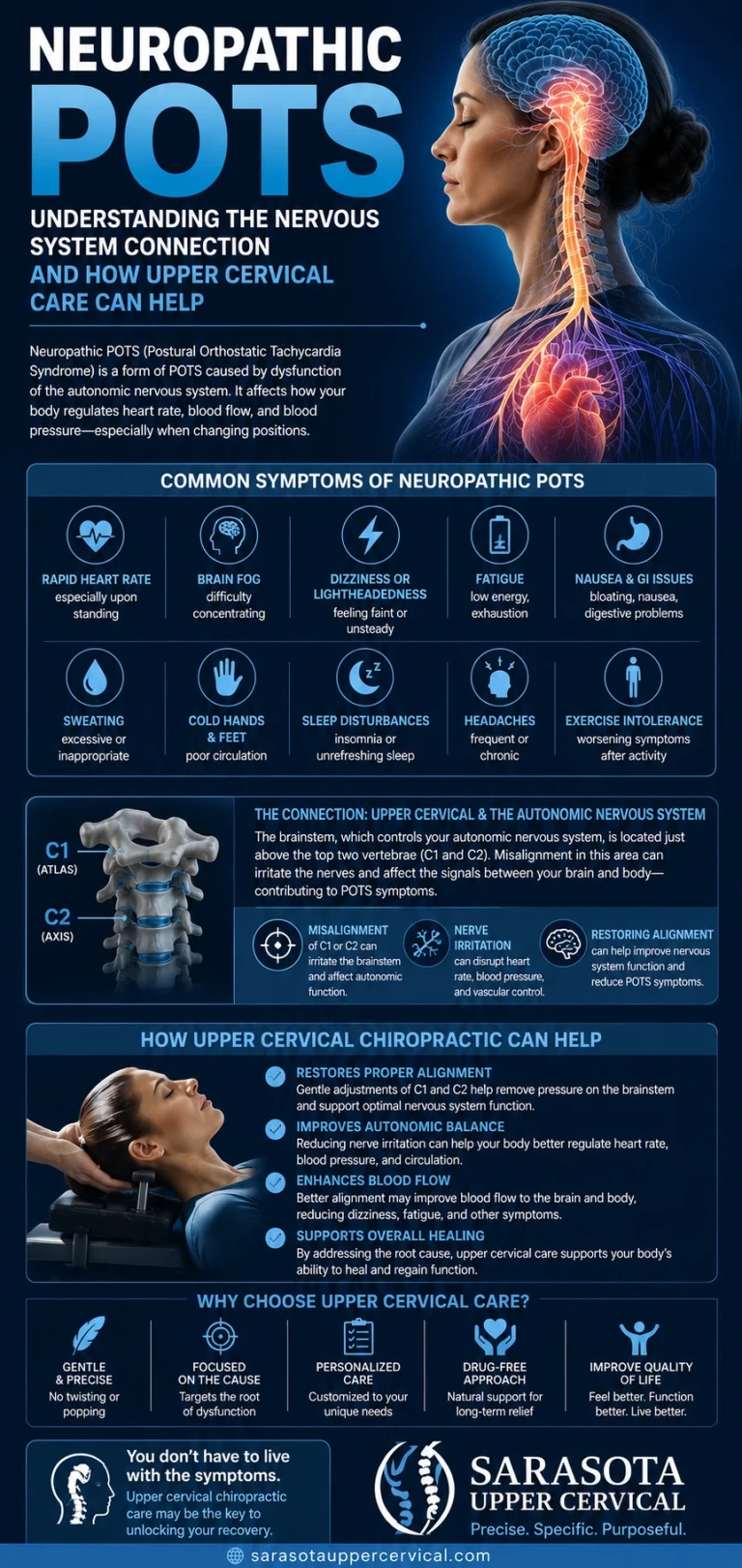
Neuropathic POTS and the upper neck connection | Holistic healing for POTS
Jul 14, 2026How Upper Cervical Doctors Confirm What's Actually Going On
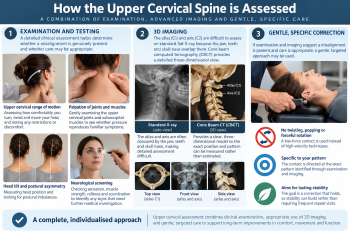
Because this junction is small, mobile, and not reliably assessed on standard imaging, upper cervical doctors use CBCT (Cone Beam CT) imaging to get a precise three-dimensional picture of exactly how the atlas and axis are positioned. Combined with objective neurological testing, this allows a doctor to determine not just whether a correction is needed, but exactly how to perform it — and equally important, when the alignment is already stable and no adjustment should be made.
Healing Takes Time, Not a Single Adjustment
Upper cervical correction isn't presented as an instant cure for headaches or migraines, and it isn't a substitute for appropriate medical evaluation — especially for anyone experiencing sudden, severe, or unusual headache patterns, which should always be evaluated by a physician first. But when chronic mechanical stress at the craniocervical junction is reduced, the nervous system is better positioned to regulate its own pain processing over time. That improvement tends to build gradually, over weeks and months of stability at the atlas and axis, rather than resolving after one visit.
If your headaches consistently show up with neck stiffness, tenderness at the base of your skull, or reduced neck mobility, it's a reasonable next step to have the top of your cervical spine specifically evaluated by someone trained to look for it.
This article is for informational purposes only and is not a substitute for professional medical advice, diagnosis, or treatment. Sudden, severe, or unusual headaches — especially with vision changes, weakness, or confusion — should be evaluated promptly by a physician.
Article written by Dr. Drew hall, Upper Cervical Chiropractor


Leave a comment