

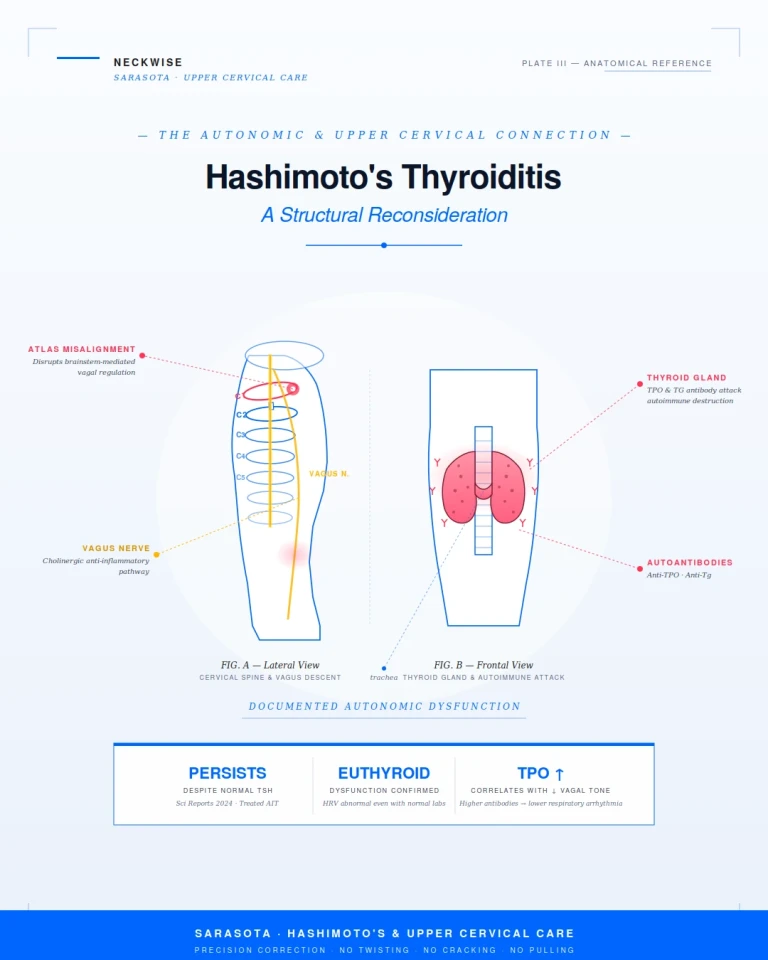
"Why patients with Hashimoto's experience symptoms that go beyond the thyroid, what the research says about autonomic dysfunction in autoimmune thyroid disease, and how upper cervical care can support the body's regulatory systems"
Hashimoto's thyroiditis is the most common autoimmune disease in the United States and the leading cause of hypothyroidism in iodine-replete populations. In Hashimoto's, the immune system produces antibodies — primarily thyroid peroxidase (TPO) and thyroglobulin antibodies — that gradually destroy the thyroid gland. The result is a slow decline in thyroid function over months and years, eventually requiring lifelong hormone replacement therapy with levothyroxine.
Schedule Your Appointment
Schedule appointmentWhat patients often experience, however, is more complex than a simple thyroid hormone deficiency. Even after their TSH and thyroid hormones have been normalized with medication, many Hashimoto's patients continue to feel unwell. Persistent fatigue, brain fog, heart palpitations, anxiety, cold intolerance, weight regulation issues, and a constant sense of being run-down can persist long after the lab values look fine. This phenomenon is well-documented in the medical literature and has even been called 'syndrome T' — referring to the lingering symptoms of autoimmune thyroiditis that do not resolve with thyroid hormone replacement alone.
At Neckwise in Sarasota, we focus on a piece of this picture that the conventional endocrinology workup is rarely designed to evaluate. Hashimoto's is increasingly understood as a systemic autoimmune condition with broader autonomic and neurological involvement, and the structural conditions at the upper cervical spine directly influence the autonomic regulation that supports both immune balance and overall recovery.
Hashimoto's as More Than a Thyroid Problem
Modern research has shifted the way we understand Hashimoto's. It is no longer viewed as a localized thyroid problem with a straightforward hormonal solution. It is increasingly understood as a systemic autoimmune condition with widespread effects on the nervous system, the cardiovascular system, and the body's overall inflammatory state.
A 2024 study published in Scientific Reports examined autonomic and somatosensory function in patients with autoimmune thyroiditis who were on levothyroxine therapy and whose thyroid hormone levels had been normalized. Despite adequate hormone replacement, many of these patients continued to demonstrate measurable abnormalities in autonomic function and in small fiber sensory function, supporting the existence of a peripheral neuropathy and autonomic dysfunction component of the disease that is not addressed by hormone replacement alone. The researchers also found that patients with higher thyroid peroxidase antibody titres showed measurably reduced respiratory arrhythmia, an index of vagal function.
Impaired autonomic function and somatosensory disturbance in patients with treated autoimmune thyroiditis. Scientific Reports, 2024. Markers of respiratory arrhythmia, an index of vagal function, were significantly lower in patients with higher TPO antibody titres, and a substantial subgroup of patients showed signs of small or large fiber dysfunction.
This is an important finding because it directly contradicts the assumption that bringing TSH into the normal range fully resolves the disease. The autoimmune process appears to affect the autonomic nervous system in ways that hormone replacement does not address.
Earlier work supported the same picture. A study examining children with euthyroid Hashimoto's thyroiditis — meaning their thyroid hormone levels were normal — still found measurable cardiac autonomic dysfunction compared with healthy controls. The autonomic abnormalities were present even before any clinical hypothyroidism had developed, suggesting that autonomic dysregulation is not just a consequence of low thyroid hormone but is intrinsic to the autoimmune process itself.
Related article
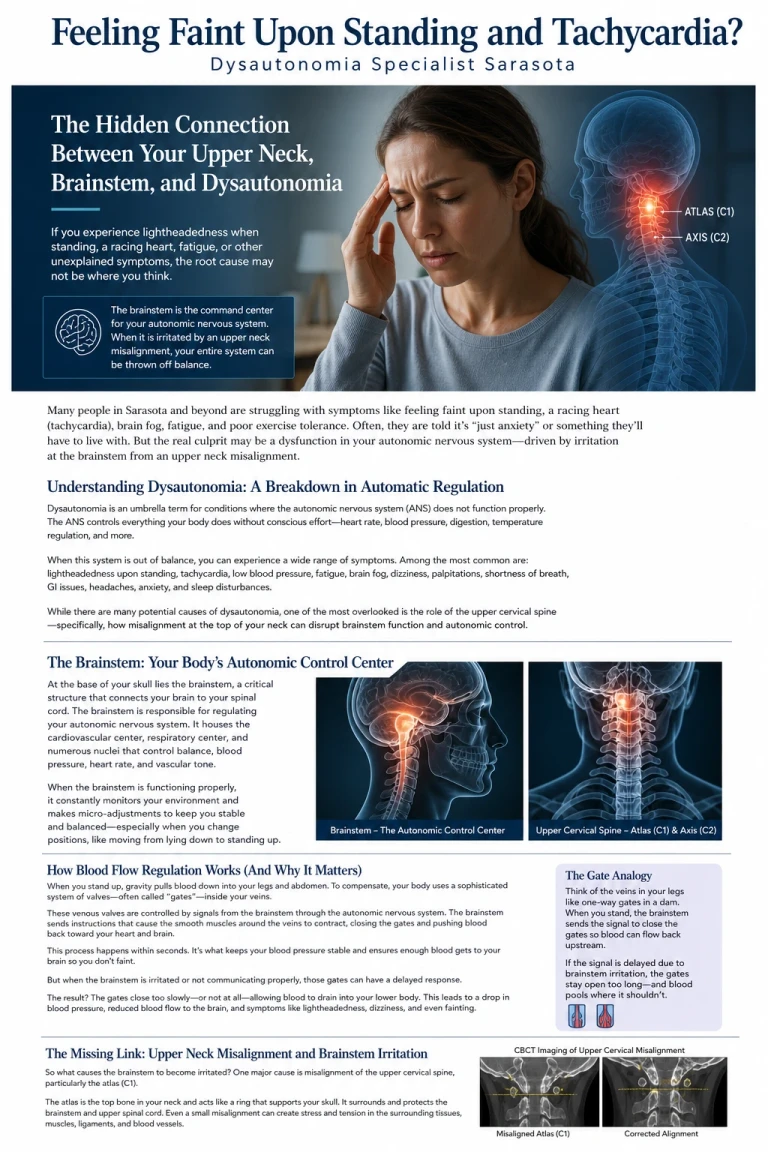
Feeling Faint Upon Standing and Tachycardia? | Dysautonomia Specialist Sarasota
May 03, 2026Cardiac autonomic regulation is disturbed in children with euthyroid Hashimoto thyroiditis. PubMed reference 22343434. Children with euthyroid Hashimoto's thyroiditis demonstrated significantly altered heart rate variability compared to controls, indicating cardiac autonomic dysfunction independent of thyroid hormone status.
Recent 2025 research published in Cureus extended these findings into pediatric populations, demonstrating that even in children with normal thyroid function, Hashimoto's thyroiditis is associated with measurable repolarization heterogeneity and autonomic modulation changes that may predispose patients to future arrhythmias.
Turan O, Ozturk Gomec TB. Silent Signals: Analyzing Repolarization Heterogeneity and Autonomic Modulation in Children With Euthyroid Hashimoto's Thyroiditis. Cureus, 2025. Patients with euthyroid Hashimoto's thyroiditis exhibited significantly longer P-wave dispersion, QT intervals, and altered time-domain HRV parameters.
Why the Upper Cervical Spine Matters
If autonomic dysfunction is part of the Hashimoto's picture and is not fully addressed by thyroid hormone replacement, then anything that mechanically supports the autonomic nervous system is clinically relevant. The brainstem is the central regulator of autonomic function. The vagus nerve, the dominant parasympathetic nerve in the body, emerges from the brainstem and exits the skull through the jugular foramen, immediately adjacent to the atlas vertebra at the top of the spine.
When the atlas is misaligned, the entire craniocervical region is affected. The brainstem can experience sustained mechanical stress, the vagus nerve can be irritated as it descends through the upper neck, and the autonomic regulation that the brainstem governs degrades under these conditions. For a Hashimoto's patient already carrying autonomic dysfunction as part of their disease, this structural compromise becomes a compounding factor — and a removable one.
The clinical research on upper cervical care and autonomic function supports this connection. Studies have demonstrated that upper cervical adjustments produce measurable shifts in heart rate variability toward parasympathetic dominance, and that precise atlas correction can produce sustained changes in autonomic regulation.
Win NN, et al. Effects of Upper and Lower Cervical Spinal Manipulative Therapy on Blood Pressure and Heart Rate Variability. Journal of Chiropractic Medicine, 2015. Heart rate variability indices increased significantly after upper cervical manipulation, indicating enhanced parasympathetic activity.
These findings do not establish upper cervical care as a treatment for Hashimoto's. They establish that the structural conditions at the top of the neck measurably influence the autonomic nervous system that is documented as dysregulated in Hashimoto's. Addressing the structural piece is a mechanistically grounded support for the body's overall regulatory function.
Common Symptoms in Hashimoto's Patients We See
Patients with Hashimoto's thyroiditis who come to Neckwise often present with a wide range of symptoms that extend well beyond what would be expected from low thyroid hormone alone. The pattern often points back to autonomic dysregulation and chronic systemic inflammation. Common symptoms include:
Related article
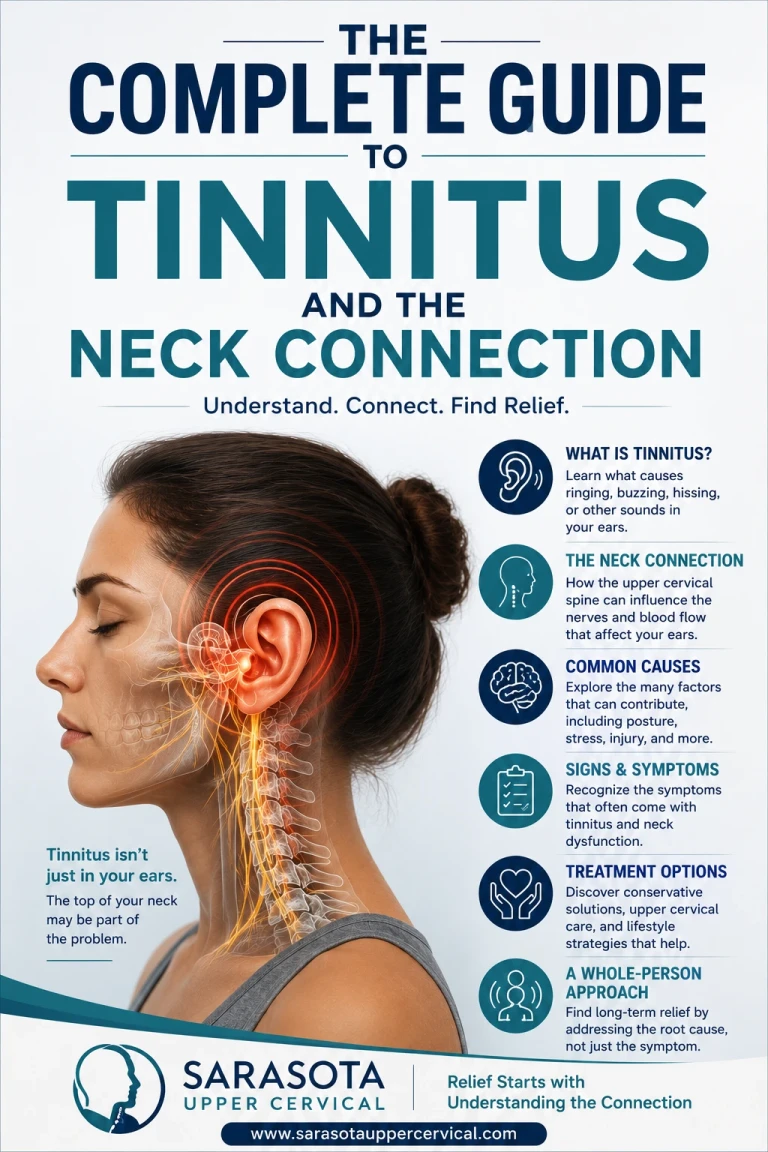
A complete Guide to Tinnitus and the neck connection | Tinnitus relief and treatment in Sarasota
Jun 15, 2026• Persistent fatigue that does not improve with thyroid hormone replacement
• Brain fog, difficulty concentrating, and word-finding problems
• Heart palpitations and awareness of heart rate changes
• Cold intolerance even when thyroid lab values are normal
• Weight regulation difficulty despite stable thyroid medication
• Anxiety, mood changes, and a sense of being in fight-or-flight
• Sleep disturbance and unrefreshing sleep
• Hair thinning and dry skin
• Digestive symptoms — bloating, motility changes, food sensitivities
• Joint pain and muscle stiffness
Related article
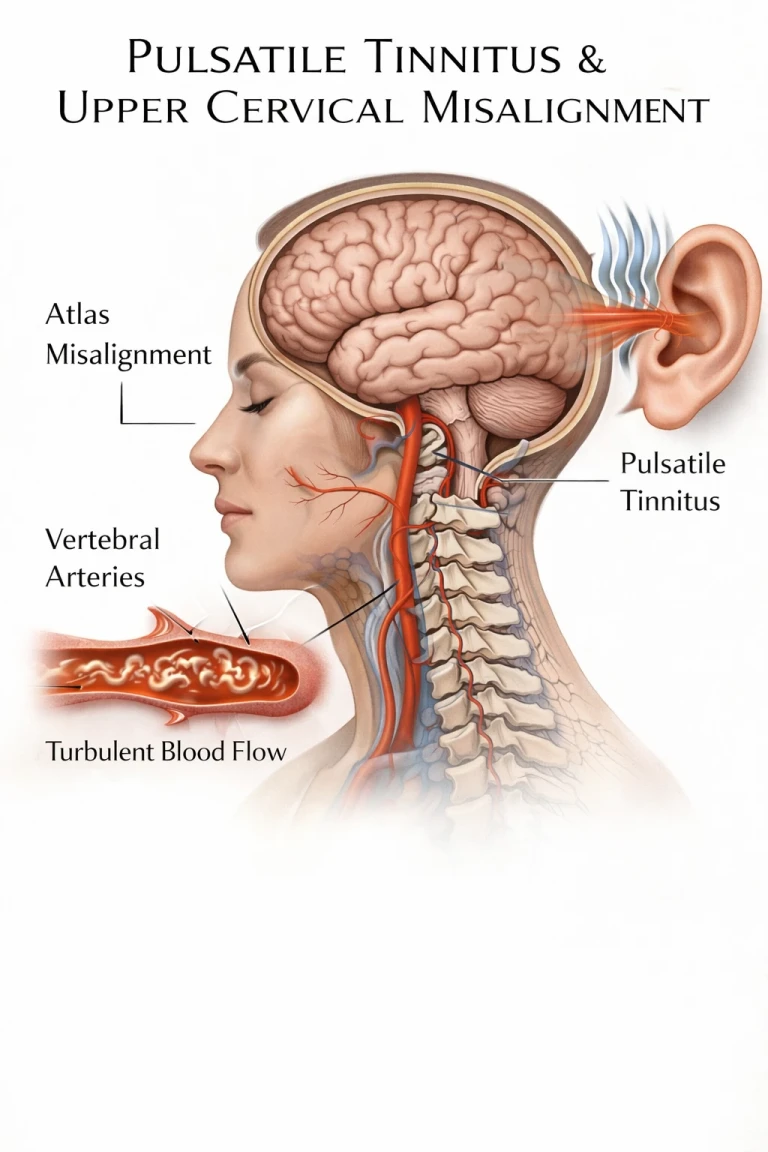
Lingering Concussion Symptoms? Sarasota Upper Cervical Chiropractor Explains a Different Approach
Apr 07, 2026• Headaches and migraines
• Neck pain, neck stiffness, or tension at the base of the skull
• A history of head or neck trauma — often years or decades old
Patients are often surprised to learn how many of their symptoms — particularly the ones that didn't resolve with levothyroxine — are explained by autonomic dysfunction rather than by ongoing thyroid hormone deficiency. Understanding this is often the first step toward addressing the symptoms more effectively.
How Neckwise Evaluates and Corrects
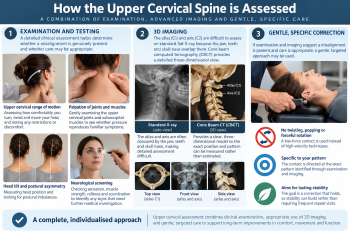
The Neckwise evaluation begins with a comprehensive consultation and history, with particular attention to the timeline of the Hashimoto's diagnosis, the pattern of associated autonomic symptoms, prior trauma to the head or neck, and the symptoms that have not responded to thyroid hormone replacement. Objective testing — including a leg balance test and infrared thermography — determines whether the upper cervical spine is part of the picture.
If the screens point toward upper cervical involvement, we move to imaging. Neckwise uses CBCT 3D imaging as a precision tool to visualize the atlas and axis in three dimensions, quantifying any misalignment in degrees and millimeters across all axes of motion. The atlas does not misalign in just one direction. It can shift forward or backward, rotate, and tilt — often in combination — and addressing one component without the others does not fully resolve the underlying mechanical compromise.
The correction itself involves no twisting, no cracking, and no pulling. This matters in general, and it matters even more for Hashimoto's patients, whose autonomic nervous system is already in a state of heightened sensitivity. The correction is delivered as a controlled, low-force input that gives the body a precise mechanical input to release the misalignment on its own terms. The goal is for the upper cervical spine to learn to hold its corrected position over time, so that the brainstem and central nervous system can operate without sustained mechanical stress.
Finding Natural Support for Hashimoto's in Sarasota
If you are living with Hashimoto's thyroiditis and searching for natural support in Sarasota, an upper cervical evaluation may be a meaningful piece of your overall care — particularly if many of your symptoms have not resolved despite normal thyroid lab values. The connection between autonomic dysfunction, chronic inflammation, and Hashimoto's is well-documented in peer-reviewed research, and the structural conditions at the head-neck junction directly influence the nervous system that supports autonomic balance.
Upper cervical care is not a cure for Hashimoto's, and it is not a replacement for thyroid medication or endocrinology care. It is a structural intervention that addresses one specific, measurable factor that is consistently overlooked in conventional management. To learn more or schedule a consultation, contact Neckwise Sarasota.
Leave a comment