

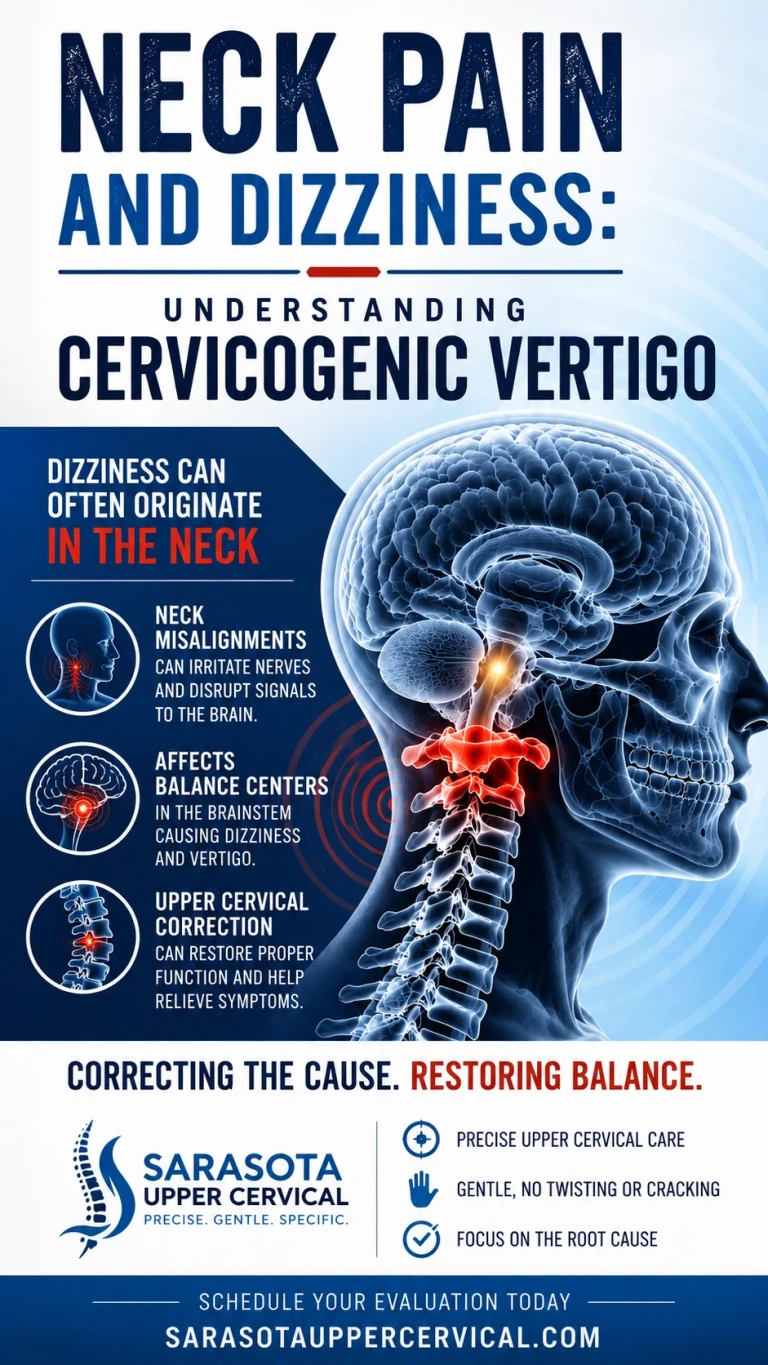
Dizziness is one of the most common reasons people see a doctor, and it's also one of the most frustrating to get answered — because "dizzy" can mean a dozen different things, and it can come from just as many sources. But if your dizziness consistently shows up alongside neck pain, stiffness, or a specific neck position or movement, there's a real, research-recognized explanation worth understanding: cervicogenic dizziness.
What Cervicogenic Dizziness Actually Is
Cervicogenic dizziness (also called cervical vertigo) is dizziness that originates from dysfunction in the cervical spine rather than from the inner ear or brain directly. The mechanism behind it is proprioception — the sense that tells your brain where your body is in space. The neck contains an especially dense concentration of proprioceptive receptors; the joints and deep muscles of the upper cervical spine alone are estimated to supply roughly half of all the proprioceptive signaling coming from the entire neck.
Schedule Your Appointment
Schedule appointmentYour brain constantly cross-references three sources of positional information: your vestibular system (inner ear), your vision, and your cervical proprioception. Normally these three inputs agree with each other. When cervical dysfunction distorts the proprioceptive signal — while the eyes and inner ear are reporting something else — the result is a sensory mismatch. The brain receives conflicting information about where the head and body are in space, and the result is often described as lightheadedness, unsteadiness, or a subtle spinning sensation, frequently triggered or worsened by turning the head.
Why the Upper Cervical Spine Is Especially Relevant
This isn't a fringe theory — it's an active area of clinical research. Reviews on the topic describe how the cervical proprioceptive system connects directly to the vestibular nuclei in the brainstem, meaning dysfunction in the neck can produce symptoms that are functionally indistinguishable from a vestibular (inner ear) problem: dizziness, imbalance, and even nystagmus (involuntary eye movement). Because the upper cervical joints — particularly around the atlas and axis — carry such a large share of the neck's proprioceptive load, dysfunction concentrated at that specific junction is disproportionately likely to produce this kind of sensory mismatch.
Related article
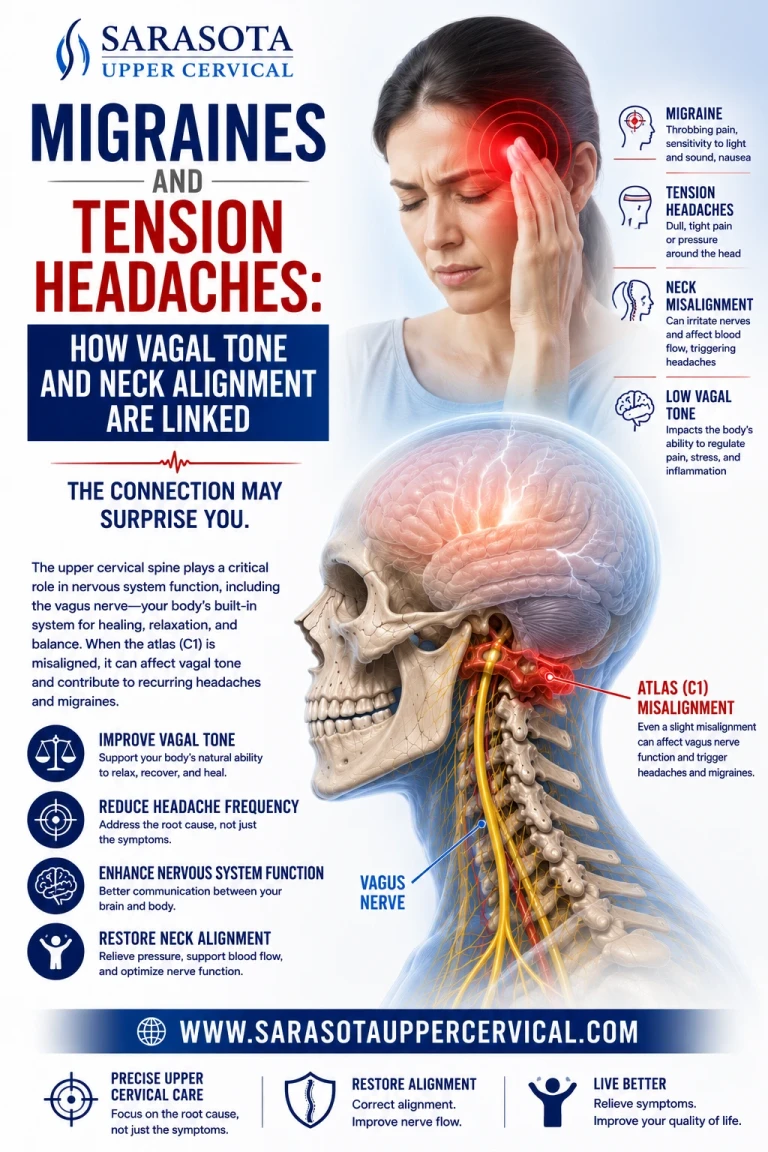
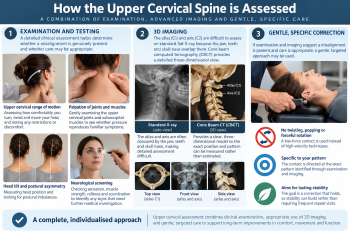
Clinically, patients with cervicogenic dizziness tend to show a recognizable pattern on exam: reduced neck range of motion, tenderness in the upper cervical and suboccipital region, and dizziness that's reproducible with specific neck movements or positions — as distinct from vertigo triggered by changes in head position relative to gravity, which points toward an inner-ear cause instead.
An Important Caveat: This Is a Diagnosis of Exclusion
It's worth being direct about this, because responsible care requires it: cervicogenic dizziness is diagnosed only after other, potentially more serious causes of dizziness have been ruled out — including inner ear conditions like BPPV or Ménière's disease, cardiovascular causes, and central neurological conditions. There's no single gold-standard test that confirms cervicogenic dizziness on its own; it's identified through a combination of history, physical exam findings, and the elimination of other explanations. Anyone with new, severe, or unusual dizziness — especially with additional neurological symptoms — should be evaluated by a physician before assuming the cause is cervical.
How Upper Cervical Doctors Evaluate the Neck's Role
Because upper cervical joint dysfunction can be subtle and isn't reliably visible on standard imaging, upper cervical doctors use CBCT (Cone Beam CT) imaging to get a precise three-dimensional view of how the atlas and axis are positioned relative to the skull and spine. Paired with objective neurological testing, this allows a doctor to determine whether a correction is warranted — and just as importantly, when the segment is already stable and no adjustment should be made.
Related article

Whiplash and Neck Pain After a Car Accident: What Sarasota Drivers Should Know
Jul 19, 2026Recovery Is Typically Gradual
Addressing upper cervical misalignment isn't a guaranteed fix for dizziness, and it isn't a substitute for ruling out other causes first. But research on manual and upper cervical-focused therapy for cervicogenic dizziness has shown meaningful improvement in patients using standardized measures like the Dizziness Handicap Inventory. The underlying idea is that restoring normal joint mechanics and proprioceptive input at the top of the neck gives the nervous system a more reliable, consistent signal to work with — allowing the brain's balance systems to recalibrate over time rather than compensating for a persistently distorted input.
If your dizziness reliably tracks with neck stiffness or specific neck movements — and other causes have already been ruled out — it's worth having the upper cervical spine specifically evaluated.
This article is for informational purposes only and is not a substitute for professional medical advice, diagnosis, or treatment. New, severe, or persistent dizziness should be evaluated by a physician to rule out inner ear, cardiovascular, or neurological causes before being attributed to the neck.
Article written by Dr. Drew hall, Upper Cervical Chiropractor Locate an upper cervical chiropractor at www.sarasotauppercervical.com
To learn more about vertigo go to www.gotvertigo.com


Leave a comment