

If you suffered a concussion weeks, months, or even years ago — and you still don’t feel like yourself — you may be dealing with Post Concussion Syndrome.
Persistent symptoms like:
Schedule Your Appointment
Schedule appointment• Brain fog
• Head pressure
• Dizziness
• Light sensitivity
• Fatigue
• Neck stiffness
• Anxiety
• Sleep disruption
• Difficulty concentrating
If you’re searching for Post Concussion Syndrome treatment in Sarasota or Bradenton, you may have been told:
“Your scans look normal.”
“You just need more time.”
“It’s stress.”
But here’s what is often overlooked:
The upper cervical spine is frequently injured during a concussion.
👉 Call 941-259-1891 to schedule your FREE consultation
Or click here to schedule online.
A Concussion Is Not Just a Brain Injury
A concussion rarely happens in isolation.
When the head experiences impact:
• The brain moves inside the skull
• The neck snaps forward and backward
• Ligaments stretch
• The joint capsule becomes injured
• Muscles tighten protectively
Even if brain imaging is clear, the cervical spine may remain unstable.
Especially the upper cervical region (C1 and C2).
The Upper Cervical Spine and the Brainstem
The atlas (C1) and axis (C2) sit directly beneath the skull and support the brainstem.
The brainstem regulates:
• Balance
• Eye coordination
• Heart rate
• Sleep cycles
• Pain processing
• Autonomic nervous system function
• Cognitive clarity
When the upper cervical spine becomes misaligned after trauma, it can:
• Create mechanical stress on the brainstem
• Distort proprioceptive input
• Disrupt vestibular signaling
• Alter autonomic regulation
Related article
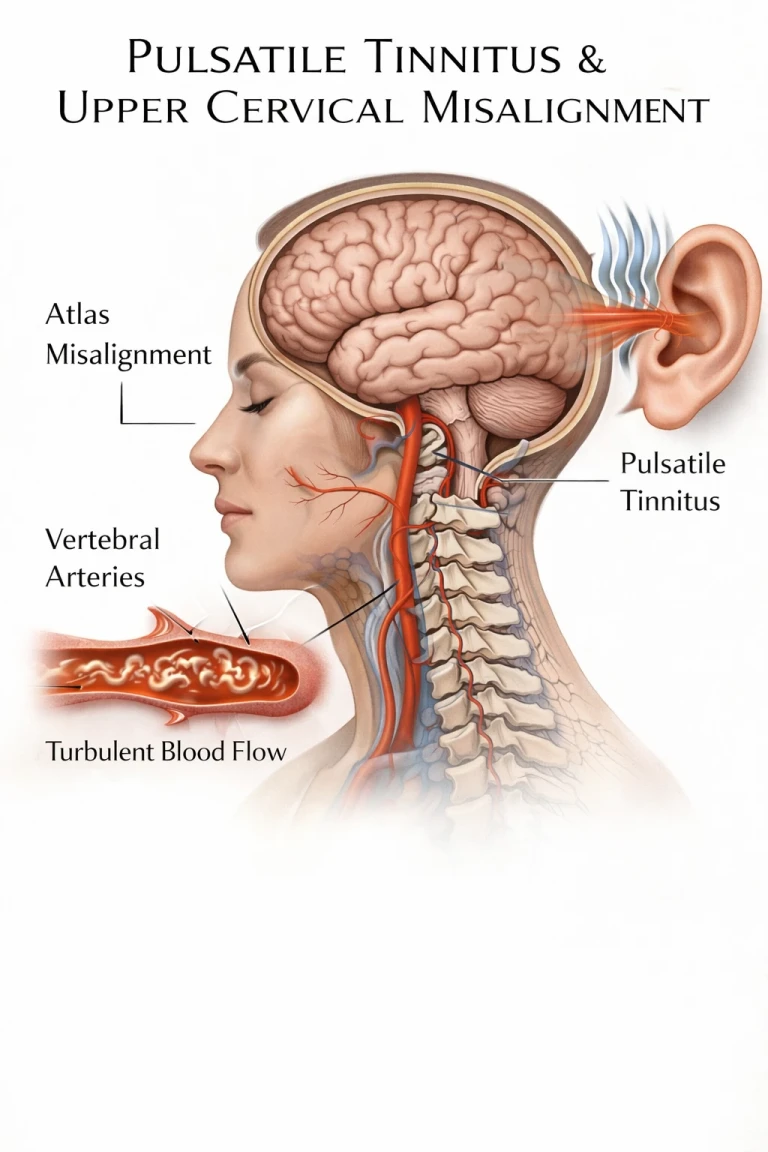
Lingering Concussion Symptoms? Sarasota Upper Cervical Chiropractor Explains a Different Approach
Apr 07, 2026This may contribute to lingering symptoms long after the initial concussion has “healed.”
👉 If your symptoms persist after a concussion, schedule your FREE consultation today- click here.
Joint Capsule Injury and Instability
During a concussion, the joint capsule surrounding the upper cervical joints is often injured.
When the capsule is damaged:
• Inflammation occurs
• Motion becomes restricted
• Instability develops
• Muscles tighten to protect the joint
This muscle spasm reduces normal motion and increases neurological stress.
Until the joint is properly corrected, the nervous system may remain in a defensive state.
Why Symptoms Persist
Many post-concussion patients report:
• Ongoing dizziness
• Head pressure
• Neck pain
• Difficulty focusing
• Sensitivity to movement
These symptoms are often connected to:
• Brainstem irritation
• Cervical proprioceptive distortion
• Autonomic imbalance
• Loss of normal joint motion
Treating only the brain without addressing the neck can leave the root cause untouched.
How Upper Cervical Care Helps
Upper cervical chiropractic focuses on restoring alignment at C1 and C2.
When precise correction occurs:
• Joint motion improves
• Muscle guarding decreases
• Brainstem stress reduces
• Vestibular function stabilizes
• Autonomic balance improves
The goal is not to “crack” the neck repeatedly.
The goal is to restore structural stability so the nervous system can recover.
👉 Call 941-259-1891 now to schedule your FREE consultation or click here.
Related article

Sub-occipital neuralgia Treatment Sarasota, Venice, Bradenton and Tampa Bay
Nov 29, 2021
The Importance of 3D CBCT Imaging
Every concussion injury is unique.
No two people have the same misalignment pattern.
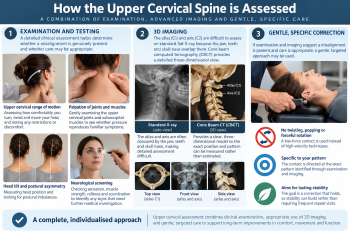
That’s why we use advanced 3D Cone Beam CT (CBCT) imaging to measure:
• Exact rotational displacement
• Lateral deviation
• Angular misalignment
• Structural asymmetry
• Skull-to-atlas relationship
Without imaging, adjustments are generalized.
With CBCT imaging, corrections are precisely tailored to your anatomy.
Precision is critical when working near the brainstem.
No Twisting. No Cracking. No Pulling
Many concussion patients are understandably cautious.
Upper cervical care is gentle.
There is:
• No forceful twisting
• No aggressive cracking
• No yanking or pulling
• No high-velocity manipulation
Adjustments are:
• Specific
• Minimal force
• Data-driven
• Designed for stability
Especially in post-traumatic cases, less force with more precision matters.
Objective Testing: Knowing When to Adjust
We do not adjust on every visit.
We rely on objective testing, including:
Leg Length Analysis
Subtle changes reflect neurological imbalance.
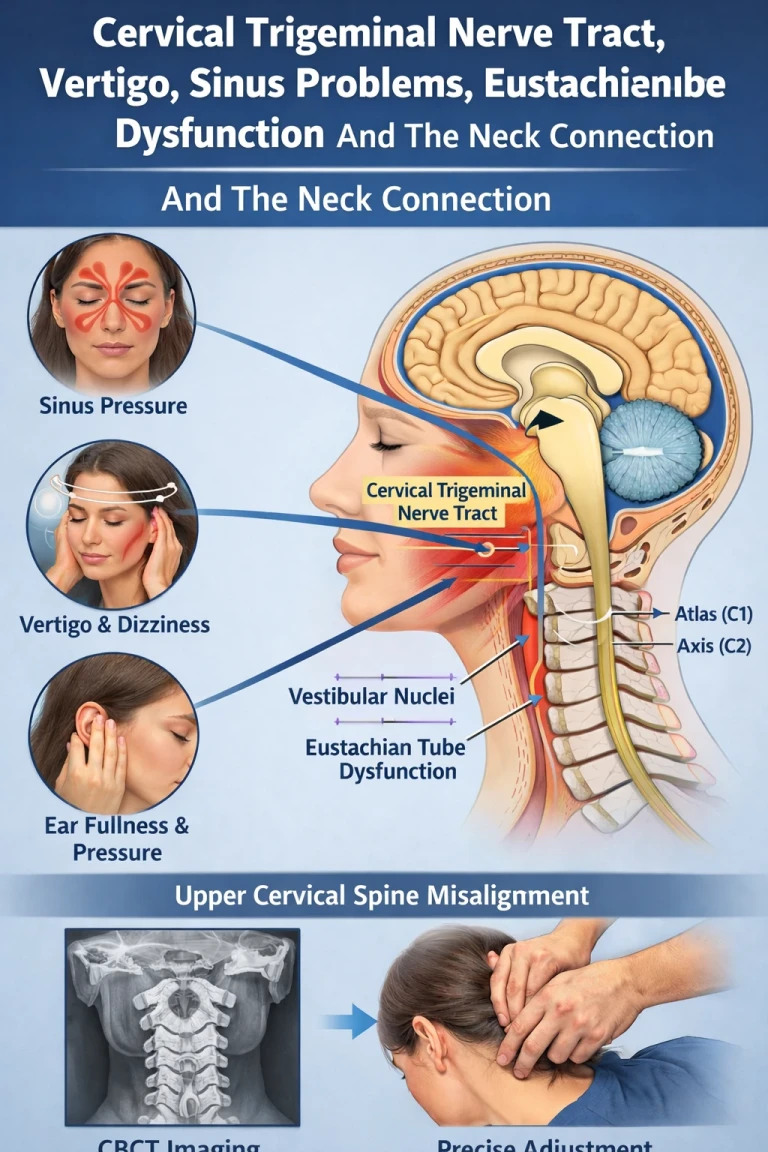
Infrared Thermography
Thermal scanning measures heat patterns along the spine, indicating nervous system stress.
These tools help determine:
• If misalignment is present
• If correction is holding
• If adjustment is necessary
• When the body is stable
Adjustments are based on measurable data — not routine.
True Healing vs Symptom Suppression
Many post-concussion patients are prescribed:
• Pain medication
• Anti-anxiety medication
• Sleep aids
• Vestibular therapy
These may help manage symptoms.
But if upper cervical instability remains, neurological irritation may persist.
True healing focuses on:
• Restoring motion
• Reducing mechanical stress
• Stabilizing the nervous system
• Allowing the brain to recover properly
Signs You May Need an Upper Cervical Evaluation
You may benefit from evaluation if:
• Symptoms began after a head injury
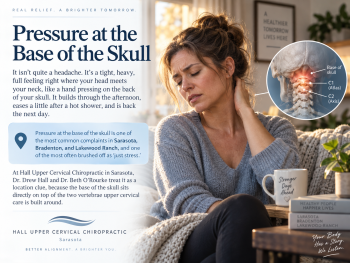
• You feel pressure at the base of your skull
• You have persistent dizziness
• You experience brain fog
• You feel worse with head movement
• You have chronic neck tightness
Your brain and spine are connected.
If the foundation is unstable, recovery may stall.
Post Concussion Syndrome Treatment in Sarasota & Bradenton
If you are still struggling months after your concussion, don’t assume this is your “new normal.”
Upper cervical chiropractic offers:
• Advanced 3D imaging
• Gentle, precise correction
• Objective neurological testing
• No twisting or aggressive cracking
• A focus on restoring nervous system balance
👉 Call 941-259-1891 to schedule your FREE consultation
Or click here to schedule online.
Don’t settle for symptom management.
Investigate the structural component that may be preventing full recovery.
Your brain deserves a stable foundation beneath it.
Leave a comment