

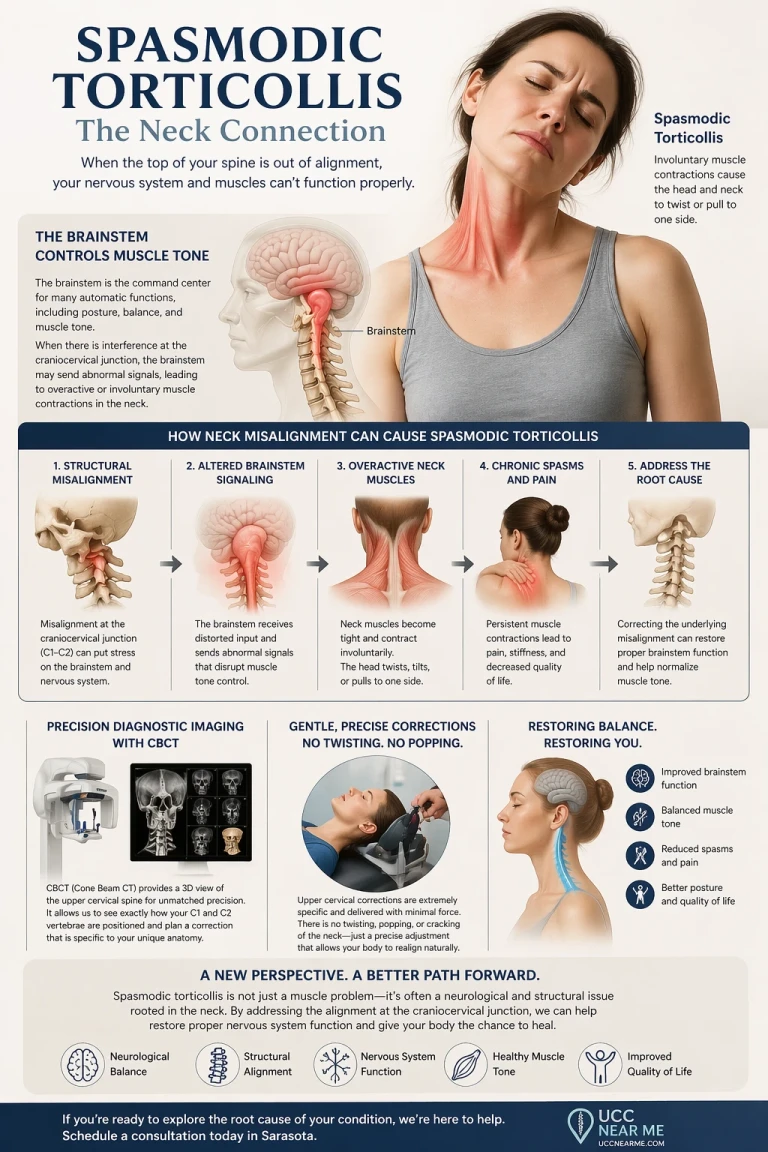
Spasmodic torticollis—also known as cervical dystonia—is a challenging and often misunderstood condition that can significantly impact quality of life. Individuals suffering from this disorder experience involuntary contractions of the neck muscles, causing the head to twist, tilt, or pull to one side. These movements can be painful, unpredictable, and frustrating, especially when conventional treatments only provide temporary relief.
In Sarasota, more people are beginning to explore a root-cause approach to spasmodic torticollis—one that looks beyond the muscles themselves and instead focuses on the brainstem, the upper cervical spine, and the structural integrity of the craniocervical junction.
Schedule Your Appointment
Schedule appointment
What Is Spasmodic Torticollis?
Spasmodic torticollis is a neurological movement disorder characterized by:
Involuntary neck muscle contractions
Twisting or tilting of the head
Muscle stiffness and pain
Tremors in the neck or head
Difficulty holding the head in a neutral position
The condition can vary in severity—from mild discomfort to severe, debilitating spasms that interfere with daily activities.
Traditionally, treatment options include:
Botox injections
Muscle relaxants
Physical therapy
Pain management strategies
While these approaches may reduce symptoms, they often do not address why the abnormal muscle contractions are happening in the first place.
The Brainstem’s Role in Muscle Tone
To understand spasmodic torticollis at a deeper level, we need to look at the brainstem.
The brainstem is one of the most vital parts of the nervous system. It sits at the base of the brain and connects directly to the spinal cord. Among its many responsibilities, the brainstem plays a critical role in:
Regulating muscle tone
Coordinating posture and balance
Processing sensory input from the body
Controlling automatic functions like breathing and heart rate
Muscle tone. the slight, constant contraction of muscles that keeps you upright and stable—is not random. It is finely tuned by the brainstem based on incoming signals from the body.
When the brainstem is functioning properly, muscle tone is balanced and coordinated. But when there is interference or dysfunction, that balance can be disrupted, leading to overactive or underactive muscle patterns.
In the case of spasmodic torticollis, this can manifest as involuntary, excessive contraction of the neck muscles.
Schedule a FREE consultation by clicking here.
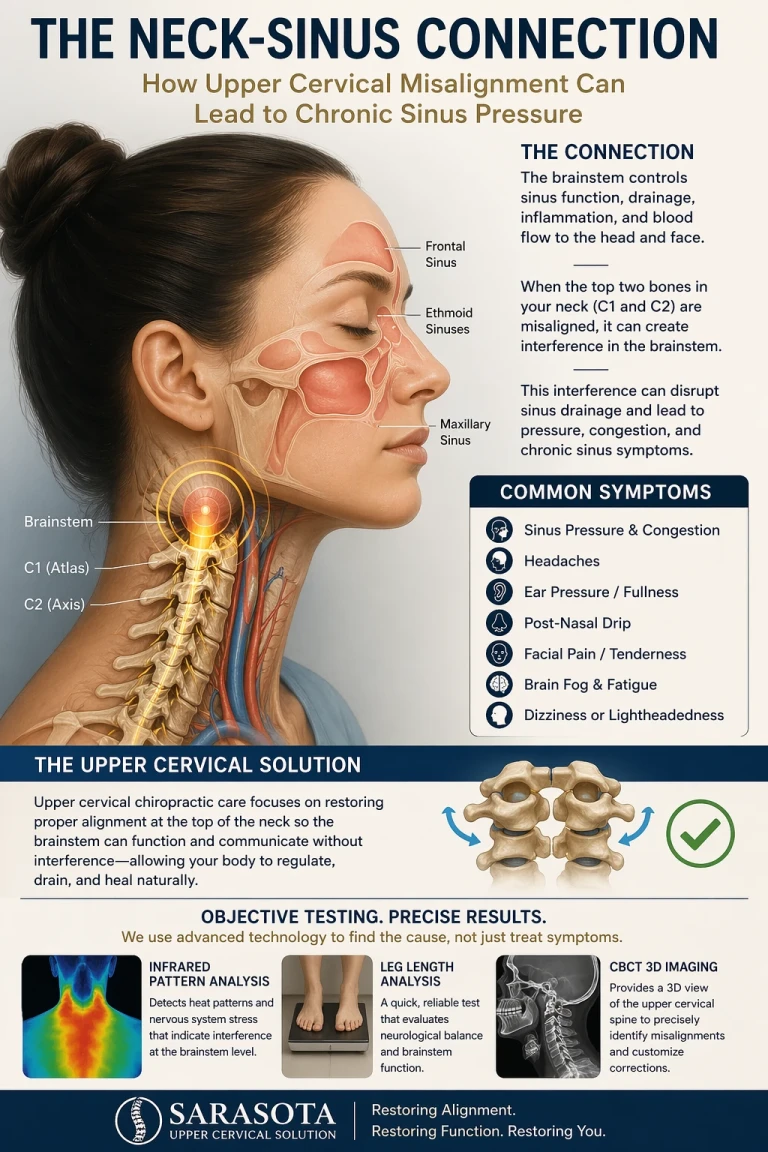
The Craniocervical Junction: A Critical Area
The craniocervical junction is where the skull meets the top two vertebrae of the spine:
C1 (Atlas)
C2 (Axis)
This area is unique for several reasons:
It houses and protects the brainstem
It allows for a large range of head movement
It contains a high density of neurological receptors that provide feedback to the brain
Because of its structure and function, even a small misalignment (often referred to as an upper cervical subluxation) in this region can have a significant impact on the nervous system.
How Structural Misalignment Can Affect Muscle Control
When there is a structural misalignment at the craniocervical junction, it can alter the way information flows between the brain and body.
Here’s how that can contribute to spasmodic torticollis:
1. Altered Brainstem Signaling
A misalignment near the brainstem can create abnormal mechanical and neurological stress. This may interfere with the brainstem’s ability to regulate muscle tone effectively.
2. Imbalanced Muscle Tone
When the brainstem receives distorted input or sends altered output, the muscles of the neck may become hyperactive, leading to involuntary contractions.
3. Compensatory Patterns
The body attempts to adapt to the imbalance by recruiting certain muscles more than others. Over time, this creates chronic contraction patterns.
4. Loss of Normal Control
As the condition progresses, the body may struggle to return to normal muscle tone, resulting in persistent spasms and abnormal head positioning.
This is why many individuals feel like their neck is “pulling” or “twisting” without their control—it’s not just a muscle issue; it’s a neurological control issue rooted at the top of the spine.
Why Focusing Only on Muscles Falls Short
If spasmodic torticollis were purely a muscle problem, then stretching, massage, or injections would resolve it long-term. But for many patients, relief is temporary.
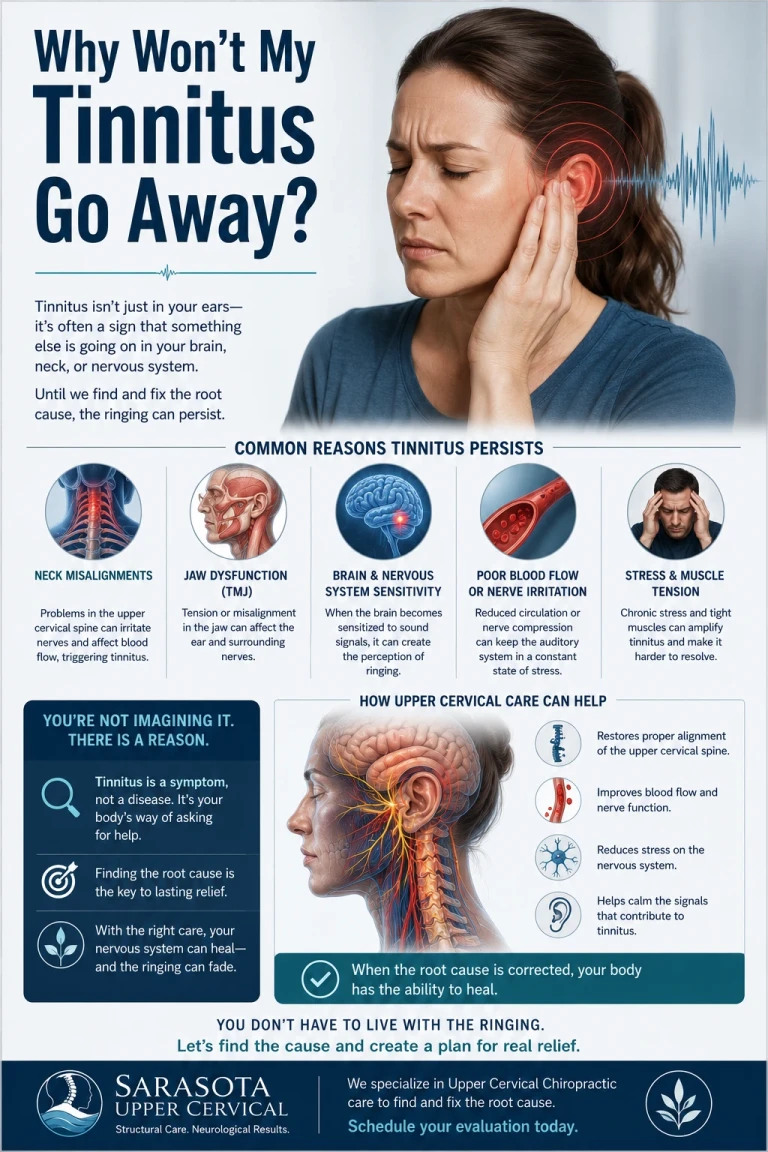
That’s because these approaches often:
Address the symptom (tight muscles)
But not the source (neurological imbalance)
Without correcting the underlying issue, the brainstem continues to send abnormal signals, and the muscles continue to respond accordingly.
The Importance of Precision: Advanced Imaging with CBCT
One of the most important advancements in upper cervical care is the use of Cone Beam Computed Tomography (CBCT) imaging.
CBCT provides a three-dimensional view of the upper cervical spine, allowing for:
Precise visualization of the alignment of C1 and C2
Detailed assessment of joint structure and asymmetry
Accurate measurement of the exact direction and degree of misalignment
This level of precision is critical.
Every person’s anatomy is unique, and no two misalignments are exactly the same. With CBCT imaging, care can be tailored specifically to the individual—rather than using a generalized or “one-size-fits-all” approach.
Gentle, Specific Corrections—No Twisting or Popping
One of the biggest misconceptions about chiropractic care is that it involves twisting or forceful manipulation of the neck.
In upper cervical care, the approach is very different.
Corrections are:
Extremely precise
Tailored to the individual’s anatomy
Delivered with minimal force
Performed without twisting, popping, or cracking the neck
The goal is not to “force” the spine into place, but to apply a specific, calculated correction that allows the body to realign naturally.
Because of this precision, many patients find the process to be comfortable and gentle.
Restoring Balance to the Nervous System
Related article
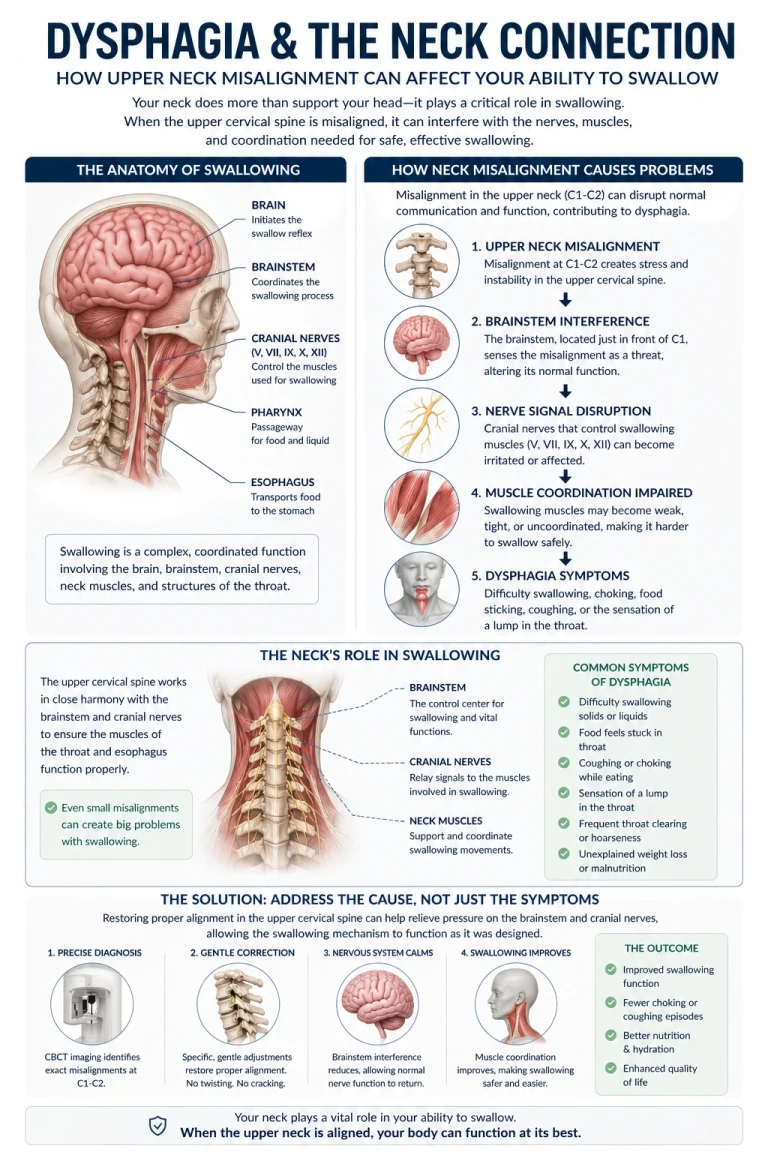
Why am I having difficulty swallowing ? | Dysphagia relief and treatment Sarasota
Apr 24, 2026
When the upper cervical spine is properly aligned, several important changes can occur:
Reduced stress on the brainstem
Improved communication between the brain and body
More balanced muscle tone regulation
Decreased involuntary muscle contractions
Over time, this can lead to:
Less frequent or intense spasms
Improved head positioning
Reduced pain and stiffness
Better overall function
It’s important to note that this approach is not about masking symptoms, it’s about creating an environment where the body can function and heal more effectively.
A Different Perspective on Spasmodic Torticollis
Spasmodic torticollis can feel overwhelming, especially when it disrupts daily life and doesn’t respond to typical treatments.
But when you begin to view the condition through the lens of:
Brainstem function
Neurological control of muscle tone
Structural alignment at the craniocervical junction
…it opens the door to a new way of thinking about both cause and recovery.
Finding Spasmodic Torticollis Relief in Sarasota
If you or someone you know is dealing with spasmodic torticollis, it may be time to explore a more comprehensive, root-cause approach.
A detailed evaluation of the upper cervical spine using advanced imaging like CBCT can help determine whether structural misalignment is contributing to the condition.
From there, a precise and gentle correction—without twisting or popping—may help restore balance to the nervous system and reduce the abnormal muscle contractions associated with this condition.
Take the Next Step
You don’t have to settle for temporary relief or symptom management alone.
Schedule a consultation to explore whether upper cervical misalignment could be playing a role in your condition.
Leave a comment