

Thoracic Outlet Syndrome (TOS) is one of those conditions that often gets misdiagnosed, misunderstood, or simply labeled as “tight muscles” or “poor posture.” But for many people in Sarasota dealing with arm numbness, tingling, weakness, or persistent neck and shoulder tension, the root cause runs deeper, often involving structural stress at the top of the spine that cascades down into the thoracic outlet.
In this article, we’ll break down exactly what the thoracic outlet is, how tight scalene muscles contribute to the problem, and how forward head posture, often driven by upper cervical misalignment, can play a central role in narrowing this space and compressing critical nerves, arteries, and veins.
Schedule Your Appointment
Schedule appointment
What Is the Thoracic Outlet?
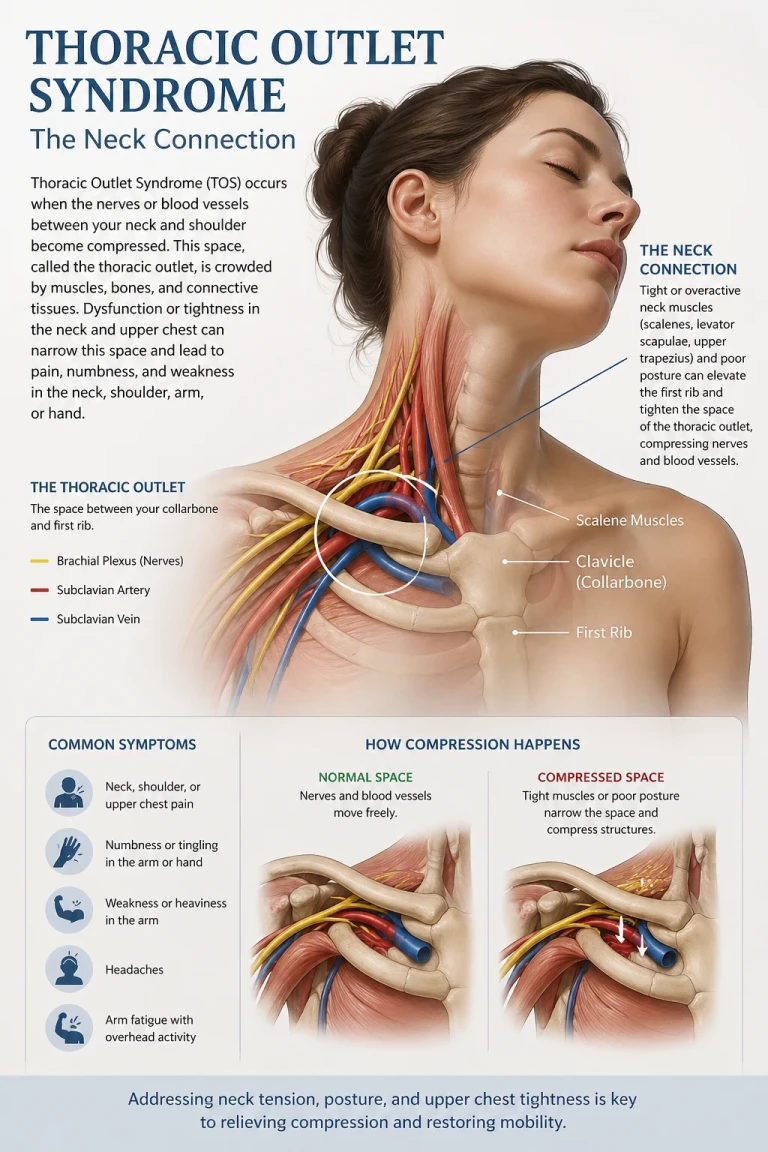
The thoracic outlet is a small but critically important space located between your collarbone (clavicle) and your first rib. This area acts as a passageway for major structures traveling from your neck into your arm, including:
The brachial plexus nerves (which control sensation and movement in the arm and hand)
The subclavian artery (which delivers blood to the arm)
The subclavian vein (which returns blood from the arm back to the heart)
Because this space is naturally narrow, it doesn’t take much for it to become compromised. When something reduces that space, whether it’s muscle tension, poor posture, or structural imbalance, it can lead to compression of these vital structures. That compression is what we call Thoracic Outlet Syndrome.
What Causes Thoracic Outlet Syndrome?
There are several contributing factors to TOS, including:
Poor posture (especially forward head posture)
Repetitive overhead movements
Trauma (like whiplash or sports injuries)
Anatomical variations (such as an extra rib)
However, one of the most overlooked contributors is chronic tension in the scalene muscles, which are directly influenced by head and neck positioning.
The Role of the Scalene Muscles
The scalene muscles are a group of three muscles located on each side of your neck:
Anterior scalene
Middle scalene
Posterior scalene
These muscles attach from the cervical spine (neck) to the first and second ribs. Their primary functions include:
Related article
Assisting with breathing (elevating the ribs)
Stabilizing the neck
Helping with neck movement
Here’s where it becomes important for TOS:
The brachial plexus nerves and subclavian artery pass directly between the anterior and middle scalene muscles.
When these muscles become tight, inflamed, or overactive, they can narrow the space between them, compressing the nerves and blood vessels traveling through that region.
How Forward Head Posture Narrows the Thoracic Outlet
Forward head posture is extremely common today. Whether it’s from phone use, computer work, or long hours sitting, the head begins to drift forward relative to the shoulders.
For every inch your head moves forward, the load on your neck muscles significantly increases. This leads to:
Chronic tension in the neck
Overactivation of the scalene muscles
Elevation of the first rib
Reduced space in the thoracic outlet
Over time, this creates the perfect environment for nerve and vascular compression.
But the key question is: why does the head shift forward in the first place?
The Connection to Upper Cervical Subluxation
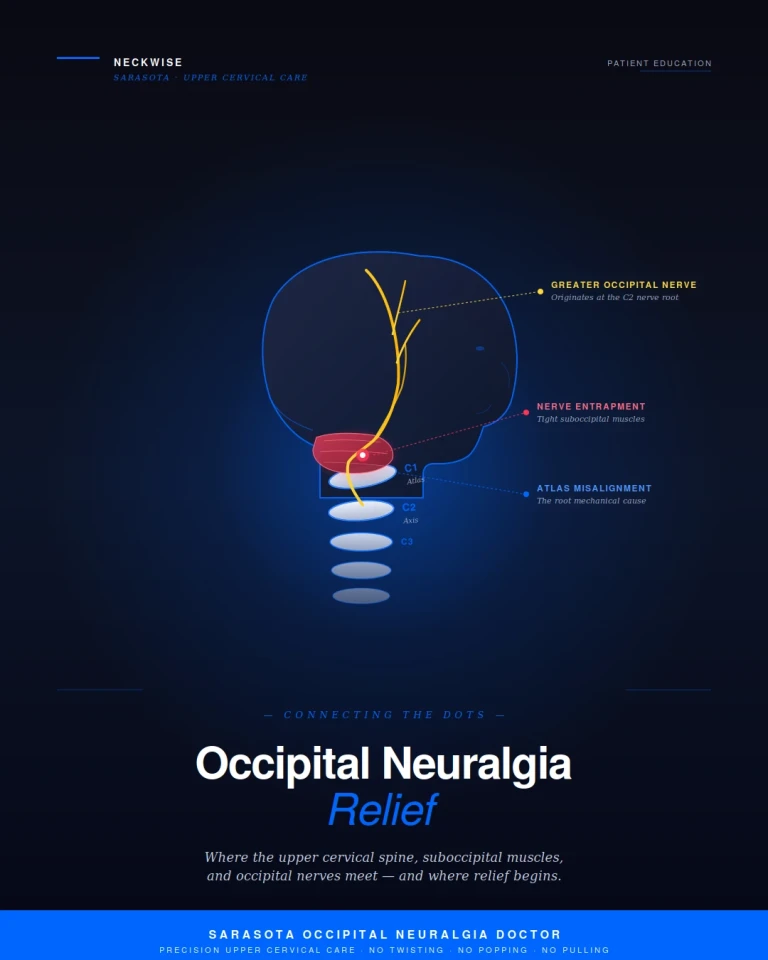
At the very top of your spine are two critical vertebrae:
C1 (Atlas)
C2 (Axis)
These vertebrae surround and protect the brainstem, which plays a central role in posture, muscle tone, and nervous system regulation.
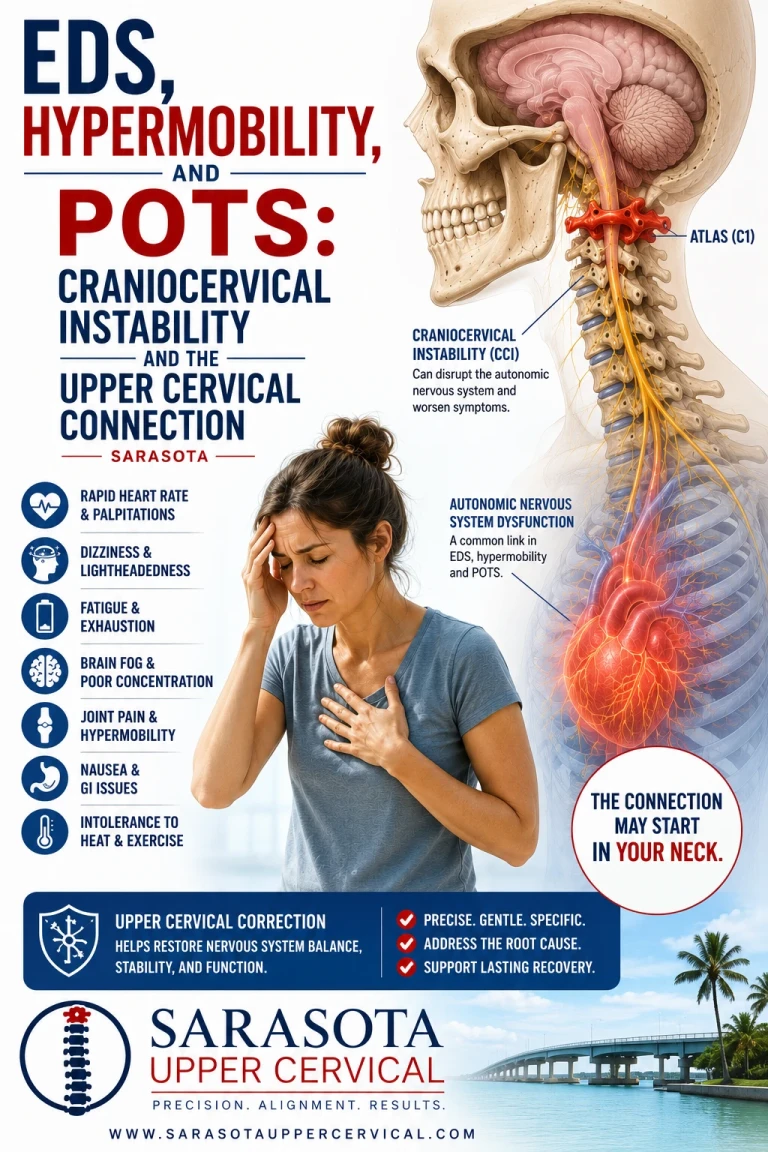
When there is an upper cervical subluxation (misalignment), it can disrupt normal neurological communication and postural balance. The body will often compensate for this imbalance by shifting the head forward.
This compensation may seem small at first, but over time it leads to:
Chronic forward head posture
Increased tension in the scalene muscles
Elevation of the first rib
Narrowing of the thoracic outlet
So instead of just treating the tight muscles, it’s important to understand why those muscles became tight in the first place.
How Thoracic Outlet Syndrome Develops
When you connect all the pieces, the progression often looks like this:
Upper cervical misalignment disrupts normal posture and muscle tone
The head shifts forward to compensate
Scalene muscles become chronically tight
The first rib elevates, reducing thoracic outlet space
Nerves, arteries, and veins become compressed
Symptoms of TOS begin to appear
This is why many people find only temporary relief from stretching, massage, or physical therapy—because the underlying structural cause hasn’t been addressed.
Common Symptoms of Thoracic Outlet Syndrome
Depending on whether nerves or blood vessels are being compressed, symptoms can vary. Common signs include:
Numbness or tingling in the arm or hand
Weakness in the grip
Neck and shoulder pain
Heaviness or fatigue in the arm
Coldness or color changes in the hand
Swelling in the arm
Headaches or upper back tension
These symptoms may come and go or become more persistent over time.
A Root-Cause Approach to Treatment
Many traditional approaches focus on symptom relief:
Related article

Upper Cervical Chiropractor Sarasota, Bradenton, Venice and Tampa Bay Area
Nov 15, 2021Stretching the neck and shoulders
Massage therapy
Anti-inflammatory medications
Postural exercises
While these can help temporarily, they often don’t address the deeper issue—why the thoracic outlet is being narrowed in the first place.
A more comprehensive approach looks at:
1. Structural Alignment of the Upper Cervical Spine
Correcting misalignment at C1 and C2 can help restore normal posture and reduce compensatory patterns like forward head posture.
2. Nervous System Function
When the brainstem and upper cervical region are functioning properly, muscle tone and postural control improve naturally.
3. Reduction of Chronic Muscle Tension
As posture improves, the scalene muscles can relax, decreasing pressure on the thoracic outlet.
4. Restoration of Space in the Thoracic Outlet
With improved alignment and reduced tension, the compression on nerves and blood vessels can decrease—leading to symptom relief.
Why This Matters for Long-Term Relief
Thoracic Outlet Syndrome isn’t just a local shoulder or arm problem—it’s often a whole-body structural issue that starts at the top.
If you only treat the symptoms:
The scalene muscles may tighten again
The first rib may elevate again
The compression may return
But when you address the underlying cause, the body has a chance to:
Restore proper posture
Reduce chronic tension
Improve nerve and blood flow
Heal more completely
Final Thoughts
Thoracic Outlet Syndrome can be frustrating, especially when symptoms linger despite trying multiple therapies. Understanding the connection between upper cervical alignment, forward head posture, scalene muscle tension, and thoracic outlet narrowing can be a game-changer.
The goal isn’t just to chase symptoms—it’s to identify and correct the underlying imbalance that’s driving the problem.

Leave a comment