

Superior canal dehiscence syndrome belongs on the differential list for anyone in Sarasota, Bradenton, and Lakewood Ranch who has been told they have vertigo of unclear cause, and it is on this site for a specific reason: it is a condition where the neck is not the answer, and where mistaking it for a cervical problem delays the care that actually helps.
I would rather be the practice that identifies it and sends you to the right specialist than the one that treats you for a year while it goes unrecognised.
Schedule Your Appointment
Schedule appointmentWhat it is
The inner ear normally has two openings into the middle ear — the oval window and the round window. Sound energy enters through one and leaves through the other, and the balance organs sit protected outside that circuit.
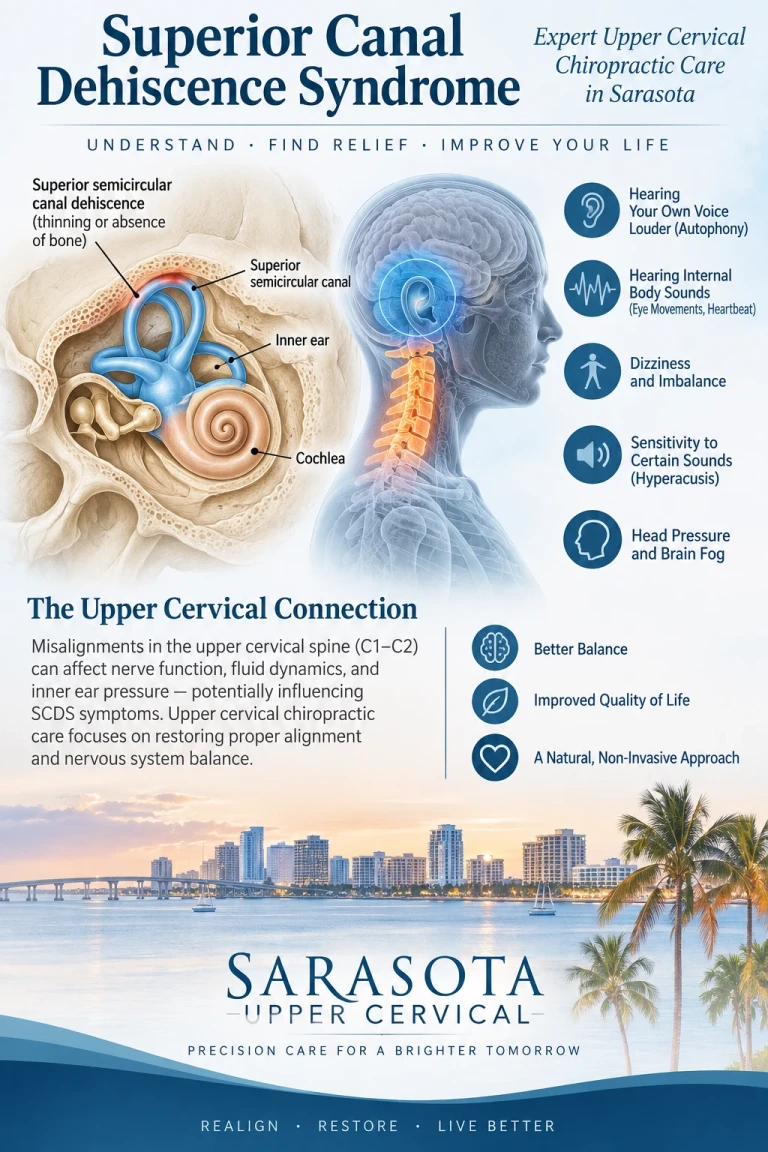
Superior canal dehiscence syndrome, described by Lloyd Minor and colleagues in 1998, occurs when the bone covering the superior semicircular canal in the floor of the middle cranial fossa is thin or absent. That defect creates a third opening — a third mobile window — through which sound and pressure energy can reach the balance organ directly.
The result is an inner ear that responds to sound and pressure as though they were head movement. It is also thought to develop as a two-stage process: congenitally thin bone over the canal, followed by a later event such as head trauma or a period of raised intracranial pressure that completes the defect.
The symptoms are strange, and the strangeness is diagnostic
Several features of this condition are unusual enough to be close to specific for it, and describing them accurately to a clinician is often what makes the diagnosis.
Sound-induced vertigo, the Tullio phenomenon, means loud noises produce dizziness or a sensation of visual movement. Pressure-induced vertigo, the Hennebert sign, means the same occurs with coughing, sneezing, straining, nose-blowing, or pressure changes in the ear canal.
Autophony means hearing your own voice unnaturally loudly or resonantly inside the affected ear. Patients frequently describe it as speaking into a barrel.
Related article
Migraine vs. Tension Headache vs. Cervicogenic Headache: How to Tell the Difference
Jun 11, 2026Bone conduction hyperacusis is the most striking feature. Patients report hearing internal body sounds that should be inaudible — their own eye movements, their eyelids blinking, their footsteps, their heartbeat, their neck turning, the joints of the jaw. If you can hear your eyes move, that is not anxiety and it is not a cervical problem. It is a third window until proven otherwise.
Pulsatile oscillopsia — the visual field appearing to bounce with the pulse — chronic disequilibrium, aural fullness, and tinnitus round out the picture. Symptoms often worsen during upper respiratory infections.
Why it gets misdiagnosed
Superior canal dehiscence is regularly mistaken for Ménière's disease, otosclerosis, perilymphatic fistula, vestibular migraine, and anxiety. It can also be mistaken for cervicogenic dizziness, which is why it belongs on this site.
One finding drives a particular error. Audiometry in superior canal dehiscence often shows what looks like a conductive hearing loss at low frequencies — an air-bone gap. But it is a pseudoconductive loss: bone conduction thresholds are abnormally good, sometimes better than zero, because the third window makes the inner ear unusually responsive to bone-conducted sound. A patient with this pattern has occasionally been offered middle ear surgery for a problem that is not in the middle ear.
The distinguishing test is straightforward. In genuine conductive hearing loss, acoustic reflexes are typically absent. In superior canal dehiscence, they are preserved.
How it is confirmed
Two investigations establish the diagnosis, and neither is a cervical study.
Vestibular evoked myogenic potentials are the physiological test. In superior canal dehiscence, cervical VEMP thresholds are abnormally low and amplitudes abnormally high — the third window makes the balance organ pathologically easy to stimulate with sound. Minor reported reduced cVEMP thresholds in these patients, and the combination of a reduced threshold with increased amplitude is regarded as one of the two essential objective markers, alongside the pseudoconductive hearing loss.

High-resolution CT of the temporal bone is the imaging test, and the technique matters. Standard slices frequently miss the defect. The images must be reconstructed in the plane of the superior canal itself — the Pöschl and Stenvers views — with sub-millimetre slices. A negative CT performed without those reconstructions does not exclude the diagnosis.
An important caution runs the other way too. Thin or apparently absent bone over the canal is found in people with no symptoms at all. The radiological finding alone does not make the syndrome; it has to correspond to the clinical picture and the physiological testing.
What upper cervical care can and cannot do here
Let me be unambiguous. Superior canal dehiscence is a bony defect in the skull base. No adjustment repairs it. Upper cervical chiropractic is not a treatment for this condition, and anyone suggesting otherwise is not describing something the evidence supports.
Management is either conservative — avoiding known triggers, ear protection, and reassurance, which is appropriate where symptoms are mild — or surgical. Surgical repair involves plugging, capping, or resurfacing the canal through a middle fossa or transmastoid approach, and it is reserved for genuinely debilitating symptoms.
The contribution an upper cervical practice makes to this condition is entirely diagnostic, and it is not trivial. A large proportion of patients arriving with chronic dizziness have been through several clinicians without anyone asking whether loud sounds provoke their symptoms, whether they can hear their own eyes move, or whether straining sets it off. Those three questions take under a minute and they separate a third window disorder from a cervicogenic one.
There is also a legitimate coexistence question. Some patients have both — a dehiscence and genuine cervical dysfunction, sometimes because the same head trauma contributed to each. In that situation, treating the neck may help the cervical component while doing nothing for the dehiscence, and both patient and clinician need to be clear about which symptoms belong to which problem so that improvement is not over-attributed.
Distinguishing this from cervicogenic dizziness
The patterns differ in ways that are usually clear once you look for them.
Related article
Cervicogenic dizziness is typically provoked by neck movement or sustained neck positions, accompanies neck pain and restricted rotation, and does not involve hearing symptoms. Superior canal dehiscence is provoked by sound and by pressure, involves prominent auditory symptoms including autophony and internal sound perception, and often comes with a measurable audiometric and VEMP abnormality.
If your dizziness is triggered by a loud restaurant rather than by turning your head, the neck is not where the answer lies.
How assessment is conducted here
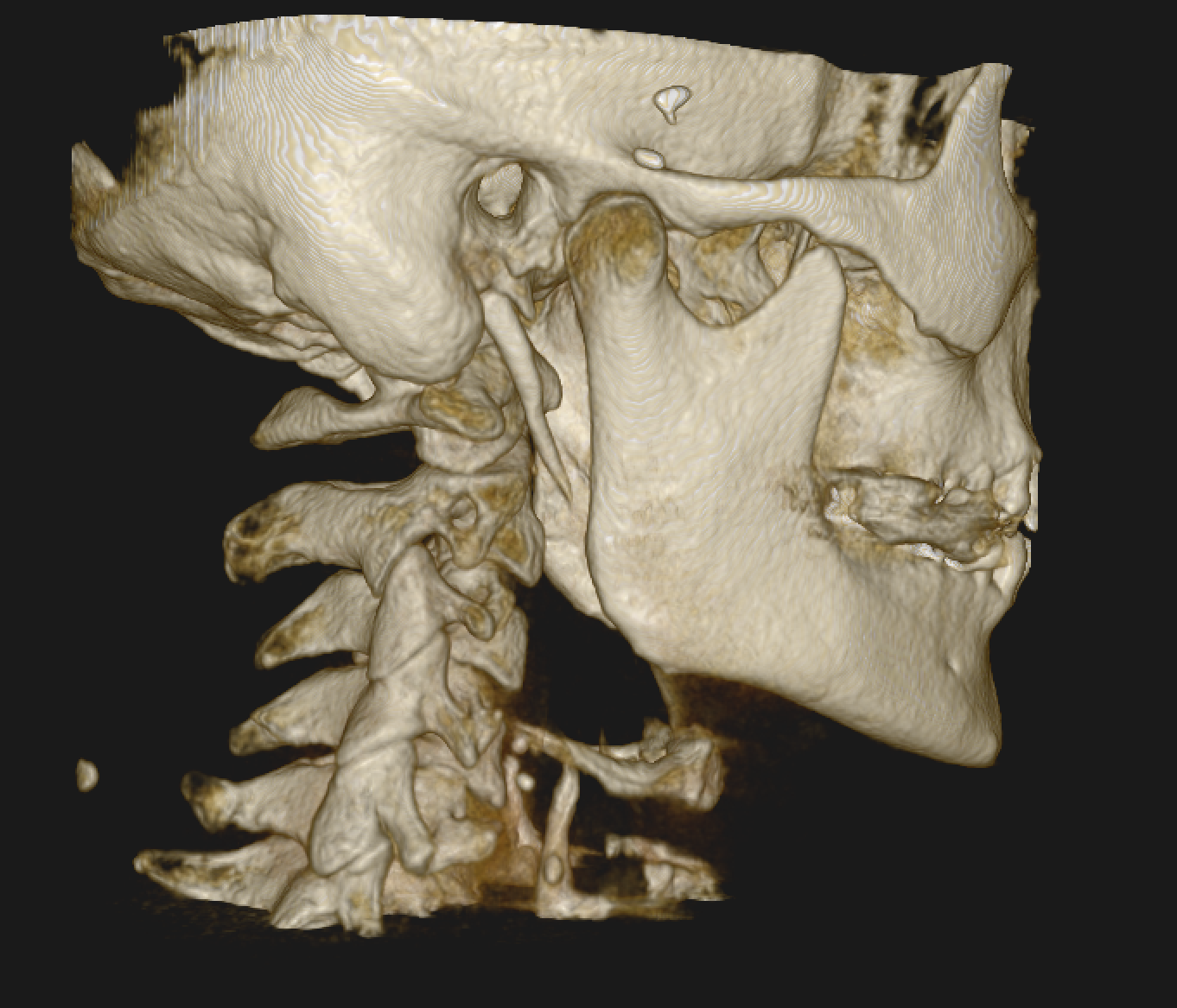
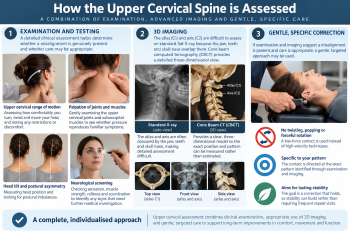
Where upper cervical care is appropriate, correction involves no twisting, no popping, no cracking, and no pulling of the neck. Cone beam computed tomography measures the three-dimensional position of the atlas and axis against your own anatomy so that a correction is calculated rather than estimated, and objective measures — leg length assessment, cervical range of motion, postural and balance measurement, and thermographic pattern tracking — determine whether a correction is indicated and whether it is holding. When it is holding, no adjustment is given.
Cone beam imaging of the cervical spine does not assess the superior semicircular canal, and it should not be presented as though it does. Where the history suggests a third window disorder, the appropriate referral is to a neurotologist for VEMP testing and dedicated high-resolution temporal bone CT.
Red flags
Sudden hearing loss, particularly on one side, is an emergency and should be assessed the same day, because treatment is time-sensitive. Vertigo accompanied by new weakness, numbness, double vision, slurred speech, facial droop, or severe headache requires emergency evaluation for stroke. Dizziness with fever, ear discharge, or severe ear pain suggests infection. Progressive hearing loss with facial weakness needs urgent specialist assessment. Dizziness following head trauma warrants medical evaluation before any manual care.
An evaluation in Sarasota
If you have chronic dizziness and loud sounds set it off, or you hear your own voice or eye movements inside your head, or coughing and straining trigger the sensation, that pattern needs specific testing rather than another course of general vestibular or cervical treatment. An upper cervical evaluation here includes screening for those features, and where they are present, the outcome is a referral rather than a treatment plan. To arrange a consultation call 941 259-1891.
Dr. Drew Hall, Upper Cervical Chiropractor
Serving Sarasota, Bradenton, and Lakewood Ranch, Florida
This article is for general educational purposes only and is not medical advice, a diagnosis, or a treatment recommendation for any individual. Superior canal dehiscence syndrome requires diagnosis by qualified medical providers, typically a neurotologist, using vestibular evoked myogenic potential testing and high-resolution temporal bone CT with reconstruction in the plane of the superior canal. Upper cervical chiropractic is an area of focus within chiropractic; it is not a board-recognized specialty, and no claim of specialization or superiority is made or implied. Upper cervical chiropractic care cannot repair a bony dehiscence, is not a treatment for this condition, and no such claim is made here; the role described is limited to recognition and referral. Cone beam computed tomography of the cervical spine is used as a precision measurement and analysis tool for cervical alignment, is not a stand-alone diagnostic device, and does not image the superior semicircular canal. Individual results vary and no specific outcome is guaranteed. Seek same-day medical attention for sudden hearing loss, and emergency attention for vertigo accompanied by weakness, numbness, double vision, slurred speech, facial droop, or severe headache. Always consult a qualified healthcare provider regarding diagnosis and treatment.


Leave a comment