

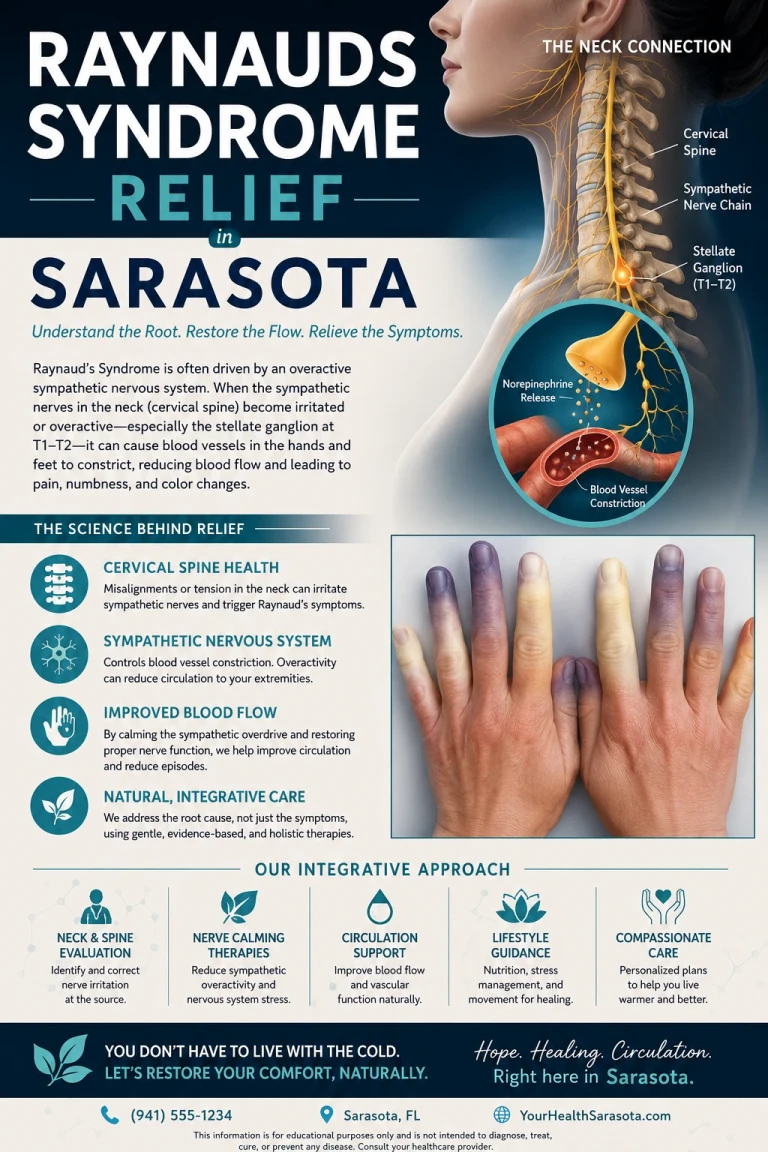
You walk into an air-conditioned grocery store and within minutes your fingers turn white. Then they go a little blue. They feel numb, tingly, and uncomfortably cold — sometimes painfully so. Then later, when your body finally warms back up, your hands flush red and feel hot, throbbing, almost burning. The cycle repeats every time the temperature drops, every time you grip a cold steering wheel, every time you wash dishes in cool water. Sometimes it happens for no obvious reason at all.
If this sounds familiar, you are likely dealing with Raynaud's phenomenon. It is not a circulation problem in the way most people think — it is a nervous system problem. Specifically, it is a disorder of the autonomic nervous system, the part of your nervous system that controls things you do not consciously think about: heart rate, blood pressure, digestion, sweating, and the diameter of every blood vessel in your body.
Schedule Your Appointment
Schedule appointmentAt Sarasota Upper Cervical Chiropractic, we focus on a part of this problem that almost no one else does: the structural relationship between the upper neck and the brainstem control centers that regulate the autonomic nervous system. If you have spent years managing Raynaud's with gloves, hand warmers, and avoidance of cold, there may be an underlying piece of the puzzle that has never been examined.
What Raynaud's Actually Is
Raynaud's phenomenon is an exaggerated response of your blood vessels to cold or emotional stress. When a person without Raynaud's gets cold, the small arteries in the fingers and toes constrict slightly to conserve heat. When the cold passes, the vessels open back up. The system is balanced.
In Raynaud's, that constriction is dramatically overshot. The small arteries in the fingers (and sometimes the toes, ears, nose, and lips) clamp down so hard that blood flow nearly stops. The fingers turn white, then often blue as oxygen drops, and the skin becomes cold and numb. When blood flow finally returns, the vessels rebound by dilating widely — which is why the hands then turn red, feel hot, throb, and sometimes tingle painfully as circulation rushes back in.
That whole cycle — white, blue, red, cold, hot — is the autonomic nervous system swinging from extreme vasoconstriction to extreme vasodilation, with nothing in between. It is not a problem with the blood vessels themselves. It is a problem with the nervous system signals telling those vessels what to do.
The Autonomic Nervous System: The Real Driver
Related article
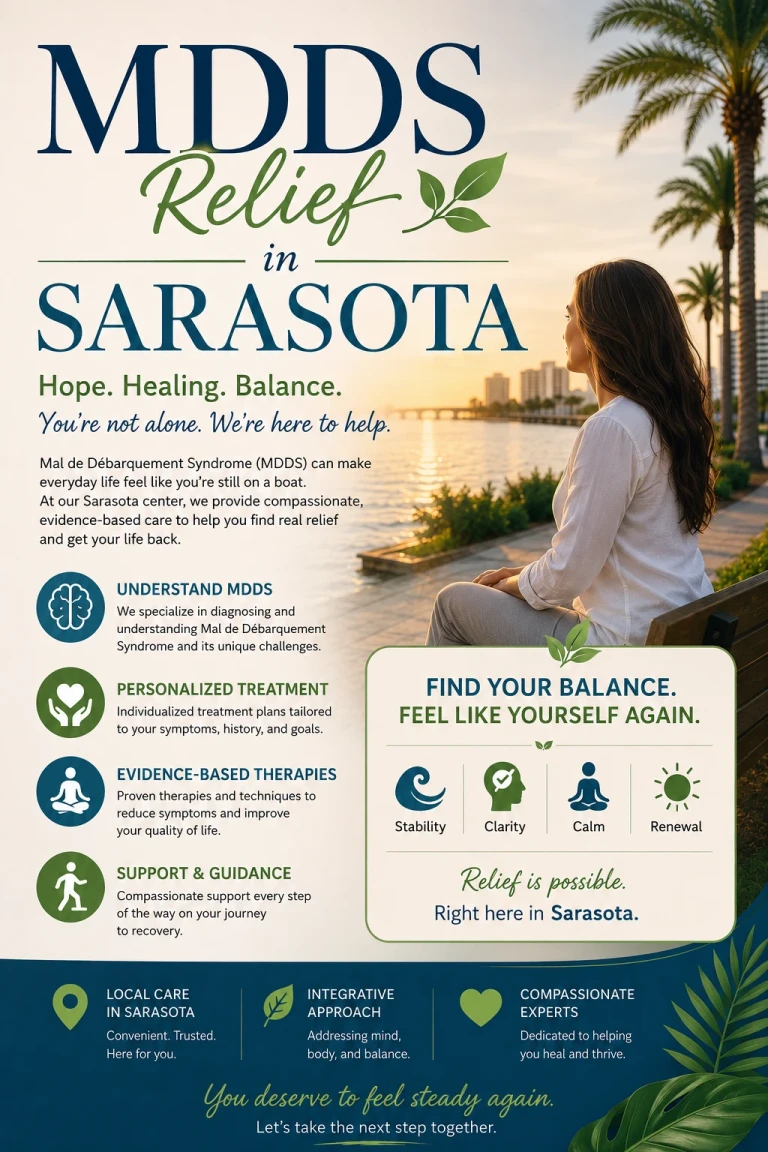
When You Feel Like You Are Still on a Boat: MdDS Relief and treatment in Sarasota
May 19, 2026To understand Raynaud's, you have to understand the autonomic nervous system.
Your autonomic nervous system has two main branches. The sympathetic branch is your "fight or flight" system — it speeds up your heart, redirects blood to your muscles, and constricts blood vessels in your skin and extremities to keep blood pressure stable and preserve core body heat. The parasympathetic branch is your "rest and digest" system — it slows the heart, supports digestion, and relaxes blood vessels.
These two branches are meant to balance each other moment to moment. When they are balanced, your body responds smoothly and proportionally to whatever is happening — cold weather, exercise, stress, sleep.
In Raynaud's, that balance is broken. The medical literature is clear about the underlying mechanism: the primary cause of Raynaud's phenomenon is hyperactivation of the sympathetic nervous system. The sympathetic nerves to the digital arteries fire too readily and too strongly in response to even mild cold or stress. The fingers receive an exaggerated signal to clamp down, and the rebound on the other side is just as exaggerated when warmth returns.
This is why simply warming the hands does not solve the underlying problem. Gloves and hand warmers manage the symptom, but they do nothing to address why the autonomic nervous system is overreacting in the first place.
Where the Autonomic Nervous System Lives
Here is the part that most Raynaud's patients have never heard: the master control centers for the autonomic nervous system sit in the brainstem.
The brainstem is the structure that connects your brain to your spinal cord. It sits at the very base of the skull, directly behind and just above the atlas, which is the first vertebra of your neck. Within the brainstem are specific clusters of neurons that regulate sympathetic and parasympathetic output to the entire body — heart rate, blood pressure, sweat glands, digestion, and, importantly for Raynaud's, the vascular tone of the small arteries in the hands and feet.
Related article
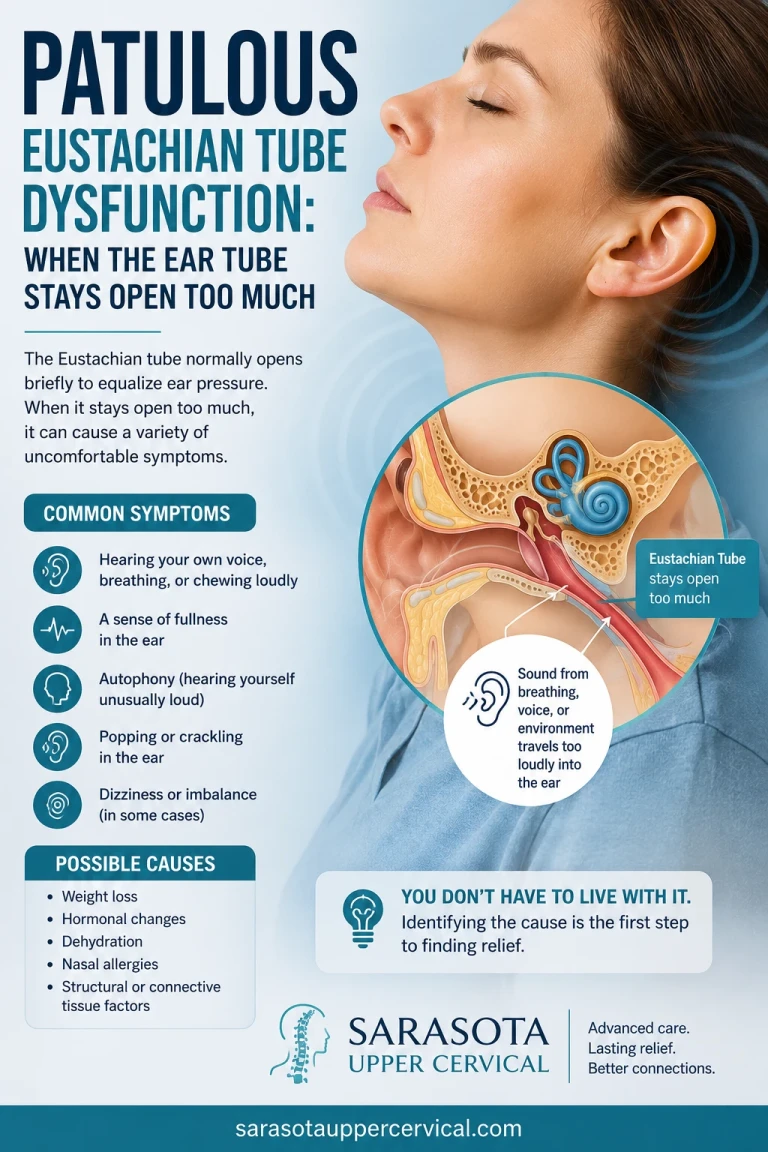
Patulous Eustachian Tube Dysfunction: When the Ear Tube Stays Open Too Much
May 26, 2026If the brainstem is functioning normally, the sympathetic signals to the digits are calibrated and proportional. If the brainstem is being irritated, mechanically stressed, or receiving distorted input, those sympathetic signals can become exaggerated, hair-trigger, and difficult to switch off. That is exactly the pattern we see in Raynaud's.
The Upper Neck Connection
The atlas (C1) and axis (C2) form the structural region immediately surrounding the brainstem. There are no discs between these two vertebrae, the brainstem passes directly through the opening they create, and the joints, muscles, and ligaments of this region contain one of the highest concentrations of nerve receptors anywhere in the body.
When the atlas shifts even slightly out of its proper position — often as the result of an old head or neck injury, a car accident, a sports concussion, a fall, or even cumulative postural stress — it creates what upper cervical chiropractors call an atlas displacement complex. This is not a typical neck ache. It is a structural shift that can subtly affect brainstem function in several ways.
It can mechanically irritate the brainstem and surrounding neural tissue. It can disrupt the proprioceptive information that the brainstem relies on to know where the head is in space. And critically for autonomic disorders like Raynaud's, it can create a chronic low-grade stress signal that biases the entire autonomic nervous system toward sympathetic dominance.
In a sympathetically dominant nervous system, the fight-or-flight branch is constantly turned up a little too high. Heart rate runs higher than it should. Sleep becomes shallow. Digestion slows. And the small arteries in the fingers and toes become primed to clamp down at the slightest provocation. The exaggerated vasoconstriction of Raynaud's is exactly what you would expect from a nervous system that is stuck in a sympathetic-dominant pattern.
## Why the Cold-Then-Hot Cycle Makes Sense
When the autonomic nervous system is balanced, blood vessel tone is regulated in small, proportional increments. When it is stuck in sympathetic overdrive — as it tends to be when the upper cervical spine is structurally compromised — that smoothness is lost. Vessels clamp down too hard in response to cold (the white-and-blue phase). When the cold finally passes, the system overshoots in the other direction (the red, hot, throbbing rebound phase). The body cannot find a steady middle ground because the regulatory system that produces that middle ground is not functioning normally.
Related article
Epilepsy, Headaches, and Neck Pain: Comprehensive Care for Patients with Multiple Conditions
Jun 04, 2026The cold-then-hot cycle is not just a temperature change. It is the visible signature of an autonomic nervous system that has lost its ability to fine-tune.
What CBCT-Guided Upper Cervical Care Offers
If the underlying problem in Raynaud's is autonomic dysregulation, and if autonomic regulation is governed by brainstem function, then addressing the structural environment around the brainstem is a logical place to look.
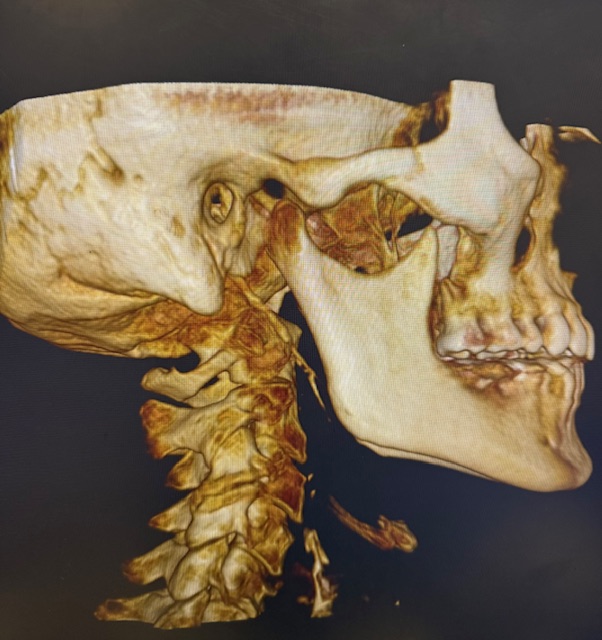
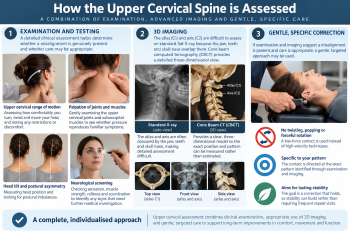
Upper cervical chiropractic care focuses on the precise structural relationship at C1 and C2. At Sarasota Upper Cervical Chiropractic, we use cone beam computed tomography (CBCT) — a high-resolution three-dimensional imaging technology — to measure the exact position of the atlas relative to the skull and the axis. This level of precision allows the correction to be calculated specifically for each patient's unique anatomy.
The correction itself is gentle. There is no popping, no twisting, and no pulling of the neck. It is a precise, low-force impulse calculated from imaging, delivered to restore the atlas to its proper position. The goal is to remove the mechanical stress on the brainstem and restore accurate input to the autonomic control centers — which, in turn, may allow the sympathetic nervous system to settle back toward balance.
Upper cervical chiropractic care does not claim to cure Raynaud's phenomenon, and the published research on this specific condition remains limited. What we can say is that the underlying mechanism of Raynaud's is autonomic, the autonomic nervous system is governed by the brainstem, and the structural integrity of the upper cervical spine has a direct mechanical relationship to brainstem function. For patients searching for a nervous-system-based approach rather than another medication, that mechanism is worth understanding.
If You Are in Sarasota and Tired of the Cold-Hot Cycle
If you have been managing Raynaud's with gloves, hand warmers, and avoidance — and if you have a history of any kind of head or neck trauma, even from years ago — it may be worth having your upper cervical spine evaluated. The same atlas misalignment that drives sympathetic overactivity in Raynaud's often shows up in patients dealing with migraines, POTS, anxiety, sleep difficulty, and chronic fatigue. These are all autonomic problems with the same underlying control system.
A thorough evaluation with CBCT imaging can show whether an underlying structural issue is present. From there, you and your doctor can decide whether a precise, gentle structural correction is appropriate for your case.
Raynaud's is not just about your hands. It is about the nervous system that controls them — and the upper neck is where that nervous system lives.

Leave a comment