

An itch that sunscreen doesn't fix
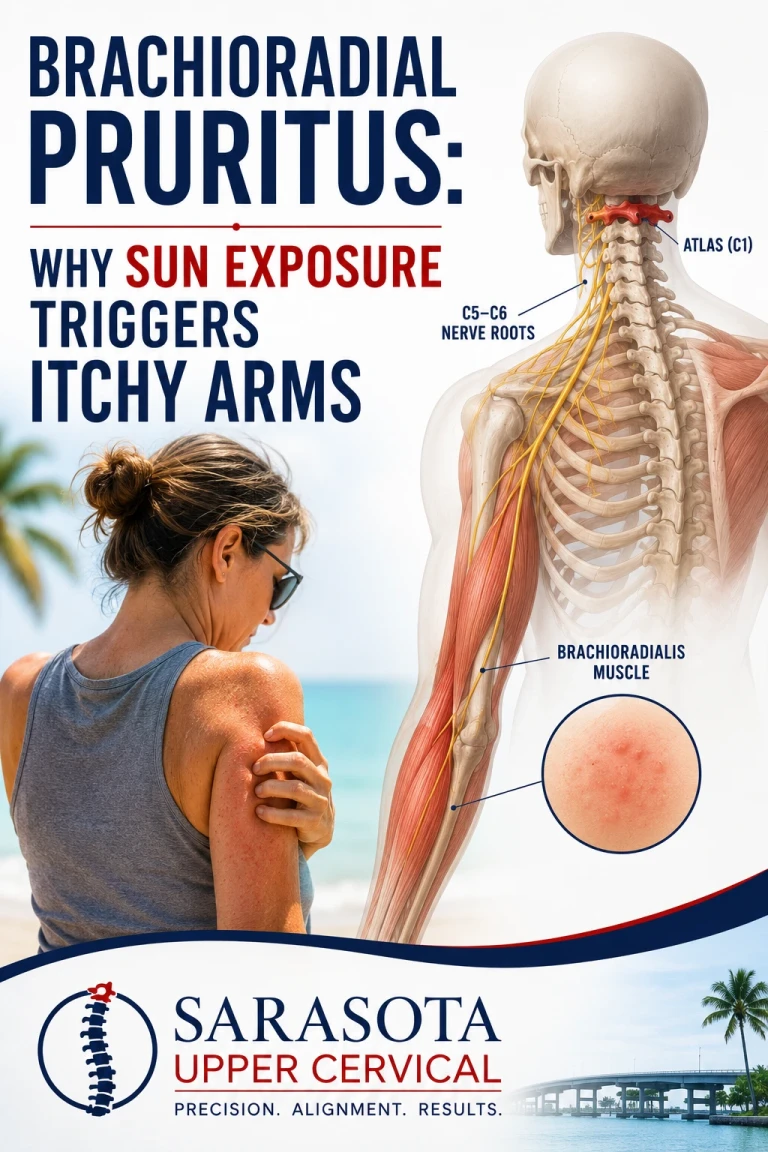
If you live in Sarasota and have developed a persistent itching, burning or stinging sensation on your forearms — worse after time outdoors, worse in summer, and strangely relieved by an ice pack — there is a specific name for what you may be experiencing.
Schedule Your Appointment
Schedule appointmentBrachioradial pruritus is a form of localized neuropathic itch affecting the outer forearms, sometimes extending to the upper arms and shoulders. It is frequently mistaken for sun allergy, dry skin, or an unexplained rash, and people often cycle through moisturizers, antihistamines and cortisone creams without relief.
The reason those approaches disappoint is that this is not primarily a skin problem. It is a nerve problem — and the nerves involved begin in the neck.
What it actually feels like
Itching, burning, stinging or tingling on the outer forearms
Usually both arms. Roughly 75% of cases are bilateral
No rash to begin with. There are no primary skin lesions — any marks that appear come from scratching
Worse with sun and heat, and typically worse in summer
Scratching does not satisfy it, which is one of the more distinctive features
It is most often identified in middle-aged women with fair skin. One report described women as making up roughly 73% of cases, with an average age at diagnosis in the mid-fifties.
The ice-pack sign
This is the feature that separates it from almost every other cause of itching.
Applying an ice pack to the affected skin produces immediate relief — and the sensation returns once the skin warms back to its normal temperature. This is known as the ice-pack sign, and it is considered close to definitive for this condition.
Ordinary itching from dry skin, eczema or an allergic reaction does not behave this way. If cold reliably switches your symptoms off and warmth switches them back on, that points strongly toward a neuropathic origin rather than a dermatological one.
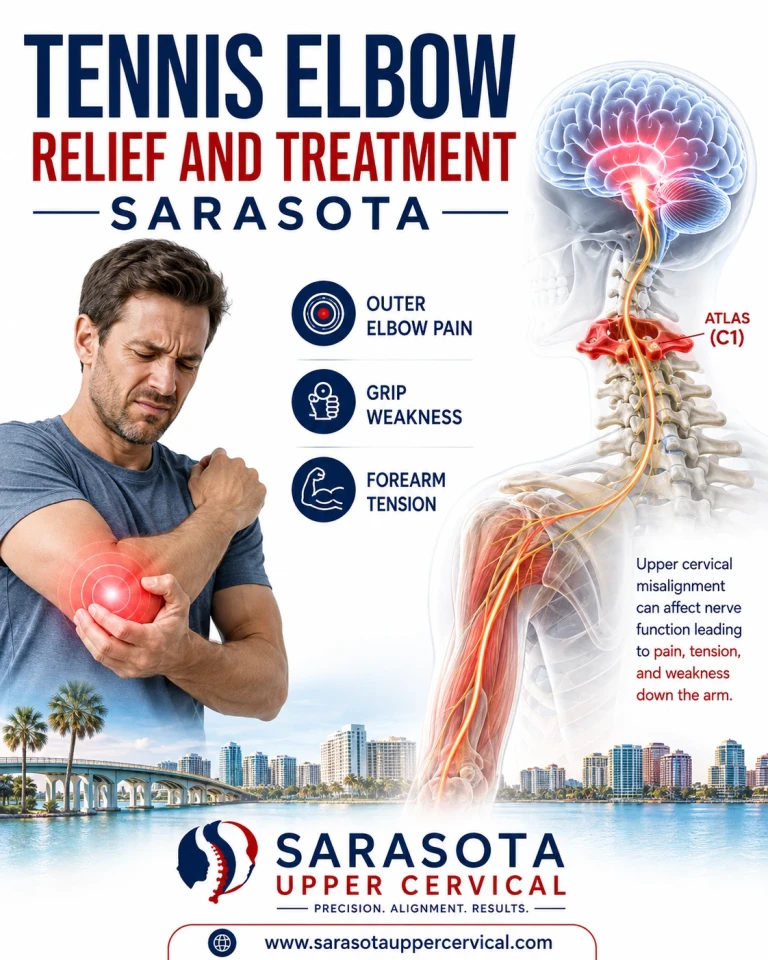
Worth noting: one study found the ice-pack test positive in fewer than half of confirmed cases, so a negative result does not rule the condition out.
Why sun matters — and why Florida matters
Current understanding describes this as a bifactorial condition. Two things contribute, and most people need both.
Factor one: ultraviolet exposure. Prolonged UV radiation appears to injure the small sensory nerve fibers within the skin of the forearms. The outer forearm is one of the most consistently sun-exposed areas on the body — think of where your arm sits on a car door, a boat rail, or a set of handlebars.
Factor two: irritation of the cervical nerves. Most people with this condition show some degree of change in the cervical spine on imaging — degenerative joint change, disc changes, or narrowing of the openings through which nerves exit, typically affecting the C5 through C8 levels.
The proposed interaction is what makes this interesting. Sun damage alone may not be enough. Cervical nerve irritation alone may not be enough. But nerve fibers already irritated at their origin in the neck appear less able to tolerate additional injury at the skin — which may explain why symptoms so often appear after a summer of sun exposure rather than gradually over years.
For anyone living on the Gulf Coast, that first factor is difficult to avoid. Which makes the second one worth understanding, because it is the part that can be examined.
The neck connection, stated accurately
The nerves supplying sensation to your outer forearm originate in the lower part of your neck. Irritation anywhere along their path — where they exit the spine, or out at the skin — can produce abnormal signals that the brain interprets as itching, burning or tingling.
Related article

Upper Cervical Chiropractor Sarasota, Bradenton, Venice and Tampa Bay Area
Nov 15, 2021This is why the itch has a dermatomal pattern. A dermatome is the strip of skin supplied by a single spinal nerve, and the distribution of brachioradial pruritus follows the C5 and C6 dermatomes closely. That pattern is a strong clue that the origin is neurological rather than dermatological.
An important honesty point: although a high proportion of people with this condition show cervical changes on imaging, most do not meet the formal criteria for radiculopathy. The relationship is well recognized but not fully explained, and research continues.
Where upper cervical assessment fits
A fair question follows: if the nerves involved are C5 through C8, why would the upper cervical spine — the atlas and axis, at C1 and C2 — be relevant?
The answer is about how the neck functions as a whole.
The upper cervical spine is where head position is controlled. The joints between the skull, atlas and axis carry the weight of the head and determine how it sits over the rest of the spine. When that relationship is altered, the segments below compensate — and sustained compensation changes how load distributes through the lower cervical levels, precisely where the C5 through C8 nerves exit.
Sarasota Upper Cervical focuses on this region. The purpose of assessment is not to claim that a C1 misalignment directly causes forearm itching. It is to determine whether the way your head sits over your neck is contributing to sustained loading further down.
That is a question worth answering rather than assuming — in either direction.
What an assessment involves
Examination and testing. The first purpose is to establish whether a misalignment is actually present, rather than presumed. This includes measurement of cervical range of motion, palpation of the joints and muscles at the base of the skull, assessment of head tilt and postural asymmetry, and neurological screening. Where symptoms suggest lower cervical involvement, that region is assessed as well.
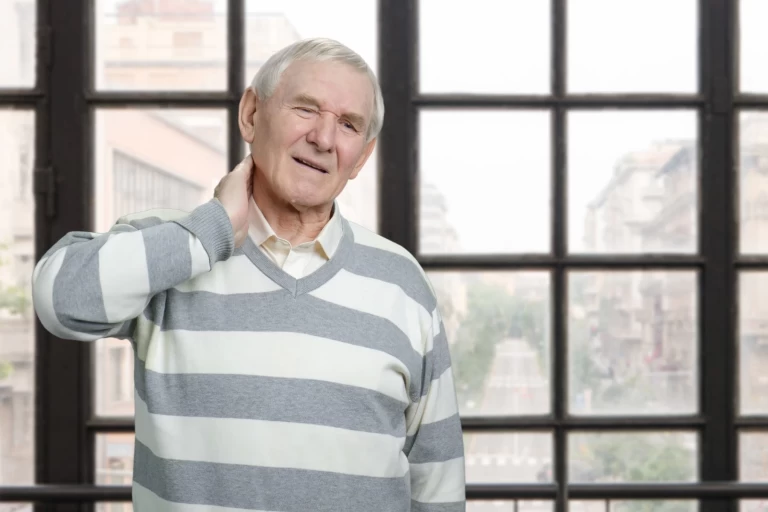
3D imaging. The atlas and axis are difficult to evaluate accurately on standard flat X-rays, because the jaw, teeth and skull base overlap them. Cone beam computed tomography is a low-dose scan that produces a three-dimensional model, allowing exact position and pattern to be measured rather than estimated.
Gentle, specific correction. Upper cervical correction of this type does not involve forceful rotation of the neck. It uses a low-force contact directed at the specific pattern the imaging identified. The goal is a correction that holds, so that stability builds over time rather than requiring frequent indefinite visits.
Working alongside your other care
Brachioradial pruritus is managed medically, and that management should continue. Reported approaches include sun protection, topical treatments, and prescription medications directed at neuropathic symptoms. Dermatology and neurology both have a legitimate role, and a dermatologist should evaluate any persistent skin symptom to exclude other causes.
Notably, cervical spine treatment appears among the approaches reported in the literature for this condition, alongside medical management. Upper cervical care is intended as one part of a broader picture rather than a replacement for anything.
Practical steps regardless
Take sun protection seriously. Long sleeves with UV protection, consistent sunscreen on the forearms, and avoiding tanning beds. This addresses one of the two contributing factors directly.
Track the pattern. When symptoms occur, how much sun preceded them, and whether cold provides relief.
Note any neck history — old injuries, whiplash, or long-standing stiffness — even if your neck does not currently hurt. Many people with this condition have no neck pain at all.
Do not rely on scratching. It does not relieve neuropathic itch and can damage the skin.
Get persistent symptoms evaluated. This condition is frequently under-recognized, and people often see several practitioners before it is identified.
When to seek prompt medical attention
Contact a physician promptly if you develop new weakness or numbness in the arms or hands, clumsiness of the hands, changes in walking or balance, or symptoms that involve one arm and progress rapidly. Any new or changing skin lesion should be evaluated by a dermatologist, particularly in a sun-exposed area.
References
Brachioradial Pruritus. StatPearls. Treasure Island (FL): StatPearls Publishing.
Brachioradial Pruritus: Background, Pathophysiology, Etiology. Medscape.
Pinto ANM, et al. Brachioradial pruritus: epidemiological and clinical characteristics. 2016.
A Rare Manifestation of Sunburn Rash: A Case Report of Brachioradial Pruritus. Cureus.
Management of Brachioradial Pruritus With Cervical Epidural Steroid Injection: A Case Report.
This article is provided for general educational purposes and is not a substitute for individual examination or medical advice. Individual results vary. Sarasota Upper Cervical focuses on upper cervical chiropractic care and does not diagnose or treat skin conditions.


Leave a comment