

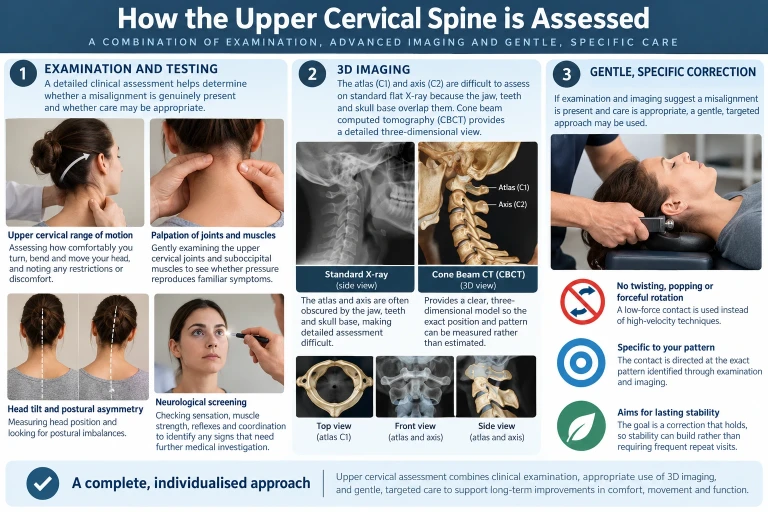
The upper cervical spine plays an important role in supporting the head, maintaining balance, and allowing comfortable movement. Located at the top of the neck, the first two cervical vertebrae—the atlas (C1) and axis (C2)—form a complex region that contributes significantly to head rotation and overall neck mobility.
Because of their unique anatomy and close relationship with surrounding muscles, nerves, and other structures, evaluating this region requires a careful and systematic approach. Upper cervical assessment may involve physical examination, neurological screening, and, when clinically appropriate, advanced imaging to better understand the underlying cause of a patient's symptoms.
Schedule Your Appointment
Schedule appointmentThe Importance of a Comprehensive Physical Examination
An upper cervical evaluation typically begins with a detailed review of the patient's medical history, symptoms, and physical function. Neck discomfort, headaches, restricted movement, and muscle tension may prompt further examination, although these symptoms do not necessarily indicate vertebral misalignment.
One important component is assessing the range of motion of the upper cervical spine. The practitioner observes how comfortably the patient turns, bends, and moves the head, noting restrictions, discomfort, or differences between sides.
Palpation is another valuable examination technique. By gently examining the joints and suboccipital muscles located beneath the skull, the practitioner can identify areas of tenderness, muscular tension, and symptoms reproduced by pressure.
Postural assessment may also be included. Observations of head tilt, shoulder position, and other asymmetries can provide information about movement habits and muscular compensation. However, posture alone cannot establish whether an upper cervical vertebra is abnormally positioned.
A neurological screening may evaluate sensation, muscle strength, reflexes, and coordination to identify signs that warrant further medical investigation.
Related article
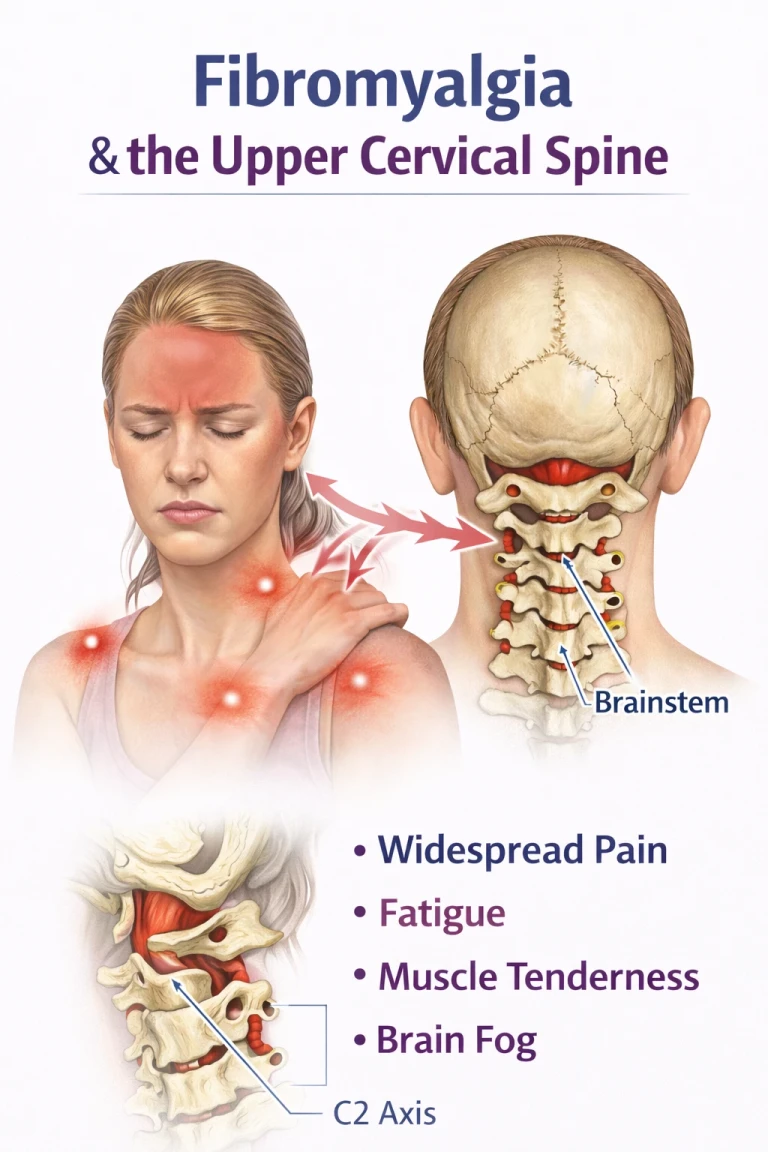
Fibromyalgia Treatment in Sarasota & Bradenton | Nervous System Focus | Upper Cervical Chiropractor
Mar 13, 2026Together, these assessments help practitioners distinguish potentially treatable musculoskeletal problems from conditions that require a different approach.
The Role of Three-Dimensional Imaging
The upper cervical spine presents particular imaging challenges because the atlas and axis are located immediately beneath the skull. On conventional X-rays, overlapping anatomical structures—including the jaw, teeth, and skull base—can make certain details difficult to visualize.
Three-dimensional imaging can provide additional anatomical information in selected clinical circumstances.
Cone beam computed tomography (CBCT) uses X-rays to create detailed three-dimensional representations of bony structures. Unlike a conventional two-dimensional radiograph, CBCT allows clinicians to examine anatomy from multiple perspectives and evaluate specific structural relationships.
Depending on the equipment and scanning protocol, CBCT may use a lower radiation dose than conventional medical CT. However, it still exposes patients to ionizing radiation, and dose comparisons vary.
It is also important to recognize that imaging cannot automatically establish that a minor difference in vertebral position is the cause of pain, headaches, or other symptoms. Small anatomical variations may be normal, and radiographic measurements must be interpreted alongside the clinical findings.

For this reason, advanced imaging is not routinely necessary for uncomplicated neck pain. Its use should be guided by a specific clinical indication and whether the results are likely to influence care.
A Gentle and Targeted Approach to Upper Cervical Care
When examination findings suggest that conservative treatment may be appropriate, clinicians may consider gentle, targeted techniques designed to address pain, restricted movement, and muscular tension.
Some upper cervical chiropractic approaches emphasize low-force contacts without rapid twisting, forceful rotation, or the audible popping commonly associated with certain spinal manipulation techniques.
These methods aim to apply controlled pressure to a selected area while minimizing unnecessary movement of surrounding structures.
Treatment planning should account for the patient's symptoms, examination findings, medical history, and individual risk factors. Not every patient is an appropriate candidate for cervical manual therapy, and gentle techniques are not automatically risk-free.
The goal of treatment should extend beyond producing an immediate change in symptoms. Improving comfortable movement, supporting muscular function, and encouraging long-term self-management are important parts of a comprehensive care plan.
Why Stability and Long-Term Function Matter
A common objective in upper cervical care is to achieve lasting improvement rather than rely on frequent, repeated interventions.
However, the idea that a vertebral correction must physically "hold" to demonstrate successful treatment has not been established as a reliable clinical measure. More meaningful indicators of progress include reduced pain, improved neck mobility, greater functional capacity, and the ability to carry out daily activities comfortably.
Depending on the patient's needs, care may also include therapeutic exercises, postural education, ergonomic modifications, and strategies for improving neck strength and movement control.
Regular reassessment helps determine whether treatment is producing measurable benefits and whether the care plan should be continued, modified, or discontinued.
A Patient-Centered Approach to Upper Cervical Health
Evaluating the upper cervical spine involves more than looking for structural asymmetry. It requires an understanding of anatomy, biomechanics, neurological function, and the many factors that can contribute to neck-related symptoms.
Physical examination provides the foundation for clinical decision-making, while advanced imaging can offer additional anatomical detail when medically justified. Gentle, individualized care may then be considered based on the patient's specific findings and treatment goals.
The central objective of upper cervical assessment is to identify clinically meaningful problems, select appropriate care, and support lasting improvements in comfort, movement, and everyday function.
By combining thorough examination, responsible use of diagnostic technology, and carefully selected treatment methods, practitioners can develop a more informed and individualized approach to upper cervical spine health.


Leave a comment