

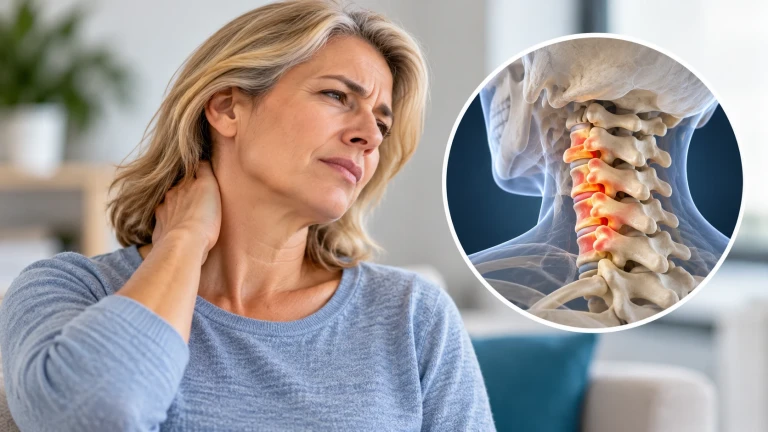
Does turning your head while driving cause sharp neck pain? Do you experience stiffness when looking up, or an aching sensation along one side of your neck that seems to return despite rest and stretching?
These symptoms can have several causes. One possible source is the small joints connecting the vertebrae of your cervical spine.
Schedule Your Appointment
Schedule appointmentThese are called cervical facet joints.
Cervical facet joint pain occurs when one or more of these spinal joints become a source of discomfort, often producing localized neck pain, restricted movement, or pain that extends toward the shoulders or head.
Although cervical facet pain can resemble muscle tension or disc-related problems, the underlying structures are different.
Understanding these differences can help you recognize when a more specific cervical evaluation may be useful.
What Are Cervical Facet Joints?
Your cervical spine contains seven vertebrae, labeled C1 through C7.
Between most adjacent vertebrae are small paired joints called facet joints, also known as zygapophyseal joints.
These joints help guide spinal movement and contribute to stability.
They are surrounded by joint capsules containing pain-sensitive tissues.
When these tissues become irritated or injured, they may generate neck pain.
Facet joints are different from the intervertebral discs, which help distribute loads between most adjacent vertebral bodies.
Both structures can contribute to cervical discomfort, but identifying the responsible source requires appropriate evaluation.
What Causes Cervical Facet Joint Pain?
Several factors can contribute to painful cervical joints.
1. Age-Related Joint Changes
Over time, the cartilage and surrounding structures of spinal joints may undergo degenerative changes.
These changes can include joint surface irregularities, altered motion, and bone spur formation.
However, degeneration visible on imaging does not necessarily mean a joint is causing pain.
Many people have age-related cervical changes without symptoms.
2. Previous Neck Injuries
Falls, sports injuries, and motor vehicle collisions can place sudden mechanical stress on cervical joints.
Whiplash-associated injuries may involve muscles, ligaments, discs, or facet joint capsules.
Persistent neck pain after trauma deserves appropriate examination, particularly when symptoms do not improve as expected.
3. Repetitive Neck Movements
Frequent head rotation or sustained cervical extension may aggravate certain painful joint conditions.
For example, someone who repeatedly turns toward a second computer monitor may notice discomfort after prolonged work.
However, repetitive movement alone does not establish a facet joint diagnosis.
4. Prolonged Static Positions
Holding your head in one position for extended periods can contribute to stiffness and muscular fatigue.
These symptoms may coexist with cervical joint discomfort.
Changing positions regularly and maintaining comfortable movement can help manage some mechanical neck symptoms.
What Does Cervical Facet Pain Feel Like?
Related article
Facet-related neck pain can vary depending on the affected region.
Common symptoms include:
- Aching or tenderness on one side of the neck
- Pain when looking upward
- Discomfort when rotating the head
- Stiffness after sitting or sleeping
- Pain extending toward the shoulder
- Reduced cervical range of motion
- Headaches associated with upper cervical joint discomfort
Pain may remain localized or be referred to another area.
Unlike cervical nerve root compression, isolated facet joint pain does not typically produce neurological deficits such as progressive muscle weakness or loss of sensation.
If those symptoms occur, other conditions must be considered.
Why Does Neck Pain Get Worse When Looking Up?
Looking upward requires cervical extension.
During extension, the cervical facet joints move closer together as part of normal spinal mechanics.
If a joint is already sensitive, this movement may reproduce discomfort.
Some individuals also notice pain when combining extension with rotation, such as looking over one shoulder and upward.
However, this response is not unique to facet joint pain.
Muscles, discs, and other cervical structures can also produce discomfort during similar movements.
A healthcare professional must consider the full symptom pattern rather than relying on one movement test.
Can Upper Cervical Facet Joints Cause Headaches?
Yes. Certain upper cervical joints can refer pain into the head.
The C2–C3 facet joint is particularly relevant because sensory pathways from the upper cervical region interact with pathways involved in head pain.
When pain originates from structures in the neck and is perceived in the head, clinicians may consider a diagnosis of cervicogenic headache.
Symptoms may include pain beginning near the upper neck or back of the head and sometimes extending forward.
However, migraines, tension-type headaches, occipital neuralgia, and other disorders may produce overlapping symptoms.
A headache accompanied by neck discomfort is not automatically cervicogenic.
Accurate diagnosis is important because different headache conditions require different management approaches.
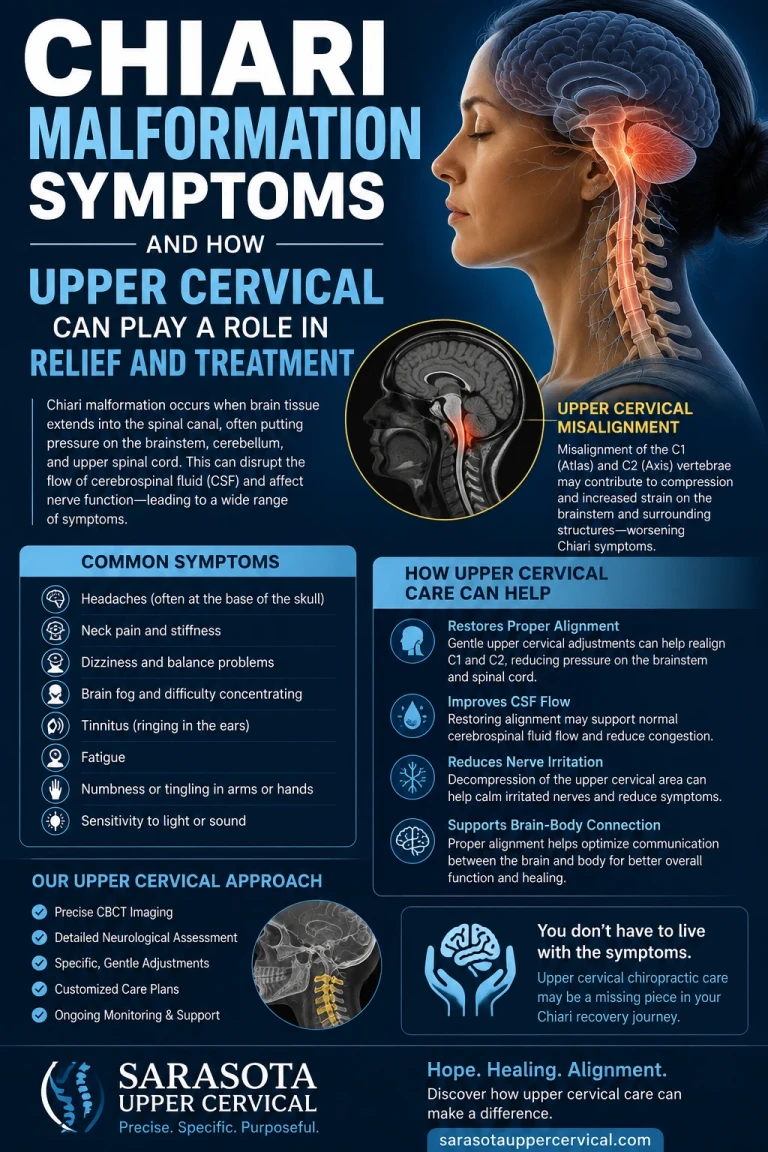
How Are the Atlas and Axis Connected to Cervical Joint Pain?
The upper cervical spine contains two specialized vertebrae:
Atlas (C1): The first cervical vertebra supports the skull and participates in head positioning.
Axis (C2): The second cervical vertebra helps facilitate rotation of the head.
Together with the skull, these structures form the upper cervical joint complex.
Unlike the lower cervical spine, the C1–C2 region has specialized joint anatomy that allows substantial rotational movement.
The upper cervical joints can be sources of pain, particularly following certain injuries or in the presence of degenerative conditions.
Because this region also contains important neurological and vascular structures, unusual or severe symptoms require careful assessment.
Related article
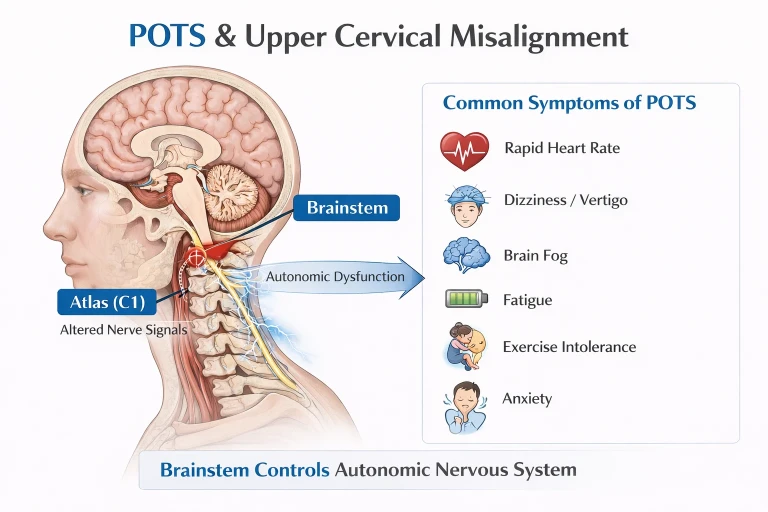
My heart races when I stand up |Postural Orthostatic Tachycardia Syndrome Specialist in Sarasota
Mar 20, 2026Upper cervical joint pain cannot be established simply by identifying postural asymmetry or an apparent change in atlas position.
How Is Cervical Facet Joint Pain Diagnosed?
Diagnosis starts with a detailed clinical history and physical examination.
A healthcare professional may review:
- The location and duration of symptoms
- Neck movements that reproduce discomfort
- Previous injuries
- Headache patterns
- Neurological findings
- Areas of tenderness
- Functional limitations
Imaging may be useful when trauma, neurological symptoms, or another structural condition is suspected.
However, X-rays, CT scans, and MRI findings cannot reliably establish whether a particular facet joint is responsible for pain.
When the precise source must be identified for an interventional procedure, a pain specialist may use diagnostic medial branch blocks.
These procedures temporarily anesthetize the small nerves carrying pain signals from the facet joints.
A carefully assessed response can help determine whether a targeted intervention may be appropriate.
Can Upper Cervical Chiropractic Help With Facet Joint Pain?
Upper cervical chiropractic focuses on the structure, movement, and mechanical function of the upper neck.
At Sarasota Upper Cervical Chiropractic, the Blair Upper Cervical approach emphasizes individualized assessment of the atlas and axis.
The practice uses a gentle, targeted technique designed to avoid forceful rotational neck manipulation.
For patients experiencing mechanical neck discomfort, an upper cervical examination may help identify relevant movement limitations and determine whether conservative care is appropriate.
However, it is important to distinguish the broader evidence for manual therapy from evidence for one specific chiropractic technique.
Exercise and selected manual therapies may benefit some patients with mechanical neck pain. There is insufficient high-quality research to conclude that Blair adjustments specifically correct cervical facet pathology or reliably resolve facet-mediated pain.
Care should therefore be based on the patient's diagnosis, clinical findings, treatment preferences, and risk factors.
Not every person with cervical joint pain requires an adjustment.
What Treatments Are Available for Cervical Facet Pain?
Treatment generally begins with conservative management when serious conditions have been excluded.
Therapeutic Exercise
Individualized exercises can help improve cervical movement, muscular endurance, and tolerance for daily activities.
Physical Therapy
A physical therapist may recommend strengthening, movement retraining, and carefully selected manual treatment.
Activity Modifications
Adjusting workstations, changing prolonged positions, and reducing temporarily aggravating activities may help manage symptoms.
Medication
Healthcare professionals may recommend appropriate pain-relieving or anti-inflammatory medication depending on a patient's medical history.
Interventional Pain Management
For selected patients with persistent facet-mediated pain, medical specialists may consider diagnostic medial branch blocks and radiofrequency ablation.
These procedures have specific indications, limitations, and risks.
An individualized treatment plan should address both symptom management and restoration of normal function.
What Can You Do at Home for Neck Joint Discomfort?
Several measures may help with uncomplicated mechanical neck pain.
1. Keep moving comfortably.
Gentle neck movements can help maintain mobility without forcing painful positions.
2. Take regular breaks from sitting.
Avoid prolonged static postures, particularly during computer work.
3. Improve screen positioning.
Place your monitor where you can view it comfortably without repeatedly extending or rotating your neck.
4. Consider gentle heat.
A warm compress may temporarily ease associated muscle tension.
5. Maintain appropriate physical activity.
Walking and clinician-recommended neck and upper-back exercises can help support overall musculoskeletal function.
Avoid forceful neck manipulation or aggressive stretching when you have unexplained pain.
When Should Cervical Facet Pain Be Evaluated?
Consider professional assessment when neck pain persists for several weeks, repeatedly limits head movement, or interferes with work, sleep, or driving.
Seek prompt medical attention for symptoms involving arm weakness, persistent numbness, or worsening coordination.
Emergency assessment is appropriate for severe neck pain following significant trauma, new neurological deficits, or sudden severe headache accompanied by concerning neurological symptoms.
These findings should not be presumed to result from ordinary facet joint irritation.
Frequently Asked Questions
Can cervical facet joint pain cause headaches?
Yes. Upper cervical joints can produce referred pain involving the back or sides of the head. However, headache symptoms require appropriate evaluation because multiple conditions can produce similar patterns.
Is cervical facet syndrome the same as arthritis?
No. Facet-mediated pain refers to pain originating from a joint, while arthritis describes pathological changes affecting joint structures. Arthritis may contribute to facet pain, but the two terms are not interchangeable.
Can facet joint pain cause shoulder discomfort?
Yes. Cervical facet joints can refer pain toward the shoulder or upper back. Symptoms involving numbness, tingling, or weakness suggest the need to evaluate possible nerve involvement.
Can cervical facet pain improve without surgery?
Many patients improve with appropriate conservative management. Surgery is not commonly required for isolated facet-mediated neck pain.
Can upper cervical chiropractic treat facet joint pain?
An upper cervical chiropractor can assess neck movement and associated musculoskeletal findings. Some patients may benefit from conservative care, but evidence specifically supporting Blair adjustments for confirmed facet-mediated pain is limited.
What is the difference between facet pain and a pinched nerve?
Facet pain often produces localized or referred aching without neurological deficits. A compressed nerve root may cause radiating arm pain, numbness, tingling, or weakness. A clinical examination helps distinguish these conditions.
Upper Cervical Chiropractic Care in Sarasota, FL
Persistent neck pain can interfere with everyday activities, including driving, working at a computer, exercising, and sleeping.
Sometimes the source is muscular. In other cases, cervical joints, discs, or nerve structures may contribute.
At Sarasota Upper Cervical Chiropractic, the focus is on individualized assessment of the upper cervical spine and careful determination of whether Blair Upper Cervical care may be appropriate.
If recurring neck stiffness or painful head movement is affecting your daily activities, contact the practice to discuss an evaluation.
Sarasota Upper Cervical Chiropractic
3920 Bee Ridge Rd, Building D, Suite 101
Sarasota, FL 34233
Phone: (941) 259-1891
Medical disclaimer: This article provides general educational information and is not intended to replace professional medical diagnosis, treatment, or individualized clinical advice.

Leave a comment