

Concussions are often described as “mild” traumatic brain injuries but for many people, the symptoms are anything but mild. Weeks, months, or even years after the initial injury, individuals can experience persistent issues such as brain fog, dizziness, headaches, sensitivity to light, fatigue, and difficulty concentrating. These are often grouped under post-concussion syndrome, and for many, traditional approaches don’t fully resolve the problem.
In Sarasota, more patients are exploring a different perspective, one that looks not just at the brain itself, but at the upper cervical spine and its influence on brain function, blood flow, and fluid dynamics.
Schedule Your Appointment
Schedule appointment👉 If you’re dealing with lingering concussion symptoms, schedule a free consultation today by clicking here or call 941-259-1891 to see if you’re a candidate for care.
Why Do Concussion Symptoms Linger?
After a concussion, the brain undergoes a cascade of changes:
Altered blood flow
Inflammation
Disruption of normal neurological signaling
Changes in pressure and fluid movement
While many people recover, others continue to struggle. One often overlooked factor is the structural relationship between the head and neck, specifically the craniocervical junction, where the skull meets the upper cervical spine.
The Craniocervical Junction: A Critical “Choke Point”
The atlas (C1) and axis (C2) vertebrae sit directly beneath the skull. This region is not just structural—it is a neurological and vascular hub that influences:
Arterial blood flow into the brain
Venous drainage out of the brain
Cerebrospinal fluid (CSF) circulation
Hydrodynamic brain pressure
Because so many critical systems pass through this small area, it acts like a choke point. Even a slight misalignment here can disrupt multiple systems at once. This concept and theory is beautifully explained by Dr. Mike Flannagan in a 25 page research article that can be read here for those looking for a deep dive!
How Upper Cervical Misalignment Can Affect Brain Function
After a concussion, it is common for the head and neck to experience trauma or rapid acceleration forces. This can lead to subtle shifts in the atlas alignment.
When this occurs, it may impact:
Related article
1. Cerebral Blood Flow
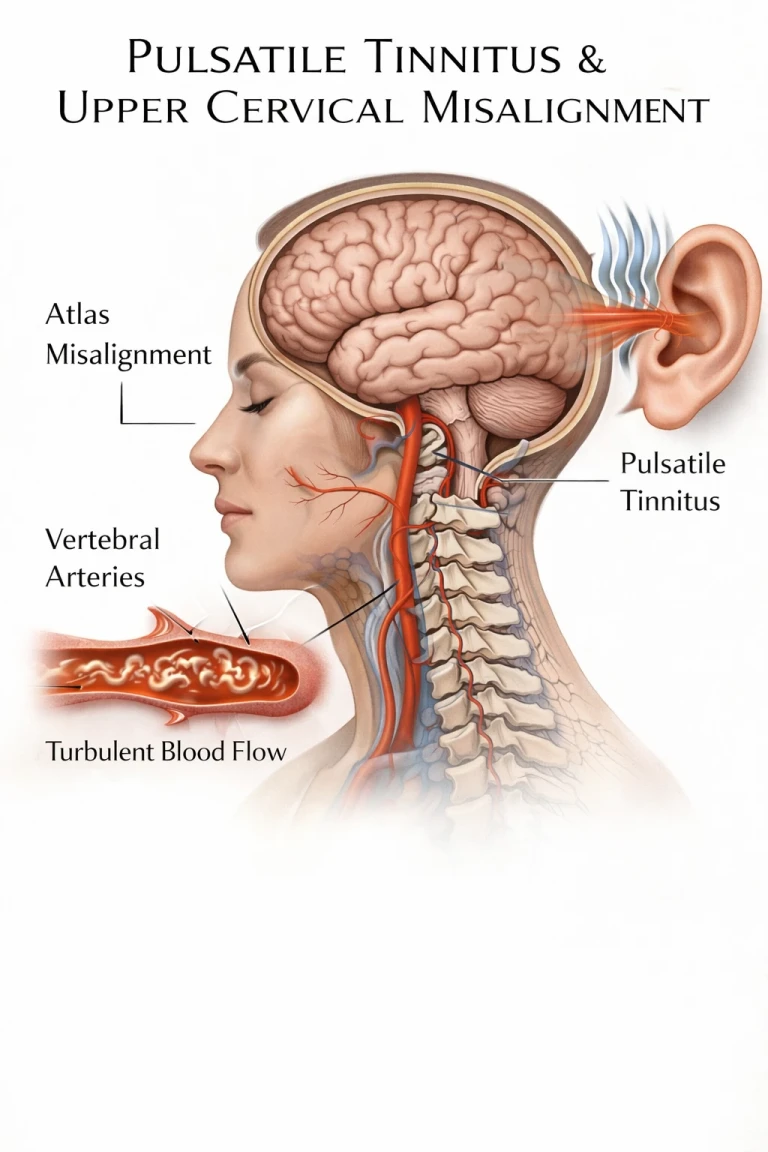
The vertebral arteries travel through the upper cervical spine and supply blood to critical areas of the brain, including the brainstem and cerebellum.
A misalignment can:
Alter vessel positioning
Change flow dynamics
Reduce optimal perfusion
This can contribute to symptoms like:
Brain fog
Fatigue
Dizziness
2. Venous Drainage
Just as important as blood flowing into the brain is blood flowing out.
Venous drainage pathways pass through the craniocervical junction. If compromised, this can lead to:
Congestion or pooling of blood
Increased intracranial pressure
Sluggish clearance of metabolic waste
This may contribute to:
Head pressure
Persistent headaches
Cognitive slowing
3. Cerebrospinal Fluid (CSF) Flow
CSF is responsible for:
Cushioning the brain
Removing waste
Maintaining a stable environment for neural function
CSF flows rhythmically between the brain and spinal cord. The upper cervical region plays a key role in this movement.
Misalignment can disrupt:
Normal CSF circulation
Drainage pathways
Pressure regulation
4. Hydrodynamic Brain Pressure
The brain operates within a delicate balance of pressure influenced by:
Blood flow
Venous return
CSF movement
If any of these are disrupted, it can create abnormal pressure dynamics, which may lead to:
Sensitivity to light and sound
Head fullness or pressure
Difficulty concentrating
The Root Cause Connection
When you combine all of these factors, a clear picture emerges:
👉 A misalignment at the craniocervical junction can simultaneously affect:
Blood inflow
Blood outflow
CSF circulation
Brain pressure dynamics
This makes it a potential root contributor to lingering post-concussion symptoms, especially when traditional treatments have not addressed structural issues.
Upper Cervical Chiropractic Care: A Targeted Approach
Upper cervical chiropractic focuses specifically on correcting misalignments in the atlas and axis.
The goal is to:
Restore proper alignment
Normalize neurological communication
Improve fluid dynamics in and around the brain
By addressing the structural component, the body is better able to:
Regulate blood flow
Restore venous drainage
Normalize CSF movement
Stabilize pressure
Precision Matters: 3D Imaging and Individualized Care
One of the defining features of upper cervical care is its precision.
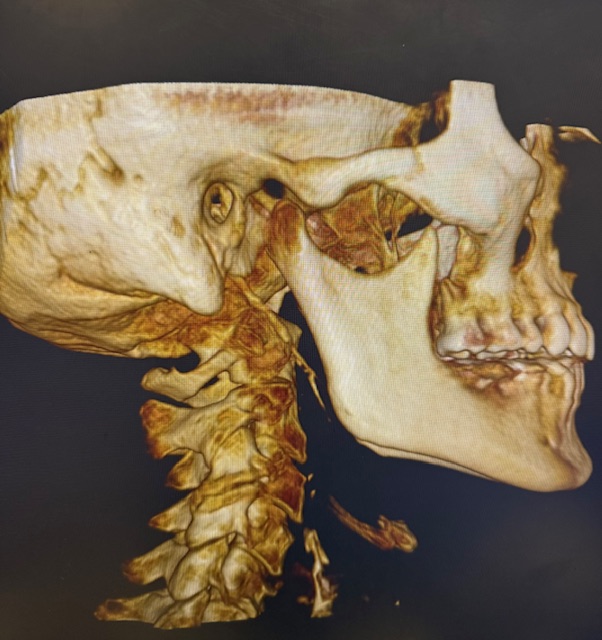
Before any correction is made, advanced 3D imaging (CBCT scans) is used to:
Analyze the exact position of the atlas
Measure the misalignment in three dimensions
Determine a precise correction strategy
This allows for a highly specific, customized approach tailored to each patient’s anatomy.
Related article
Epilepsy, Headaches, and Neck Pain: Comprehensive Care for Patients with Multiple Conditions
Jun 04, 2026
No Twisting, Popping, or Pulling
Many patients are surprised to learn that upper cervical corrections are:
Gentle
Precise
Non-forceful
There is:
No twisting
No popping
No aggressive manipulation
The focus is on making a specific correction that the body can hold, allowing healing to occur over time.
Why Holding the Correction Is Key
Healing doesn’t come from repeated adjustments—it comes from stability.
When the upper cervical spine is properly aligned and stays that way, the body can:
Rebalance muscle tone
Improve neurological signaling
Restore normal fluid dynamics
This is especially important in post-concussion cases, where the brain needs a stable environment to recover.
Who Is a Candidate?
You may benefit from upper cervical care if you are experiencing:
Persistent brain fog
Dizziness or vertigo
Headaches or pressure
Sensitivity to light or sound
Fatigue or difficulty concentrating
Especially if these symptoms began after:
A concussion
A fall
A sports injury
A car accident
Take the First Step Toward Recovery
If you’ve been told “everything looks normal” but you still don’t feel like yourself, it may be time to look at a different piece of the puzzle.
The upper cervical spine plays a critical role in how your brain functions, heals, and regulates itself.
👉 Schedule your free consultation today to find out if upper cervical care is right for you.
👉 Book here or call 941-259-1891 to get started.

Leave a comment