

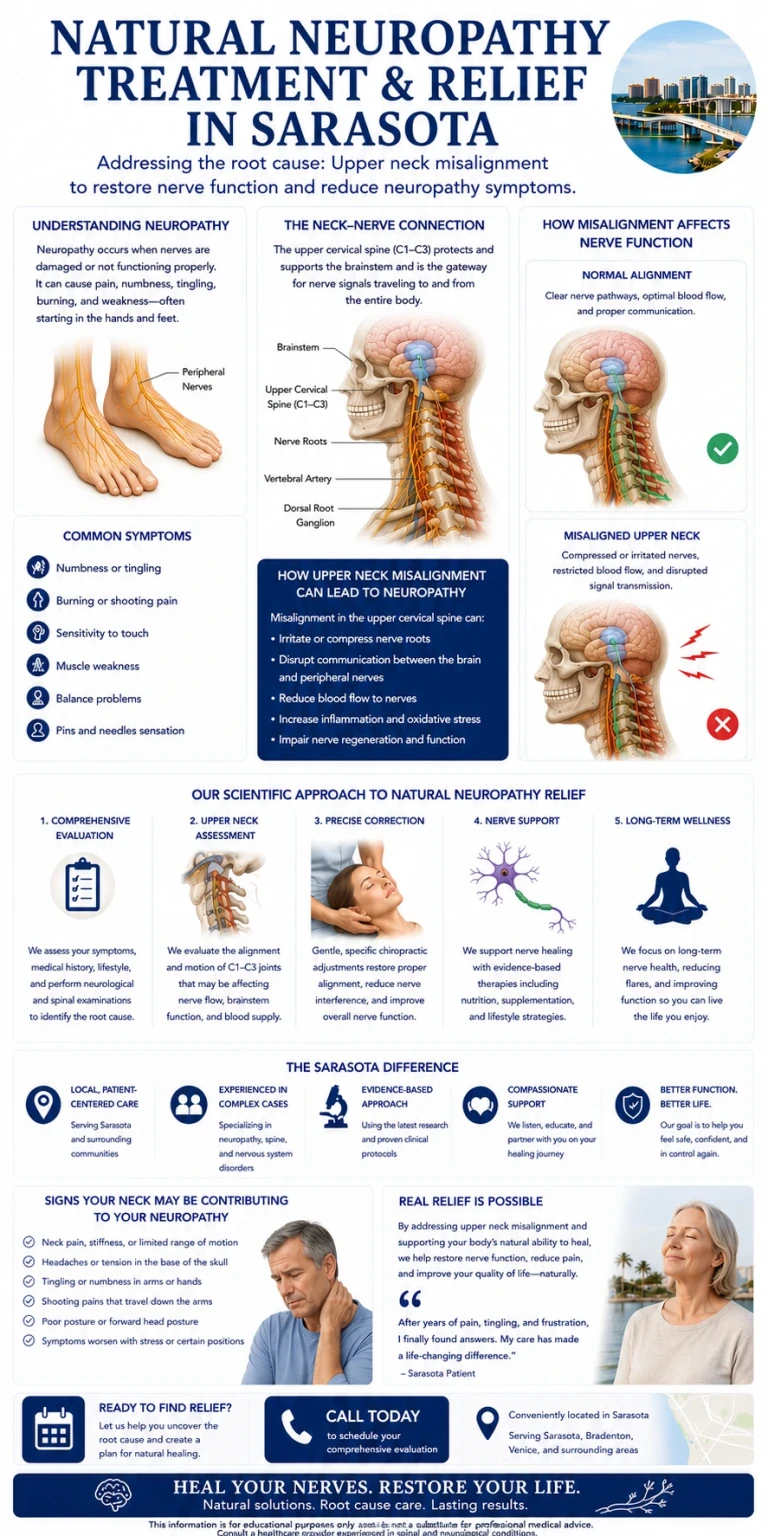
"Why the brainstem, the immune system, and the nerves you can’t feel are all part of the same conversation — and how the upper cervical spine fits into it"
Peripheral neuropathy is one of the most frustrating conditions in clinical medicine. The numbness, tingling, burning, and weakness are real and often progressive. The standard treatments — gabapentin, duloxetine, lidocaine patches, alpha-lipoic acid — manage symptoms in some patients and do little for others. And the underlying mechanism, depending on the type of neuropathy, can range from chronic blood sugar damage to autoimmune attack to chemotherapy toxicity to a clear and obvious nerve injury — to something that no workup ever quite explains.
Schedule Your Appointment
Schedule appointmentWhat rarely gets discussed in a neurology appointment is the relationship between the nervous system, the immune system, and the ability of an injured nerve to actually heal. These are not separate departments. They are deeply interconnected, and the conversation between them is regulated largely by the brainstem. When that regulation is compromised, the body’s ability to control inflammation and repair damaged nerves can be impaired — sometimes for years — without anyone looking at the structure most likely to be influencing it.
This article explains the neuroimmune mechanism that connects all of this, why the upper cervical spine plays a role at the center of it, and how a precision-based, gentle correction can offer a real path forward for patients seeking a natural approach to neuropathy.
Neuropathy Is Not One Disease — But Most Versions Share One Common Thread
Peripheral neuropathy refers to damage or dysfunction of the nerves outside the brain and spinal cord. There are many causes. Diabetes is the most common, where chronic hyperglycemia damages nerves through both metabolic and microvascular mechanisms. Other causes include chemotherapy, alcohol, vitamin B12 deficiency, thyroid disease, certain infections, mechanical compression, and a category of conditions where the immune system itself attacks the nerves — the autoimmune neuropathies, including Guillain-Barré syndrome, chronic inflammatory demyelinating polyneuropathy (CIDP), and autoimmune autonomic neuropathy.
What links most of these is a process that goes wrong at the level of inflammation and repair. A healthy peripheral nerve, when damaged, has a remarkable ability to heal itself. Schwann cells — the supporting cells that produce myelin, the insulating coating around peripheral nerves — transition from a myelinating state into a repair state. They clear away damaged debris, recruit macrophages from the immune system to help with cleanup, and lay down new myelin around regenerating axons. This is well-documented in the peer-reviewed literature.
The catch is that this entire repair process depends on a coordinated, well-regulated immune response. Too little inflammation, and debris doesn’t get cleared. Too much chronic inflammation, and the repair signals get drowned out. In autoimmune neuropathies, the immune system goes further — it actively attacks the myelin sheath itself, faster than Schwann cells can rebuild it. In all of these cases, the nervous system’s control over the immune system is part of the story.
The Brainstem Controls the Immune System: The Cholinergic Anti-Inflammatory Pathway
One of the most important findings in modern medicine is the discovery, largely credited to neurosurgeon and immunologist Kevin Tracey, that the brainstem directly regulates inflammation throughout the body. This regulatory loop is called the cholinergic anti-inflammatory pathway, and it works like this.
Related article

Upper Cervical Chiropractor Sarasota, Bradenton, Venice and Tampa Bay Area
Nov 15, 2021Sensory branches of the vagus nerve, the tenth cranial nerve, monitor inflammation throughout the body. When they detect pro-inflammatory cytokines or signs of infection, they send signals up to the brainstem — specifically to the nucleus tractus solitarius in the medulla. The brainstem then responds by activating motor fibers of the vagus nerve, originating in the dorsal motor nucleus, which release the neurotransmitter acetylcholine. Acetylcholine binds to receptors on immune cells, particularly in the spleen, and tells them to dial down their production of pro-inflammatory cytokines.
This is not chiropractic theory. It is mainstream neuroimmunology. The cholinergic anti-inflammatory pathway is the active target of multiple pharmaceutical and bioelectronic therapies under development for autoimmune diseases including rheumatoid arthritis, Crohn’s disease, lupus, and multiple sclerosis. Vagal nerve stimulation, an implantable device therapy, is being clinically tested specifically because of this mechanism.
What does this have to do with neuropathy? Two things. First, in autoimmune neuropathies, the same pathway that should be calming systemic inflammation is failing to keep the immune attack on peripheral nerves in check. Second, in any neuropathy where chronic inflammation is interfering with myelin repair, restoring vagal tone is a plausible piece of the solution. The brainstem is the regulator. When the regulator is compromised, the system underneath it can get out of balance.
Why the Upper Cervical Spine Matters in This System
The brainstem does not float in isolation. It sits at the level of the craniocervical junction — the region where the skull meets the atlas (C1) and axis (C2). The vagus nerve exits the skull through the jugular foramen at the base of the skull, immediately adjacent to the atlas. The cerebrospinal fluid that bathes the brainstem flows through a narrow channel at this same junction. The internal jugular veins draining blood from the skull pass directly in front of the atlas on their way down the neck.
When the upper cervical spine is misaligned, the mechanical environment around the brainstem changes. Cerebrospinal fluid flow can become turbulent. Jugular venous drainage can slow. The local environment around the vagus nerve as it exits the skull can be placed under mechanical stress. And the dense mechanoreceptor input from the upper cervical joints — input that feeds directly into the brainstem to help regulate autonomic function — becomes distorted. The brainstem is still trying to do its job. It is just trying to do it under chronic mechanical and neurological load.
When the brainstem is under load, its regulatory output suffers. Vagal tone drops. The sympathetic nervous system, the fight-or-flight branch, becomes relatively dominant. Sympathetic dominance is well-documented in the autoimmune disease literature as a state that promotes inflammation rather than calming it. The cholinergic anti-inflammatory pathway, which should be quietly suppressing pro-inflammatory cytokines in the background, becomes weakened. The immune system loses its top-down control, and the body’s ability to coordinate the careful balance of inflammation and repair that healing requires goes with it.
This is the neuromechanical version of the conversation: not that a misaligned vertebra causes neuropathy in a direct, mechanical sense, but that a compromised brainstem cannot supervise the neuroimmune system the way it is supposed to. For a peripheral nerve that needs the immune system to coordinate its repair, that supervision matters.
Autoimmunity, Myelin, and Why Some Neuropathies Don’t Heal
In autoimmune neuropathies, the picture becomes even clearer. CIDP, Guillain-Barré, and related conditions are conditions in which the immune system mistakenly targets the myelin sheath around peripheral nerves. The cycle of demyelination and attempted remyelination can continue for years, with Schwann cells trying repeatedly to rebuild what the immune system keeps stripping away. Over time, this back-and-forth can lead to progressive axonal damage and incomplete recovery, even with effective immunosuppressive treatment.
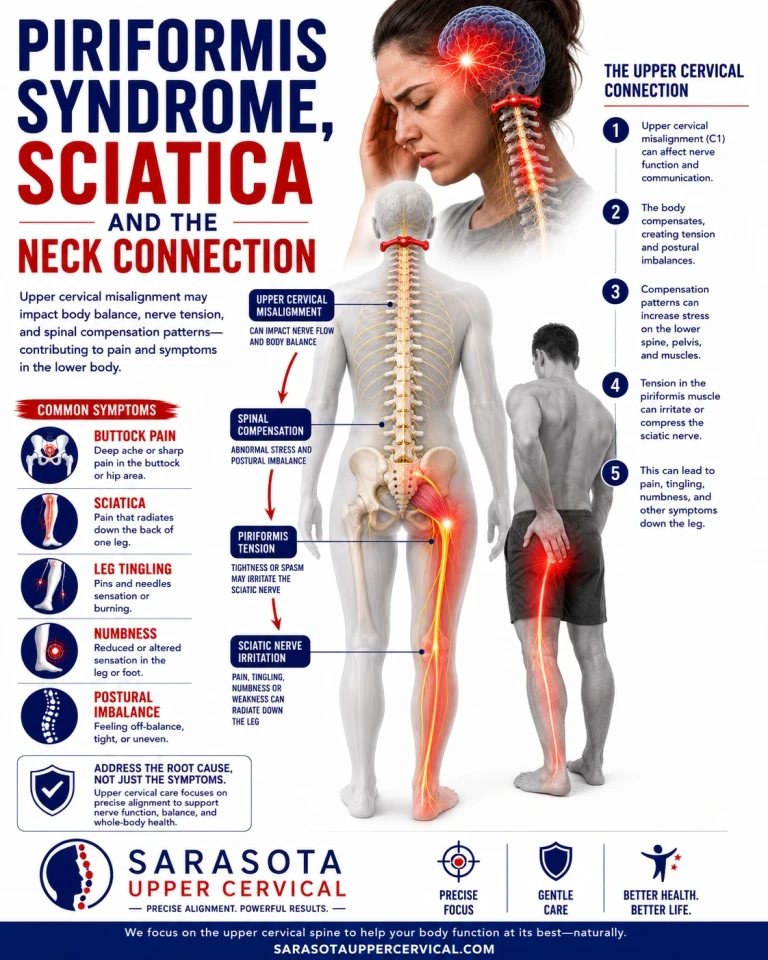
The cholinergic anti-inflammatory pathway is one of the body’s major brakes on this kind of immune dysregulation. When the brainstem is providing strong, balanced vagal output, the immune response is more likely to stay calibrated. When the brainstem is not, the immune response is more likely to overreact, sustain its overreaction, and continue attacking tissue it should be leaving alone. The autoimmune literature explicitly identifies reduced vagal tone as a feature of active autoimmune disease.
None of this means that upper cervical chiropractic care treats autoimmune neuropathy. It does not. What it means is that the structural and neurological foundation underneath the immune system — the part of the body that is supposed to be telling the immune system when to stand down — has not been part of most patients’ evaluation. For someone whose nerves are not healing the way they should, that foundation deserves attention.
CBCT Imaging: Precision Before Anything Else
Before any care begins in our Sarasota office, we use Cone Beam Computed Tomography (CBCT) imaging of the upper cervical spine. CBCT is a precision imaging tool that produces three-dimensional views of the skull base, atlas, axis, and surrounding structures — detail that flat two-dimensional X-rays cannot provide.
Every craniocervical junction is built differently. The angles, the orientations, and the relationships between the skull, C1, and C2 are unique to each person. Without precision measurements, an upper cervical correction is a guess. With them, the correction can be specific, gentle, and matched to your exact anatomy. For a neuropathy patient who has been treated systemically for years without anyone evaluating the structural environment of the brainstem, this is often the first time the picture is being looked at directly.
No Twisting. No Cracking. No Pulling of the Neck
Most people picture a chiropractic adjustment as a fast head-turn and a popping sound. That is not what we do. The correction we deliver is specific, low-force, and based directly on the measurements taken from your CBCT scan. There is no twisting, cranking, or pulling. No cavitation noise. You lie on your side with your head supported. The correction takes seconds.
For a neuropathy patient, this matters. A nervous system that has been chronically dysregulated for years does not need to be jarred. It needs to be supported. Our approach is built specifically to give the brainstem cleaner input from the upper cervical joints and to restore optimal mechanical conditions around the vagus nerve and surrounding structures — so the body’s own regulatory systems can do what they were designed to do.
Gentle does not mean ineffective. Gentle means we are working with the nervous system, not against it.
Who This Tends to Help — and Honest Expectations
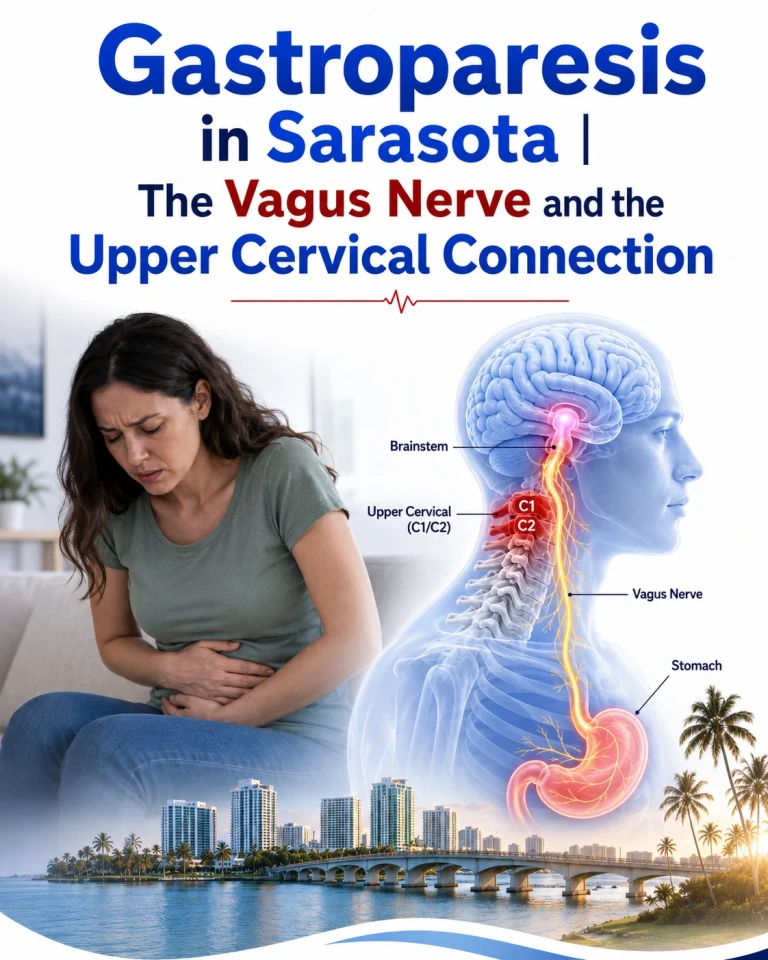
The patient we see most often in this category has a story that sounds familiar. Neuropathy that began or significantly worsened after a specific event — sometimes an injury, sometimes a viral illness, sometimes a long-standing diagnosis like diabetes or an autoimmune disease that simply will not stay quiet. Multiple medications tried. Some symptom relief but no real reversal. A growing sense that the underlying process is not being addressed.
Common features include a history of head or neck trauma, even decades old, neck stiffness or pain that the patient may not have connected to the neuropathy, co-occurring conditions involving the autonomic or immune system (chronic fatigue, digestive issues, blood pressure swings, brain fog, other autoimmune diagnoses), and a sense that the body’s overall regulation — sleep, stress response, energy, recovery — has been off for a long time. None of these features are diagnostic on their own, but together they raise the question of whether the brainstem-immune axis deserves a closer look.
We need to be honest about what upper cervical chiropractic care can and cannot do. It is not a cure for diabetes, an autoimmune disease, or chemotherapy-induced damage. It does not replace medications that are doing important work. What it can offer, in patients with a true upper cervical component, is a chance to remove a layer of dysregulation that has been sitting underneath everything else — and to give the body a better foundation to do the healing it is capable of.
A Realistic First Visit, and a Real Path Forward
A first visit in our Sarasota office includes a thorough consultation, a focused examination, and CBCT imaging of the upper cervical spine. We pay particular attention to your full history — including head and neck trauma, autoimmune diagnoses, and the timeline of your neuropathy symptoms. After we review the imaging with you, we will tell you honestly whether upper cervical care looks like a good fit. If it is, we build a plan. If it is not, we say so and point you toward what is more likely to help.
If you are looking for natural neuropathy treatment and relief in Sarasota and you want to understand whether the brainstem-immune connection might be part of your picture, the next step is a conversation. The nerves you can’t feel are downstream of a system you cannot see. The most useful question may be what is happening upstream.
Ready to take the next step? Schedule a consultation at our Sarasota office to start with a complete upper cervical evaluation and CBCT imaging.
References:
Tracey KJ. The inflammatory reflex. Nature. 2002;420(6917):853-859. • Bellocchi C, Carandina A, Montinaro B, et al. The Interplay between Autonomic Nervous System and Inflammation across Systemic Autoimmune Diseases. Int J Mol Sci. 2022. • Bonaz B, et al. The Vagus Nerve in Action: Surgical, Pharmacological and Electrical Modulation of the Cholinergic Anti-Inflammatory Pathway. Pharmaceuticals. 2023. • Jessen KR, Mirsky R. The repair Schwann cell and its function in regenerating nerves. J Physiol. 2016;594(13):3521-3531. • Boerboom A, Reusch C, et al. Loss of Schwann cell plasticity in chronic inflammatory demyelinating polyneuropathy (CIDP). J Neuroinflammation. 2016.
Disclaimer: This article is for educational purposes only and does not constitute medical advice. Peripheral neuropathy should be evaluated by a qualified medical provider to identify and address its underlying cause. Upper cervical chiropractic care does not diagnose, treat, or cure peripheral neuropathy, autoimmune disease, diabetes, or any other medical condition. Patients should not discontinue prescribed medications without consulting their physician. Individual results vary.

Leave a comment