

Chronic sinus pressure. Unexplained vertigo. Facial pain that feels like electric shocks. These conditions are often treated as completely separate problems—sent down different medical pathways with different medications and different specialists.
But what if they are all connected?
Schedule Your Appointment
Schedule appointmentWhat if the root cause lies not in the sinuses, not in the inner ear, and not even just in the face—but in a critical neurological structure that bridges them all?
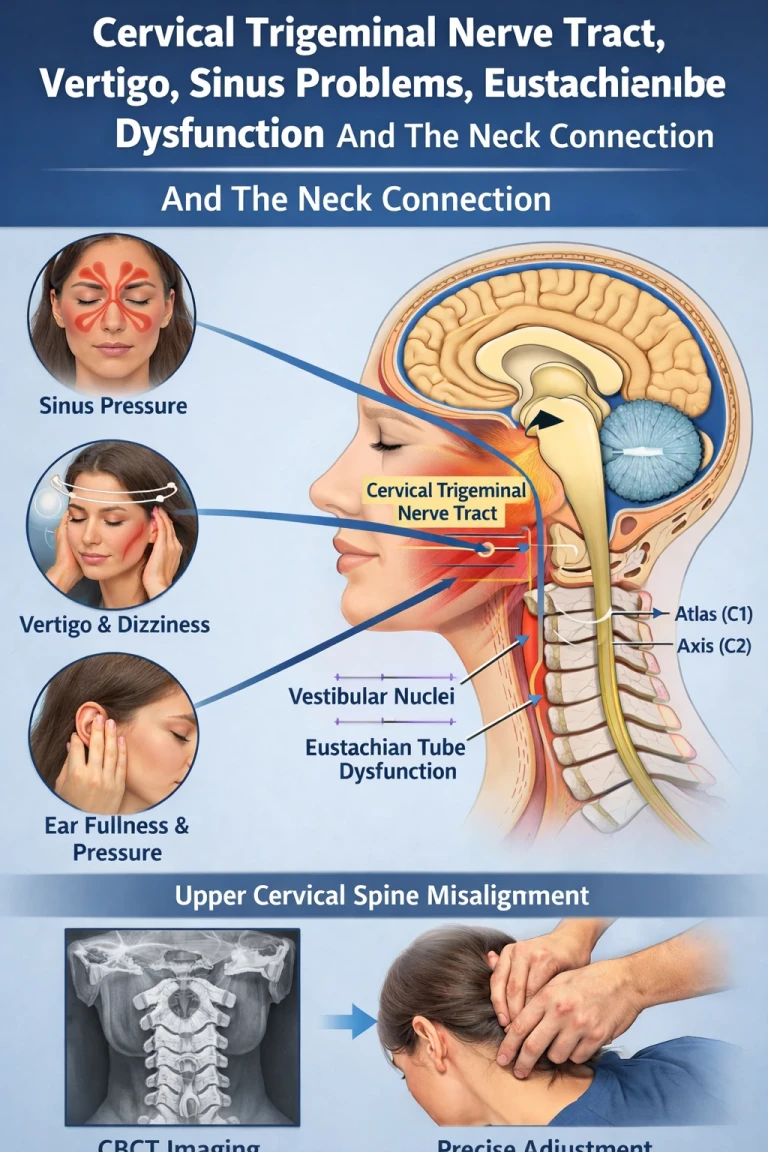
Welcome to the world of the cervical trigeminal nucleus, also known as the trigeminocervical complex—a powerful, often overlooked connection between the brainstem, the trigeminal nerve, and the upper cervical spine.
Understanding this structure can change how we view—and more importantly, how we treat—conditions like vertigo, sinus problems, and trigeminal neuralgia.
What Is the Cervical Trigeminal Nucleus?
The trigeminal nerve (cranial nerve V) is the largest cranial nerve in the body. It is responsible for:
Sensation of the face
Pain perception in the sinuses and jaw
Motor control for chewing
Most people think of the trigeminal nerve as existing only within the skull. But that’s not the full story.
The trigeminal nucleus actually extends downward from the brainstem into the upper cervical spinal cord, reaching as low as the C2–C3 levels. This extension is what we refer to as the cervical trigeminal nucleus or trigeminocervical complex.
This means that the upper neck and the face are neurologically connected.
Signals from the upper cervical spine—especially the atlas (C1) and axis (C2)—feed directly into the same processing center as signals from the face and sinuses.
That’s where things get interesting.
Why This Connection Matters
Because of this shared pathway, the brain can sometimes misinterpret where pain or dysfunction is coming from.
This is called convergence.
When abnormal signals come from the upper cervical spine due to misalignment or joint dysfunction, they can be interpreted by the brain as:
Sinus pressure
Facial pain
Headaches
Tooth pain
Eye pressure
At the same time, this interference can disrupt nearby brainstem centers involved in balance and coordination—leading to vertigo and dizziness.
Related article
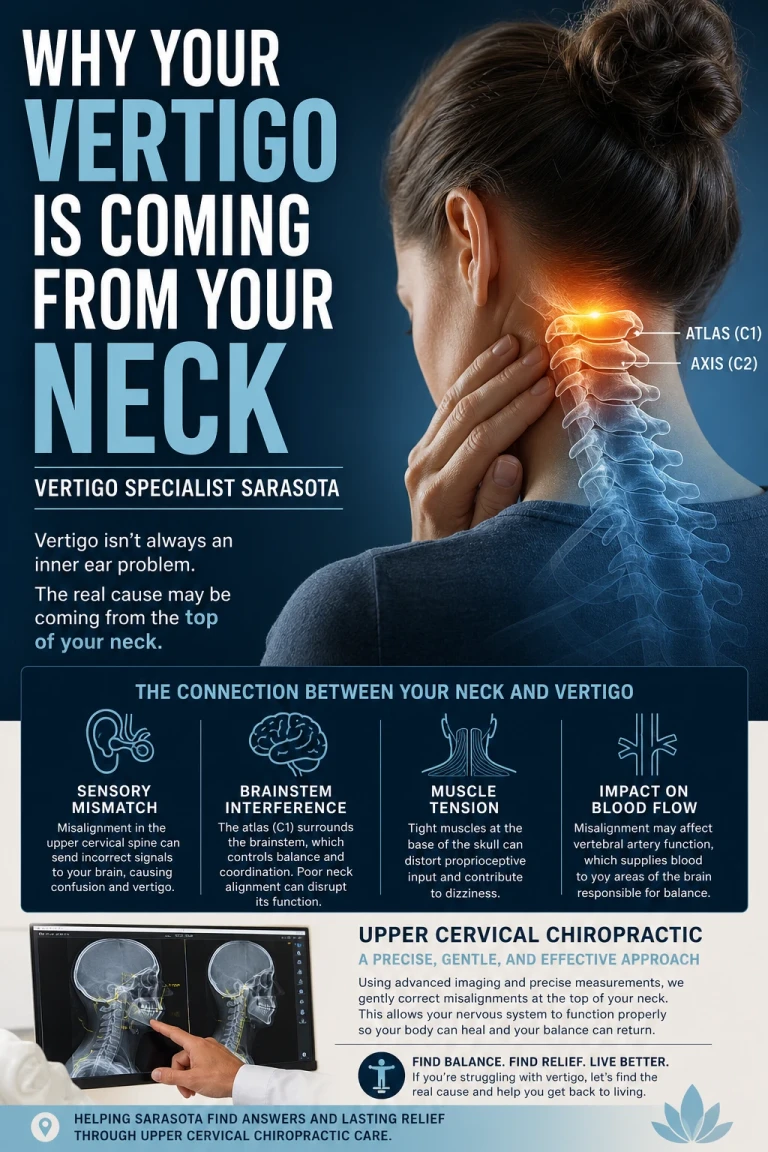
Head Pressure Relief and Treatment in Sarasota | Neck Misalignment Is Commonly the Missing Link
Mar 16, 2026In other words:
👉 A problem in your neck can feel like a problem in your face, sinuses, or inner ear.
The Cervical Trigeminal Nucleus and Sinus Problems
Many patients suffer from chronic sinus pressure without infection. They cycle through:
Antibiotics
Steroids
Allergy medications
Yet imaging often shows no significant blockage or inflammation.
Why?
Because the sensation of sinus pressure is not always due to actual sinus pathology—it can be neurologically driven.
When the cervical trigeminal nucleus is irritated by abnormal input from the upper cervical spine, it can create:
A feeling of fullness in the sinuses
Pressure behind the eyes
Facial tightness
Chronic congestion sensations
This is why some patients say, “It feels like a sinus infection—but nothing shows up.”
The issue isn’t in the sinuses themselves—it’s in how the brain is processing sensory input.
The Connection to Trigeminal Neuralgia
Trigeminal neuralgia is one of the most intense pain conditions known, often described as:
Sharp, stabbing, electric-like facial pain
Triggered by light touch, chewing, or speaking
Affecting one side of the face
Traditionally, this condition is attributed to vascular compression of the trigeminal nerve.
However, another contributing factor is often overlooked:
👉 Irritation of the trigeminal nucleus within the brainstem and upper cervical spine
Because the trigeminal nucleus extends into the cervical spine, dysfunction at C1 and C2 can:
Increase sensitivity of the nerve
Lower the threshold for pain signals
Amplify facial pain responses
This doesn’t replace other causes—but it can be a major missing piece, especially in patients who:
Don’t respond to medication
Want to avoid invasive procedures
Have a history of neck trauma
Vertigo and the Brainstem Connection
The cervical trigeminal nucleus doesn’t operate in isolation. It sits in close proximity to the vestibular nuclei—the centers responsible for balance.
These systems are constantly interacting.
The brain integrates input from:
The inner ear (balance organs)
The eyes (visual input)
The upper cervical joints (proprioception)
When the upper cervical spine is misaligned, it can send aberrant signals into the brainstem, disrupting this integration.
The result?
Vertigo
Dizziness
Disequilibrium
Motion sensitivity
This is often referred to as cervicogenic vertigo—a condition where the source of dizziness is not the inner ear, but the neck.
How Upper Cervical Misalignment Causes Interference
The atlas (C1) and axis (C2) are uniquely designed for mobility and support. But that mobility also makes them vulnerable to misalignment from:
Car accidents
Sports injuries
Falls
Repetitive stress
Poor posture over time
When misaligned, these vertebrae can:
Alter joint mechanics
Increase tension in surrounding muscles
Disturb normal proprioceptive input
Create mechanical stress on the brainstem
This leads to neurological interference at the level of the cervical trigeminal nucleus and surrounding structures.
The Role of CBCT Imaging: Seeing the Problem in 3D
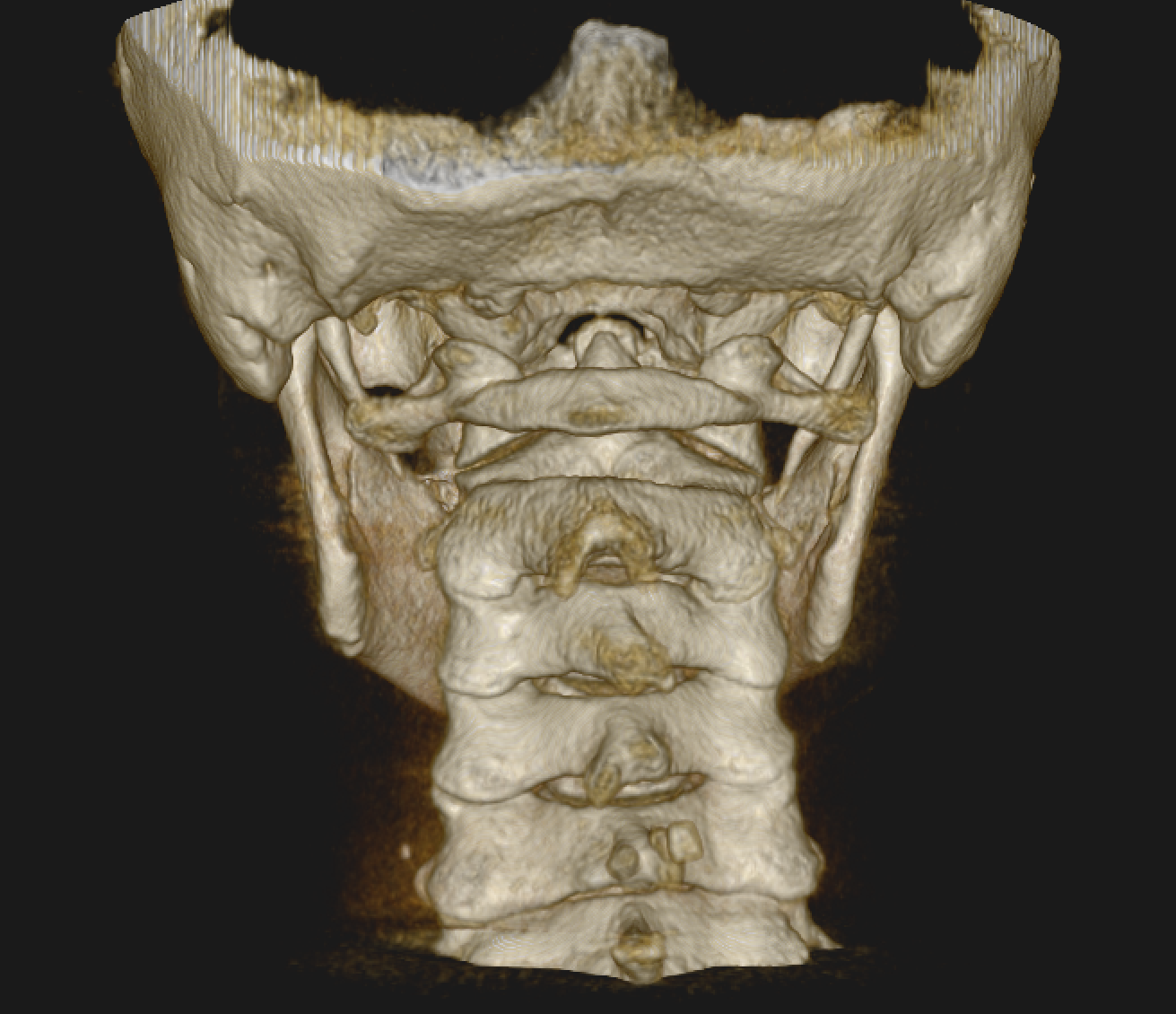
One of the biggest advancements in upper cervical care is the use of Cone Beam Computed Tomography (CBCT).
This technology provides a three-dimensional view of the upper cervical spine, allowing for unmatched precision.
With CBCT imaging, doctors can:
Visualize the exact alignment of C1 and C2
Measure rotational and angular deviations
Assess asymmetries unique to each patient
Identify structural distortions not visible on standard X-rays
This is critical because:
👉 The upper cervical spine is not symmetrical from person to person.
A one-size-fits-all approach simply doesn’t work.
Precision Corrections: No Twisting, No Guesswork
Once the misalignment is identified, upper cervical chiropractors use the CBCT data to deliver a customized correction.
This is not traditional chiropractic.
Related article
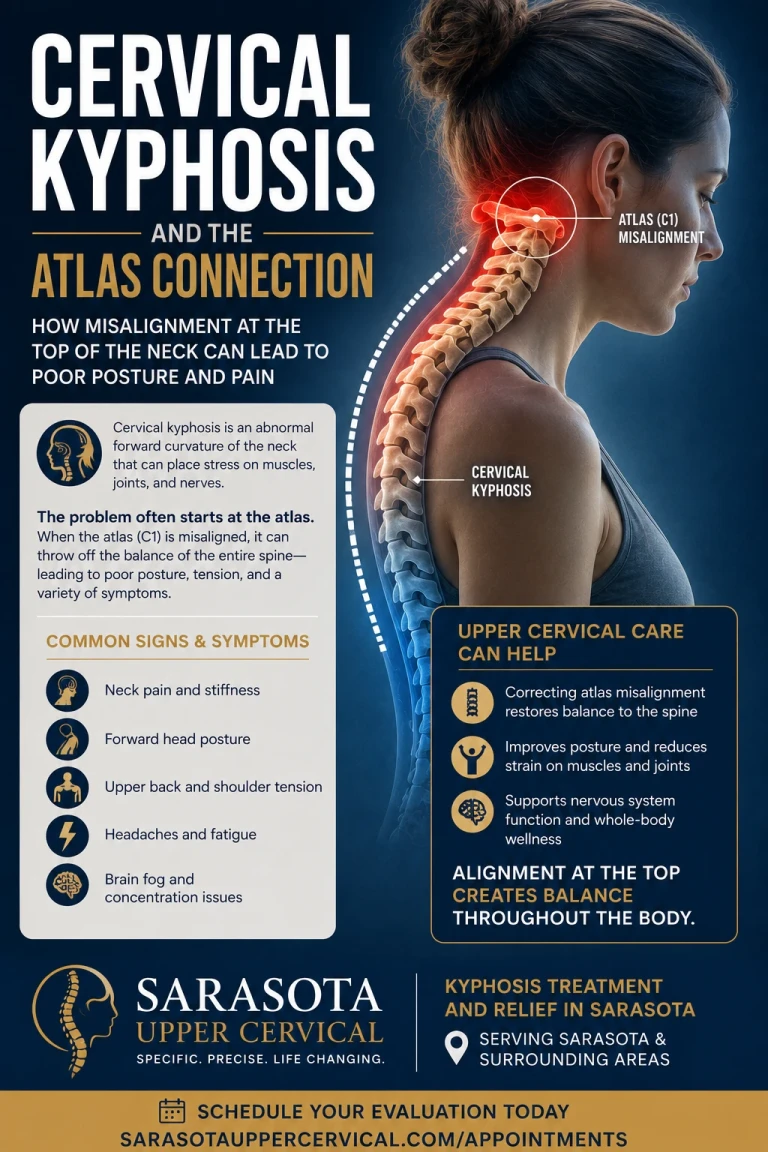
Cervical kyphosis and the atlas connection | Kyphosis treatment and relief sarasota
Jun 28, 2026There is:
No twisting
No popping
No aggressive manipulation
Instead, the correction is:
Gentle
Specific
Tailored to the patient’s exact anatomy
The goal is to restore proper alignment so the brainstem and cervical trigeminal nucleus can function without interference.
Restoring Function, Not Just Masking Symptoms
When pressure and irritation are removed from the brainstem and upper cervical region, the nervous system can begin to regulate itself properly again.
Patients often report improvements such as:
Reduced sinus pressure
Relief from facial pain
Decreased frequency or intensity of trigeminal neuralgia
Improved balance and less vertigo
Better overall neurological function
This is because the approach is not chasing symptoms—it is addressing the root cause.
The Importance of Holding the Correction
A key principle in upper cervical care is that less is more.
Once the spine is properly aligned, the body needs time to adapt and heal.
Frequent adjustments are not the goal. Instead, doctors use objective measurements—like thermography and postural analysis—to determine when care is actually needed.
When the correction holds:
The nervous system stabilizes
Inflammation decreases
Symptoms begin to resolve naturally
Is the Cervical Trigeminal Nucleus the Missing Link for You?
If you are dealing with:
Chronic sinus pressure without clear cause
Persistent vertigo or dizziness
Facial pain or trigeminal neuralgia
Symptoms that haven’t responded to traditional care
…it may be time to look beyond the surface.
The cervical trigeminal nucleus represents a powerful intersection of neurology and structure—and the upper cervical spine plays a critical role in its function.
Final Thoughts
The body is not a collection of isolated systems. It is an integrated network—where structure and neurology are deeply intertwined.
The cervical trigeminal nucleus sits at the crossroads of this integration, linking the face, sinuses, and balance systems directly to the upper neck.
When that system is disrupted, symptoms can appear in multiple areas at once.
But when it is restored—through precise, individualized upper cervical care guided by advanced imaging like CBCT—the body is given the opportunity to heal.
If you’ve been searching for answers, this connection may be the breakthrough you’ve been looking for.


Leave a comment