

Upper cervical chiropractic is one of the most misunderstood forms of healthcare today. To some, it gets lumped in with general chiropractic. To others, it sounds like a niche variation. But in reality, upper cervical care is a distinct, highly specific, and disciplined approach to restoring neurological and structural integrity at the top of the spine.
This article will break down exactly what upper cervical chiropractic is—and just as importantly—what it is not.
Schedule Your Appointment
Schedule appointmentWhat Is Upper Cervical Chiropractic?
At its core, upper cervical chiropractic focuses on one critical area of the body:
1. It Focuses on the Top of the Neck Only
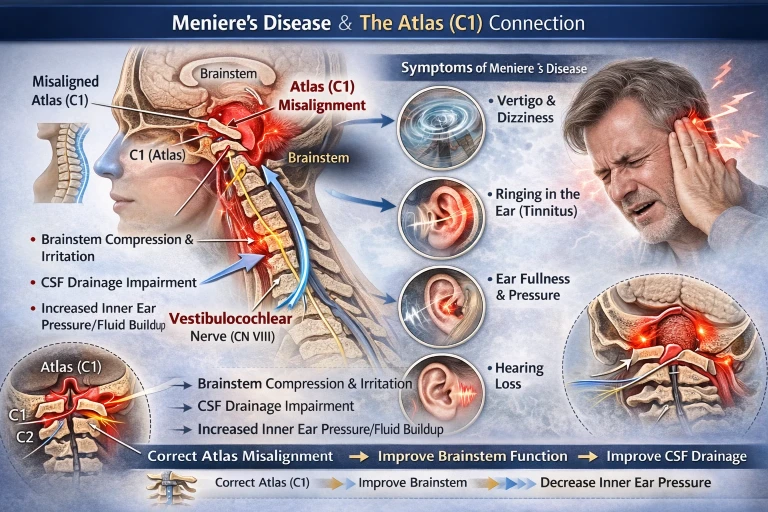
Upper cervical care is centered on the atlas (C1) and axis (C2)—the top two bones in the neck. These bones sit directly beneath the skull and surround the brainstem, one of the most vital control centers in the body.
Rather than adjusting the entire spine, upper cervical doctors concentrate exclusively on this region because:
It houses the brainstem
It plays a key role in posture and balance
Misalignment here can create widespread neurological effects
This is not a “full spine” approach. It is a precision-based system focused on the most neurologically significant area of the spine.
2. The Goal Is to Correct an Upper Cervical Subluxation—Only When It’s Present
Upper cervical care does not operate on routine or habit.
The primary goal is simple:
Correct an upper cervical subluxation when it is present—and do nothing when it is not.
This is a fundamental distinction.
Unlike many healthcare models that involve repeated or scheduled interventions, upper cervical care is based on need, not frequency. If the spine is holding its correction, no adjustment is performed.
3. Clinical Decisions Are Based on Objective Indicators
Upper cervical chiropractic relies heavily on objective testing to determine whether a subluxation is present.
These indicators may include:
Thermographic scans (to assess neurological patterns)
Postural analysis
Leg length inequality patterns
Specific neurological findings
These are not guesses or symptom-based decisions.
They are measurable, repeatable findings used to determine:
When to adjust
When not to adjust
This creates a level of precision and discipline that sets upper cervical care apart.
4. It Does Not Adjust Below the Neck

One of the most defining characteristics of upper cervical care is this:
It does not adjust the lower spine.
Why?
Because once the upper cervical spine is properly aligned, the body begins a restructuring process. Adjusting other areas can interfere with this process and disrupt the body’s ability to stabilize.
Instead of chasing symptoms or compensations in the lower spine, upper cervical care trusts that:
The body will unwind and rebalance from the top down
Structural corrections will cascade through the system naturally
5. It Is Not Symptom-Based Treatment
Upper cervical chiropractic does not treat symptoms.
This is one of the most important principles to understand.
It is a standalone healthcare procedure with a specific objective:
Restore proper alignment and function at the craniocervical junction.
If a patient requires care outside of this scope—such as physical therapy, medical management, or other interventions—they are referred appropriately.
Upper cervical care does not attempt to be everything. It stays within its lane.
6. It Relies on the Body’s Innate Healing Capacity
There are no therapies layered on top of the adjustment.
No symptom-based modalities.
No “add-ons.”
Upper cervical care operates on the principle that:
When interference to the nervous system is removed, the body has the ability to heal itself.
The correction of the upper cervical spine is the intervention.
The healing that follows is the body’s response.
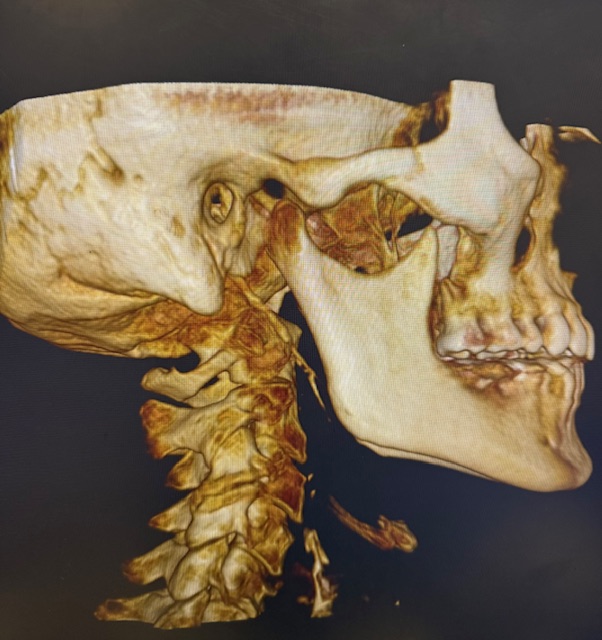
7. It Uses 3D Imaging for Precision
Upper cervical adjustments are not generic.
They are custom-tailored to each individual’s anatomy using advanced imaging, often including:
3D CBCT (Cone Beam CT scans)
This allows the doctor to determine:
The exact direction of misalignment
The unique joint orientation of each patient
The precise correction needed
No two adjustments are the same—because no two anatomies are the same.
8. The Adjustment Is Gentle and Does Not Involve Twisting or Popping
A common misconception about chiropractic is that it involves forceful twisting or cracking.
Upper cervical care is the opposite.
The adjustment is:
Gentle
Precise
Low-force
There is no yanking, twisting, or aggressive manipulation of the neck.
In many cases, patients barely feel the adjustment at all.
9. The Goal Is to Restore Function at a Critical Neurological “Choke Point”
The craniocervical junction—where the skull meets the top of the neck—is one of the most important areas in the body.
It acts as a gateway for several critical systems:
Neurological supply (brainstem and spinal cord communication)
Arterial blood flow to the brain
Cerebral venous drainage
Cerebrospinal fluid (CSF) circulation
When misalignment occurs in this region, it can create interference in these systems.
The goal of upper cervical care is to:
Remove that interference by restoring proper alignment.
10. It Does Not Treat Conditions—It Restores Function
Upper cervical chiropractic does not claim to treat diseases or conditions.
Instead, it focuses on restoring:
Proper biomechanics
Neurological integrity
When the nervous system functions better, the body often responds with:
Improved regulation
Better adaptation
Natural healing processes
This is why many people experience improvement in chronic conditions—but the care itself is not targeting those conditions directly.
What Upper Cervical Chiropractic Is Not

Understanding what upper cervical care is not is just as important.
It Is Not Full-Spine Chiropractic
No routine adjustments throughout the entire spine
No “cracking everything that’s tight”
It Is Not Symptom Chasing
Adjustments are not based on pain levels
Care is not directed at specific symptoms
It Is Not High-Frequency Care
Patients are not adjusted at every visit
Adjustments are only performed when objective findings indicate the need
It Is Not Therapy-Based
No lasers
No electrical stimulation
No rehab exercises within the adjustment protocol
No passive therapies layered onto care
It Is Not a “More Is Better” Model
Upper cervical care often follows a less is more philosophy:
Fewer adjustments
More focus on holding the correction
Greater emphasis on stability over repetition
Why This Approach Matters
In a healthcare system that often focuses on managing symptoms, upper cervical chiropractic offers a different perspective:
Identify a key structural problem
Correct it with precision
Allow the body to do the rest
By focusing on the brainstem and craniocervical junction, this approach addresses one of the most neurologically significant areas in the body.
And because it is:
Objective
Specific
Non-invasive
Conservative
…it provides a unique option for individuals seeking a different path toward better health.
Final Thoughts
Upper cervical chiropractic is not about doing more—it’s about doing what’s necessary, and only when necessary.
It is:
Precise rather than generalized
Objective rather than symptom-driven
Minimalist rather than excessive
At its best, it represents a disciplined approach to healthcare rooted in one simple principle:
Restore structure. Remove interference. Let the body heal.
For those who understand it, upper cervical care is not just another technique—it is a fundamentally different way of thinking about health.


Leave a comment