

If you’ve ever felt a tender, painful knot at the back of your head, right where your neck meets your skull, you know how frustrating it can be. It may feel like a tight ball of tension that:
Won’t go away
Hurts when you press on it
Triggers headaches or pressure
Limits how freely you can move your neck
Schedule Your Appointment
Schedule appointment
Most people assume it’s just “tight muscles” or stress.
But that knot is often a clue—a signal pointing to something deeper going on in your body.
To understand it fully, we need to look at the anatomy, the nervous system, and how the brainstem and upper cervical spine play a central role in this condition.
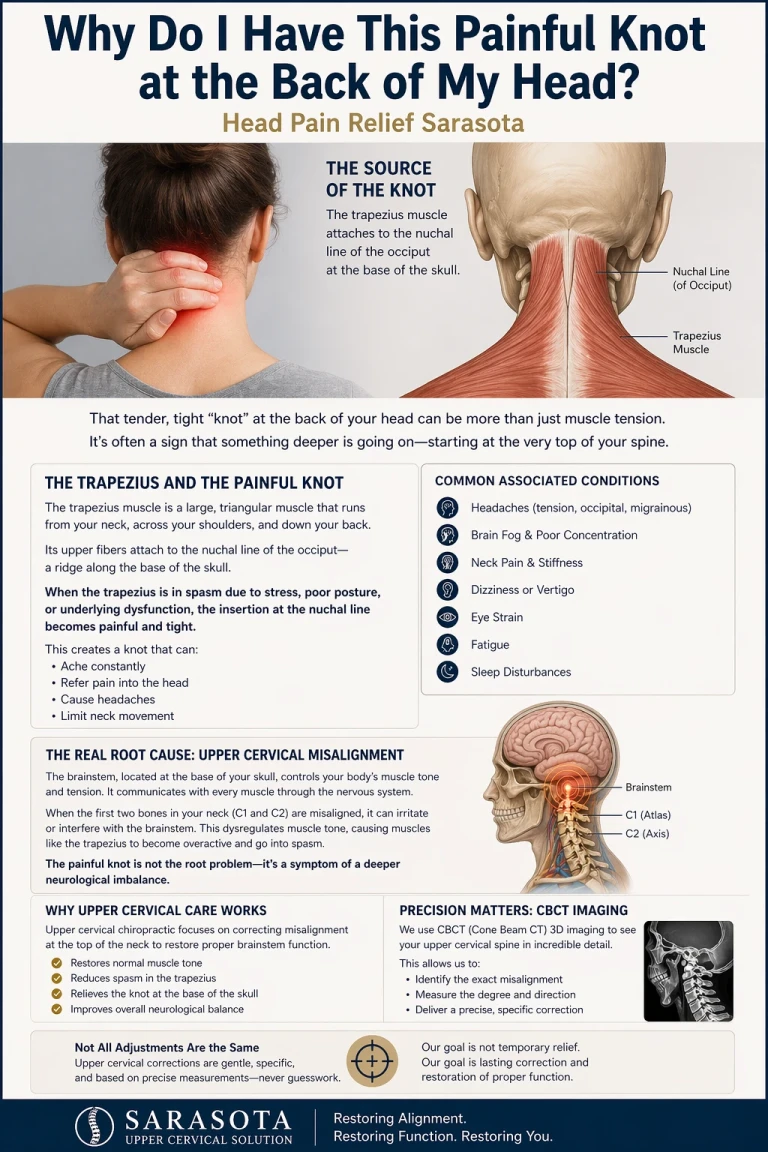
The Trapezius Muscle and the “Knot” at the Base of the Skull
The trapezius muscle is a large, triangular muscle that runs:
From the base of your skull
Down your neck
Across your shoulders
Into your upper back
The upper fibers of the trapezius attach to a ridge on the back of your skull called the nuchal line of the occiput.
This exact attachment point is where many people feel that painful “knot.”
What Happens When the Trapezius Goes Into Spasm?
When the trapezius muscle becomes tight or goes into spasm:
The muscle fibers contract and shorten
Tension builds at the point where the muscle attaches
The insertion at the nuchal line becomes inflamed and tender
This creates:
A palpable “knot”
Localized pain at the base of the skull
Referred pain into the head
That’s why pressing on that spot often reproduces your symptoms.
But here’s the important part:
The muscle spasm is usually not the root problem—it’s the result of something else.
Why Does the Trapezius Stay Tight?
Many factors can contribute to trapezius tension:
Poor posture
Stress
Long hours at a desk
Sleeping positions
But those factors alone don’t explain why:
The knot keeps coming back
It doesn’t fully resolve
It’s associated with neurological symptoms

To understand that, we have to look at the control system of muscle tone: the brainstem.
The Brainstem: The Controller of Muscle Tone
The brainstem, located at the base of your skull, is responsible for regulating:
Muscle tone
Postural balance
Reflexes
Coordination
It communicates with every muscle in your body—including the trapezius—through the nervous system.
When the brainstem is functioning properly:
Muscles maintain balanced tone
No excessive tension or spasm
Movement feels smooth and natural
But if something interferes with brainstem function…
Muscle tone can become dysregulated
The Root Cause: Upper Cervical Misalignment
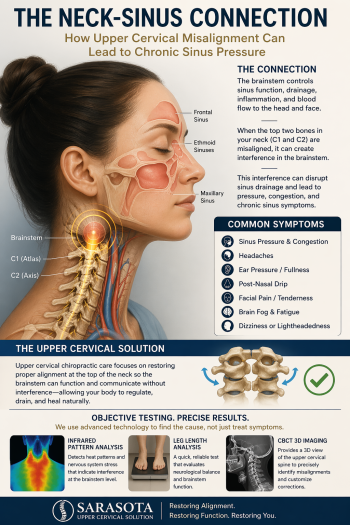
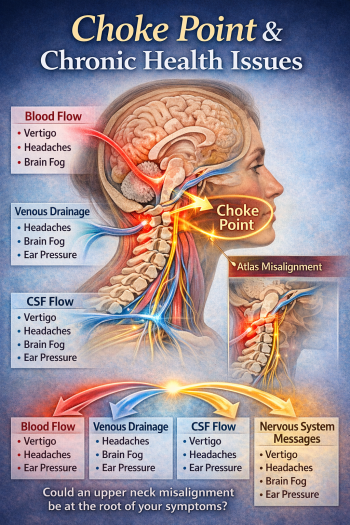
The top two bones in your neck—C1 (atlas) and C2 (axis)—sit directly under the skull and surround the brainstem.
This area is one of the most neurologically sensitive regions in the body.
When there is an upper cervical misalignment:
It can create irritation or distortion of brainstem signaling
Muscle tone regulation can become imbalanced
Certain muscles—like the trapezius—can become overactive
What Does That Lead To?
Chronic trapezius tension
Persistent muscle spasms
That painful knot at the base of the skull
The knot is not the primary problem—it’s a symptom of neurological imbalance.
Common Conditions Associated With This Type of Pain
Because the brainstem controls so many functions, upper cervical misalignment is often linked to a wide range of symptoms beyond just muscle tension.
You may also experience:
HeadachesTension headaches
Occipital headaches (starting at the base of the skull)
Migraine patterns
Neck Pain and StiffnessReduced range of motion
Pain when turning your head
Brain FogDifficulty concentrating
Mental fatigue
Vertigo or DizzinessFeeling off-balance
Sensation of spinning
These symptoms often appear unrelated—but they share a common origin:
Related article
Lingering Concussion Symptoms? Sarasota Upper Cervical Chiropractor Explains a Different Approach
Apr 07, 2026Dysfunction at the level of the brainstem and upper cervical spine
Why Massage and Stretching Often Don’t Fix It
Many people try:
Massage therapy
Foam rolling
Stretching
Muscle relaxers
These approaches may:
Temporarily reduce tension
Improve blood flow
Provide short-term relief
But they don’t address:
Why the muscle is tight in the first place
If the brainstem is sending faulty signals, the muscle will continue to:
Re-tighten
Re-spasm
Recreate the knot
The Upper Cervical Chiropractic Approach
Upper cervical care focuses on one primary objective:
Restoring proper alignment at the top of the neck so the brainstem can function normally
This approach is:
Highly specific
Neurologically focused
Based on objective measurements
Not every patient is adjusted at every visit.
Adjustments are only performed when the body shows objective signs of misalignment
Precision Matters: The Role of CBCT Imaging
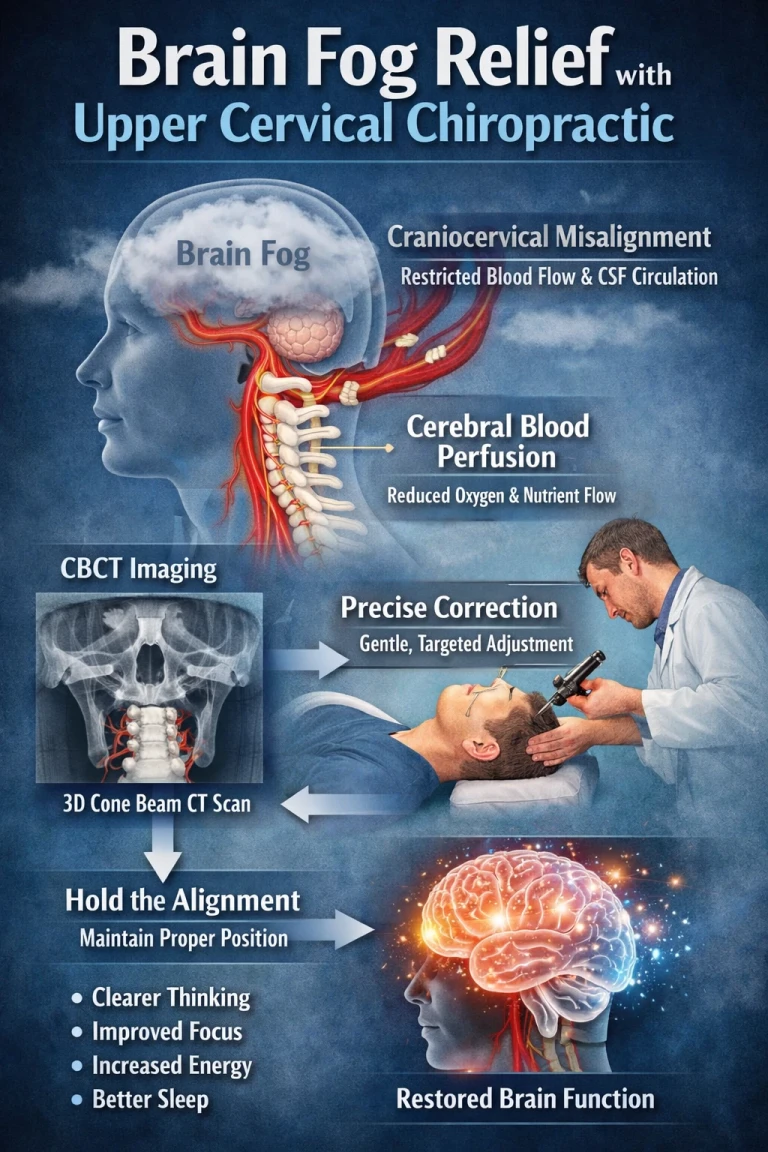
One of the most important tools in upper cervical care is CBCT (Cone Beam CT) imaging.
This advanced 3D imaging allows us to:
Visualize the upper cervical spine in precise detail
Identify the exact misalignment
Measure the degree and direction of the problem
This is critical because:
No two people have the same anatomy
With CBCT imaging, corrections are:
Customized
Precise
Gentle
The Goal of the Correction
Upper cervical adjustments are different from traditional chiropractic.
They are:
Extremely gentle
No twisting, cracking, or forceful movements
Designed to restore alignment—not force movement
The goal is simple:
Make a precise correction and allow it to hold
When the correction holds:
Brainstem communication improves
Muscle tone normalizes
The trapezius can relax naturally
What Happens to the Knot?
As proper neurological function is restored:
Muscle spasms decrease
Tension at the nuchal line reduces
The painful knot often diminishes or disappears
And importantly:
It does so without constantly chasing the muscle
A Different Way to Think About Head and Neck Pain
If you’ve been dealing with a chronic knot at the back of your head, it’s worth asking:
“How do I loosen this muscle?”
vs.
“Why is this muscle staying tight?”
That shift in perspective changes everything.
Because when you address the root cause, the symptoms often take care of themselves.
Final Thoughts
That painful knot at the base of your skull is more than just a tight muscle.
It’s often:
A reflection of trapezius spasm
A sign of altered muscle tone
A symptom of brainstem dysfunction
By focusing on the upper cervical spine, we can address the problem at its source—not just manage the symptoms.
Looking for Head Pain Relief in Sarasota?
If you’re dealing with:
A chronic knot at the back of your head
Headaches or neck pain
Brain fog or dizziness
It may be time to evaluate the role of the upper cervical spine and brainstem function.
A proper assessment—using CBCT imaging and objective neurological testing—can determine if this is the missing piece.
Leave a comment