

Understanding Vertigo: More Than Just an Inner Ear Problem
Vertigo can be one of the most unsettling symptoms a person experiences. Many describe it as the room spinning, a floating sensation, or a constant feeling of being off balance. Traditionally, vertigo is blamed on the inner ear, and while that can certainly be a factor, it is far from the only cause.
Schedule Your Appointment
Schedule appointmentWhat many people are never told is that vertigo can originate from the neck—specifically the upper cervical spine. When this connection is missed, patients often go through months or even years of treatments that never fully resolve the issue.
Liste to one of our patients describe his recovery story from vertigo after care in our office. Click here.
The Upper Cervical Spine and Its Connection to Balance
The Role of the Atlas and Axis
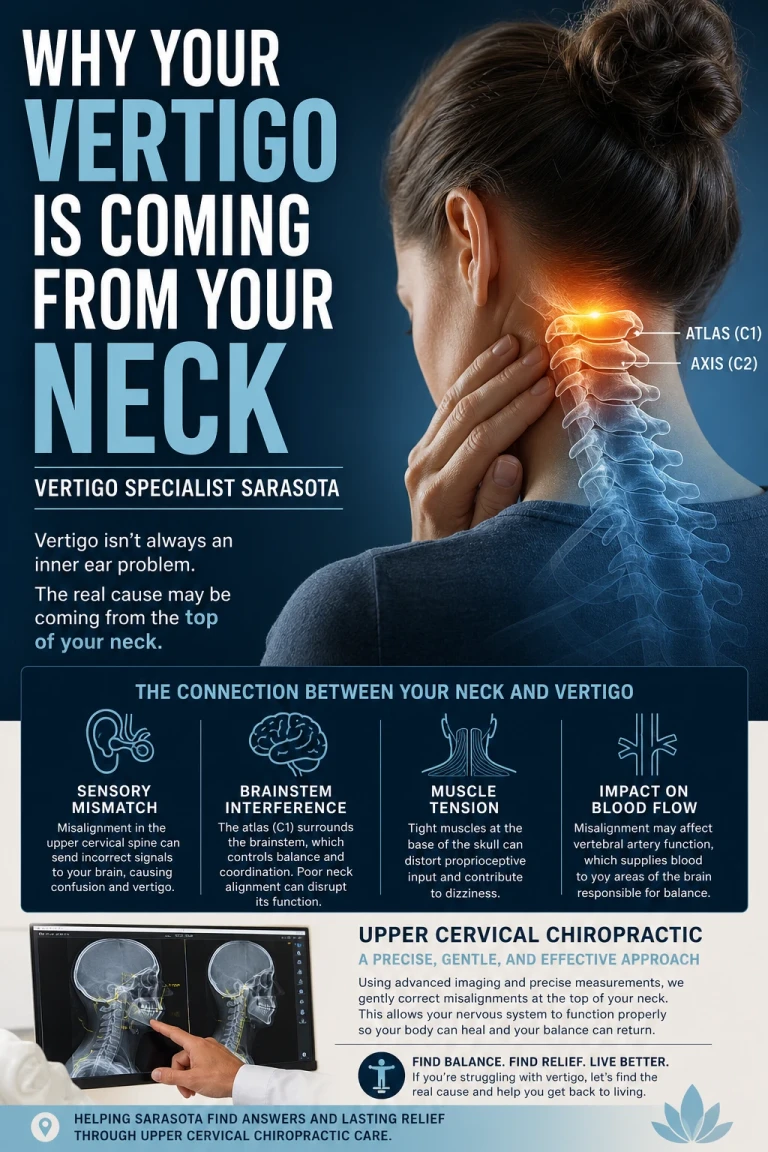
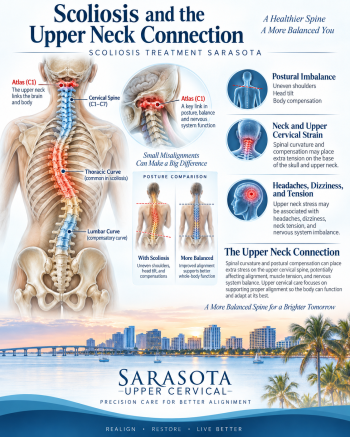
At the very top of your spine sit two critical bones: the atlas (C1) and the axis (C2). These bones support the head and protect the brainstem, one of the most important control centers in the body.
The brainstem is responsible for coordinating balance, posture, eye movements, and spatial awareness. It acts as a central hub, constantly integrating information from three main systems: your eyes, your inner ear, and your body.
When these systems are in sync, you feel stable and grounded. When they are not, symptoms like dizziness and vertigo can occur.
Why the Brainstem Is So Important for Vertigo
The brainstem houses structures known as the vestibular nuclei. These nuclei process incoming information about balance and movement. They rely heavily on accurate input from the upper cervical spine.
If that input becomes distorted, the brainstem struggles to interpret where your body is in space, leading to sensations of spinning or imbalance.
How the Neck Can Cause VertigoProprioception: Your Body’s Internal GPS
Your brain depends on proprioception—your body’s sense of position and movement—to maintain balance. A large portion of this information comes from the muscles and joints in your upper neck.
In fact, the upper cervical spine contains one of the highest concentrations of proprioceptive nerve endings in the entire body. These signals are constantly being sent to the brainstem and compared with information from your eyes and inner ear.
Related article
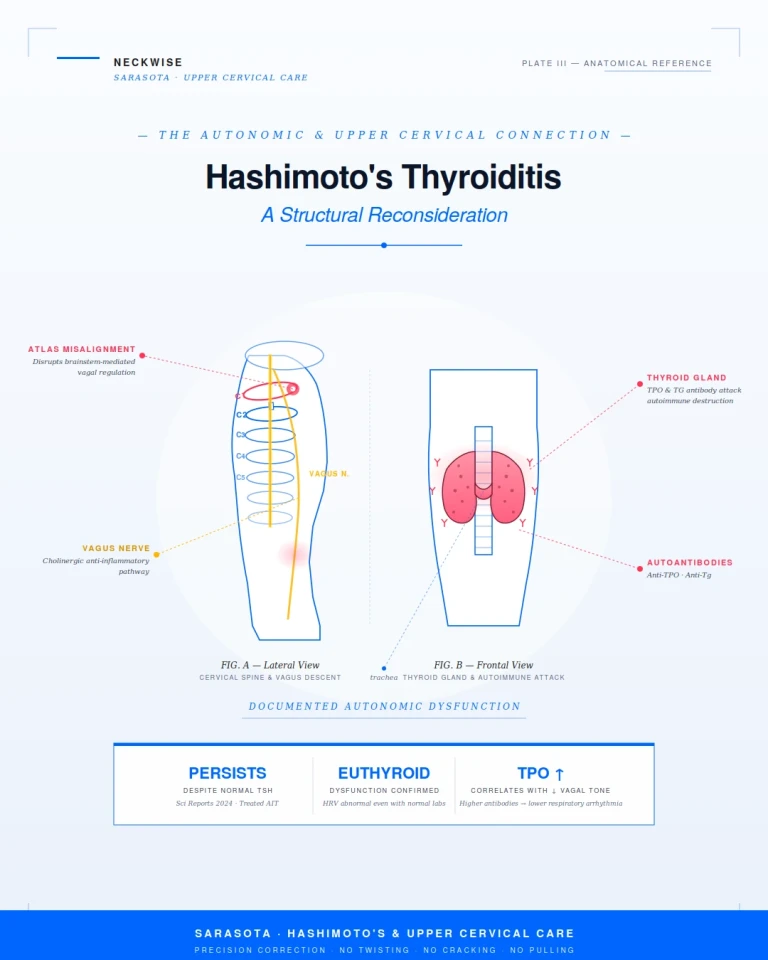
Hashimoto's Thyroiditis Treatment Support in Sarasota | The Autonomic and Upper Cervical Connection
May 14, 2026Sensory Mismatch and Brain Confusion
When the atlas becomes misaligned, even slightly, it can distort the signals coming from the neck. This creates a sensory mismatch.
Your inner ear may be telling your brain that you are still. Your eyes may confirm that you are not moving. But your neck is signaling motion. This conflicting information creates confusion in the brainstem, and that confusion is experienced as vertigo.
Cervicogenic Vertigo Explained
This type of vertigo is known as cervicogenic vertigo, meaning it originates from the cervical spine. It is often overlooked because most evaluations focus only on the inner ear.
As a result, many patients are told everything looks “normal,” even though they are still experiencing significant symptoms.
The Neurological Impact of Upper Cervical Misalignment
Disruption of the Vestibular System
The vestibular nuclei in the brainstem receive input from both the inner ear and the cervical spine. When abnormal signals come from the neck, it can disrupt the normal processing of balance information.
This can lead to dizziness, instability, and a persistent sense of disorientation.
Brainstem Interference and Nervous System Function
The brainstem is not only responsible for balance—it also plays a key role in regulating the nervous system. When there is interference at this level, it can affect how the body coordinates movement and maintains equilibrium.
Restoring proper communication in this area is essential for long-term resolution of vertigo.
Mechanical and Vascular Factors to Consider
The Role of Muscles at the Base of the Skull
The suboccipital muscles, located at the base of the skull, often become tight and overactive when the atlas is misaligned. This added tension can further distort proprioceptive input and contribute to dizziness.
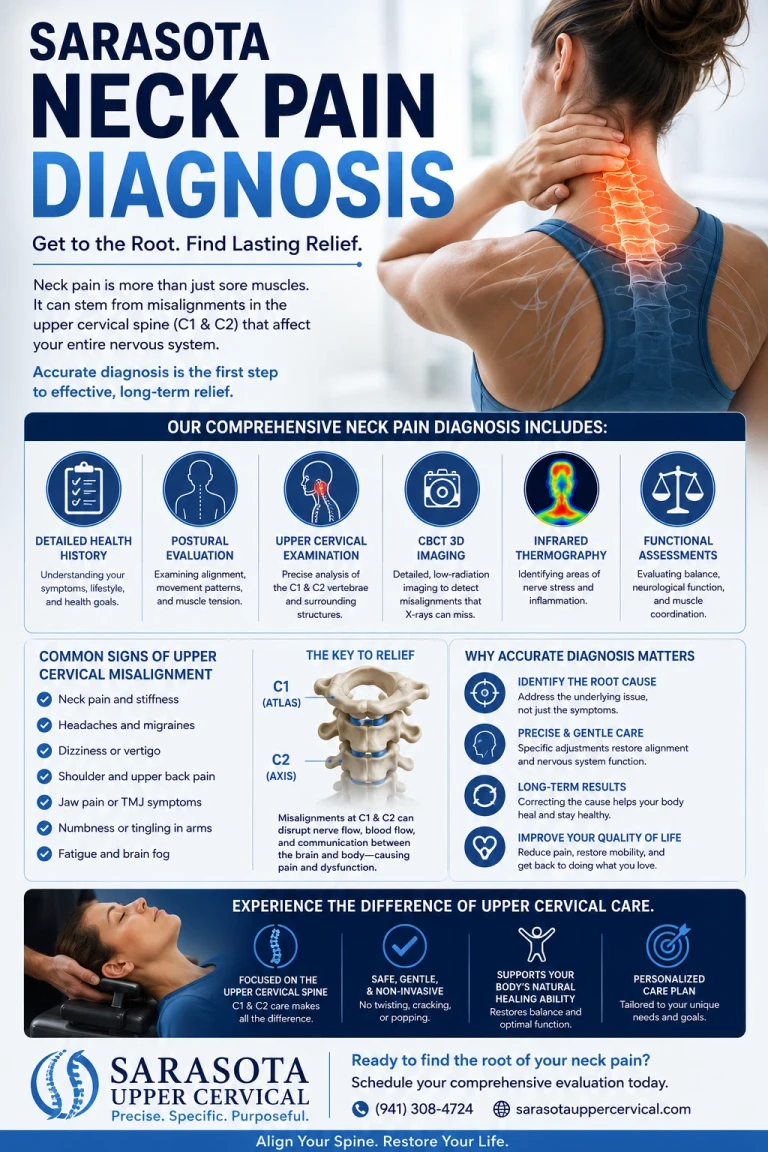
Many patients with vertigo also report a constant tightness or pressure in this region.
Blood Flow and the Upper Cervical Spine
The vertebral arteries travel through the upper cervical spine and supply blood to areas of the brain responsible for balance and coordination. While not every case of vertigo is vascular, alignment issues in this region can influence circulation and contribute to symptoms.
Why Standard Testing Often Misses the Problem
Structural vs. Functional Issues
One of the most frustrating aspects of cervicogenic vertigo is that standard imaging like MRI or CT scans often comes back normal. This is because these tests are designed to detect structural damage, not functional disturbances.
In many cases, nothing is torn or broken. The problem lies in how the system is functioning and communicating.
The Missing Piece in Many Diagnoses
Because the upper cervical spine is not always thoroughly evaluated, patients are often left without answers. They may be told their symptoms are due to stress or anxiety, when in reality there is an underlying mechanical and neurological issue that has not been addressed.
How Upper Cervical Chiropractic Can Help
Precision-Based Care Using Advanced Imaging
Upper cervical chiropractic focuses specifically on the alignment of the atlas and axis. Using advanced imaging such as 3D CBCT scans, precise measurements are taken to determine the exact position of these bones.
This allows for a highly specific correction tailored to the individual.
No Twisting, Popping, or Cracking
Unlike traditional chiropractic methods, upper cervical care does not involve forceful twisting or popping of the neck. The corrections are gentle, controlled, and based on objective findings.
This makes the approach both safe and effective for patients dealing with vertigo.
Holding the Correction for Lasting Results

The goal is not repeated adjustments, but rather to make a precise correction and allow the body to stabilize. This concept, known as “holding the correction,” is key to long-term healing.
As the alignment improves, the abnormal signals to the brainstem begin to normalize, allowing the nervous system to recalibrate.
What Patients Often Experience
Reduction in Vertigo Symptoms
Many patients notice that their vertigo episodes become less frequent and less intense over time. In some cases, symptoms resolve completely once the underlying issue is corrected.
Improved Balance and Stability
As communication between the brain and body improves, patients often report better balance, clearer thinking, and a greater sense of stability in their daily lives.
When to Consider Your Neck as the Cause
Common Signs of Cervicogenic Vertigo
If you experience dizziness when turning your head, a feeling of imbalance, or chronic tension at the base of your skull, your neck may be contributing to your symptoms.
A history of head or neck injury, even from years ago, can also play a role.
Finding the Root Cause
Vertigo is not something you have to simply live with. While there are many potential causes, the upper cervical spine is one of the most overlooked—and most important—areas to evaluate.
By addressing the root cause instead of chasing symptoms, it is possible to achieve lasting relief.
Vertigo Specialist Sarasota: A Different Approach to Healing
If you are in the Sarasota area and struggling with vertigo, seeking out a specialist trained in upper cervical chiropractic may be the missing piece in your recovery.
The body is designed to heal when interference is removed. By restoring proper alignment at the top of the neck, the brain and body can communicate more effectively, allowing your balance system to function the way it was intended.
Understanding the connection between your neck and vertigo could change everything—and finally give you the answers you’ve been searching for.

Leave a comment