

"How Upper Cervical Chiropractic Care Supports the Body, the Nervous System, and the Immune Response"
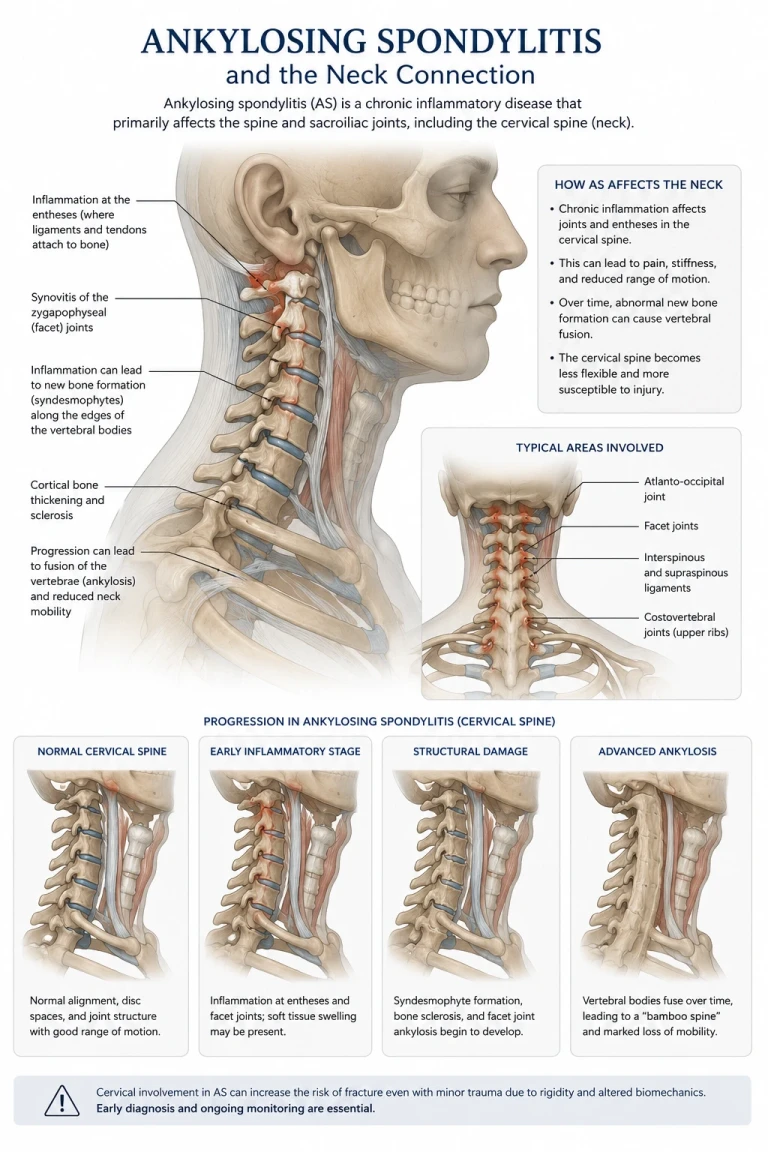
If you live with ankylosing spondylitis (AS), you already know it is more than back pain. It is stiffness that won’t leave in the morning. It is fatigue that no amount of sleep fixes. It is a quiet worry about how your spine, your hips, and your future will feel five or ten years from now. For many people in Sarasota searching for answers, the conversation has been limited to medication and waiting. There is another piece of the picture that often gets overlooked — the relationship between the upper cervical spine, the nervous system, and the immune system that is driving the disease.
Schedule Your Appointment
Schedule appointmentThis article walks through that connection, explains why the top of your neck matters more than most people realize, and shows how a precision-based, non-twisting approach to upper cervical chiropractic care fits into a broader plan for relief.
Ankylosing Spondylitis is an Immune-Driven Disease, Not Just a Spine Problem
Ankylosing spondylitis is a chronic inflammatory condition. Researchers describe it as having features of both autoimmunity (where the immune system reacts against the body’s own tissues) and autoinflammation (where the innate immune system fires off in the absence of a clear trigger). The result is the same either way — inflammation in the spine, sacroiliac joints, hips, and entheses (where tendons and ligaments meet bone). Over time, that inflammation can lead to fusion, loss of motion, and the rigid forward posture that gives the disease its name.
AS rarely travels alone. People with AS often carry, or eventually develop, related immune-mediated conditions — uveitis, inflammatory bowel disease, psoriasis, and others. There is also growing research describing overlap between AS and neurological conditions, with shared patterns of immune dysfunction and inflammation. The takeaway is simple. If your immune system is dysregulated and your nervous system is stressed, the spine is the place where it shows up most visibly — but it is not where it starts.
This is where neuroimmunology becomes important. The brain, the brainstem, and the immune system are not separate departments. They are constantly talking to each other. A nervous system that is stuck in a defensive, sympathetic-dominant state amplifies inflammation. A nervous system that can shift back into balance gives the immune system room to settle. Anything that improves the quality of communication between brain and body has the potential to influence that loop.
Why the Upper Cervical Spine Matters So Much
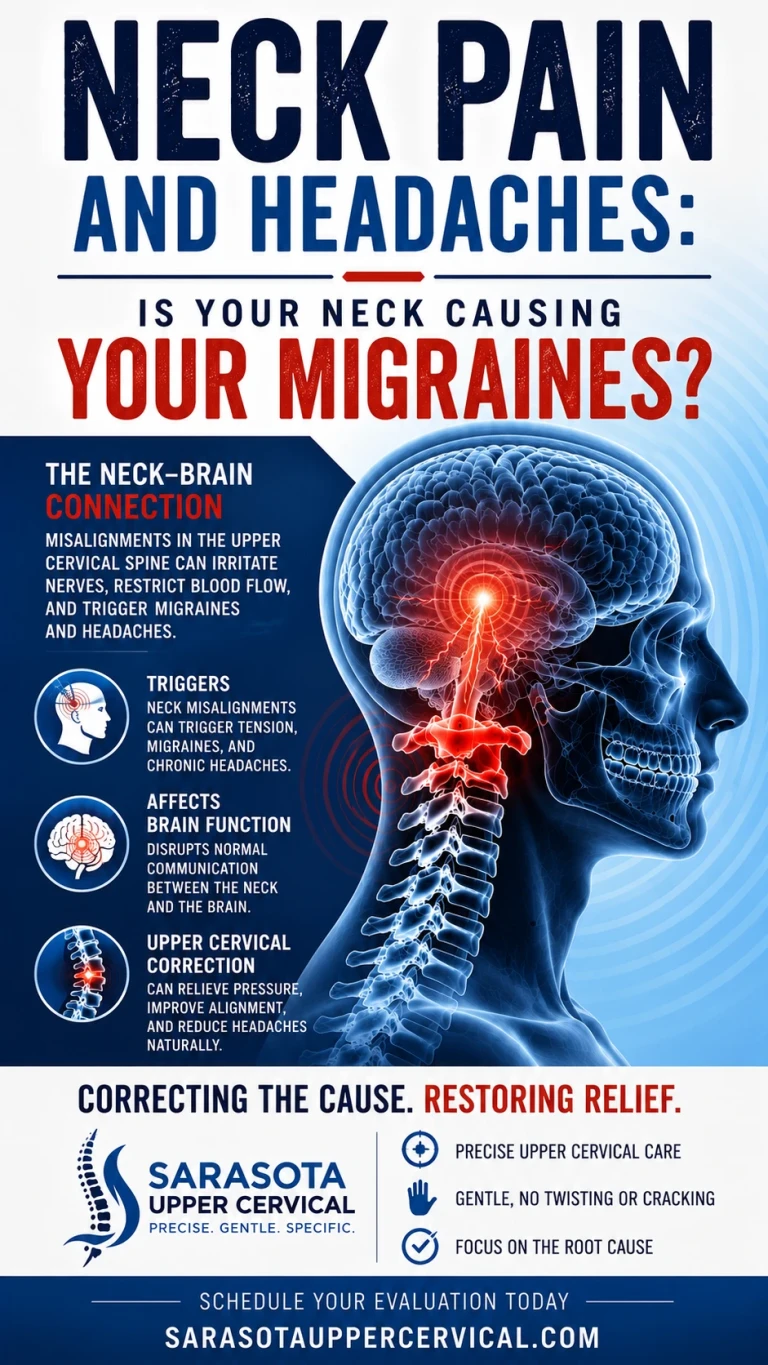
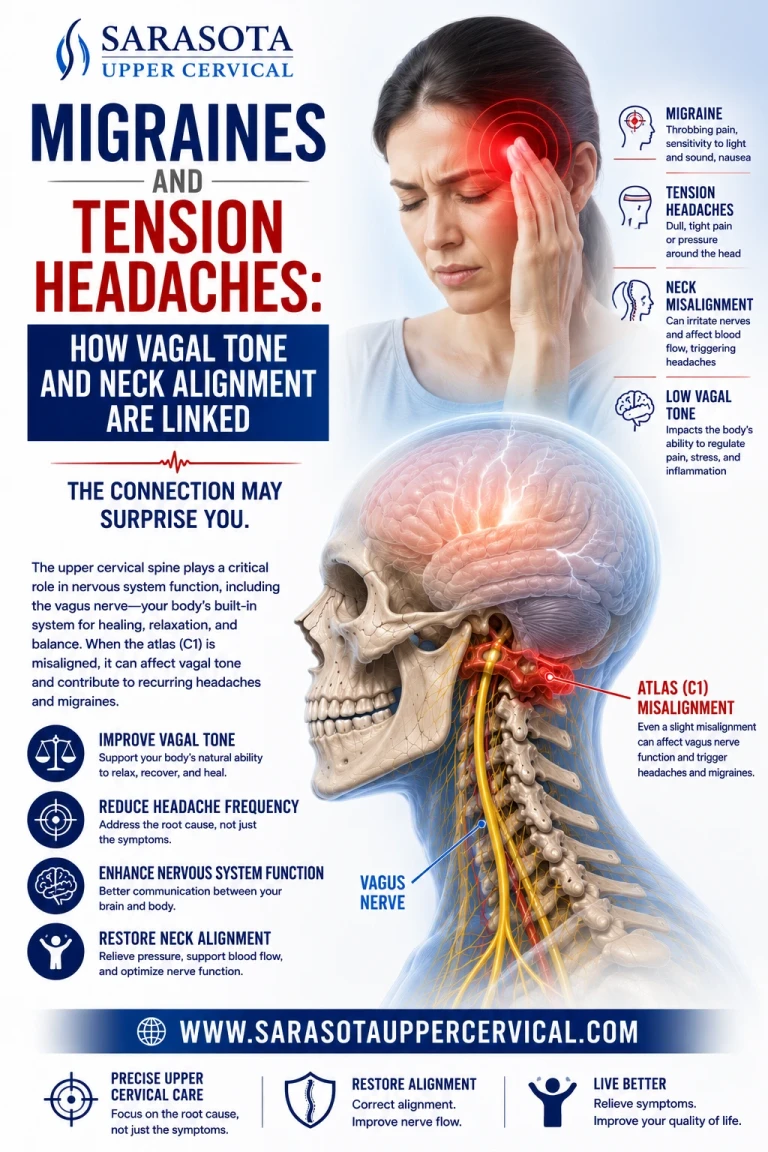
The upper cervical spine — the atlas (C1) and axis (C2) — sits at the base of the skull, surrounding the brainstem and the upper spinal cord. This region is the most mechanoreceptor-dense area of the entire spinal column. In simple terms, it is packed with sensors that tell your brain where your head is, how it is moving, and how to adjust the rest of the body to match.
The brainstem and the cerebellum use that information to coordinate postural muscle tone throughout the body. When the upper cervical spine is moving and aligning well, the signals coming up are clean. The brain receives accurate input and sends back balanced output — muscles on the right and left work in cooperation, joints sit in their natural ranges, and the body distributes load evenly through the spine, the pelvis, and the extremities.
When the upper cervical spine is not aligned or is restricted, the input becomes distorted. The brain still has to coordinate movement, so it does so with bad data. The result is a body that compensates — one shoulder higher than the other, a hip that hikes, a head that drifts forward, and muscle groups that are chronically over-firing or under-firing. Those compensations do not stay in the neck. They travel down through the thoracic spine, the lumbar spine, the sacroiliac joints, and the hips. For someone with AS, those are exactly the regions already under inflammatory stress.
Better Joint Motion, Less Pain, and Slowing the Degenerative Process
Joints are designed to move. When motion is preserved, joints are nourished, surrounding muscles stay balanced, and the body has less reason to deposit the calcific changes that drive long-term stiffness. When motion is lost, the opposite happens. Tissues adapt to the position they spend the most time in. In AS, where the disease itself promotes fusion, every degree of preserved motion matters.
Upper cervical chiropractic care does not cure ankylosing spondylitis, and we do not claim it does. What it can do is help correct the input the brain is receiving from the top of the spine. When that input improves, postural muscle tone tends to normalize, joints below begin to move more freely, and the constant low-grade compensation that fuels pain begins to ease. People often report that they sleep better, that morning stiffness loosens faster, and that the activities they had quietly given up start to feel possible again.
There is also a biomechanical argument worth making. AS is a disease in which biomechanical stress at entheses appears to play a real role in where inflammation settles. A body that is loading evenly creates less of that stress. A body that is loading unevenly creates more. Anything we can do to help the spine load the way it was designed to load is a step in the right direction.
Related article
CBCT Imaging: Precision Before Anything Else
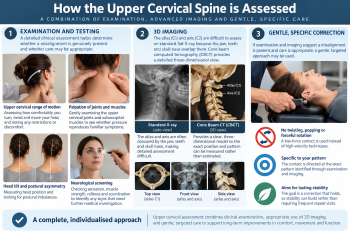
Before any care begins in our Sarasota office, we use Cone Beam Computed Tomography (CBCT) imaging of the upper cervical spine. CBCT is a precision imaging tool that produces three-dimensional views of the atlas, axis, and surrounding structures — detail that flat two-dimensional X-rays cannot provide.
We use CBCT to measure. Every spine is built differently. The angles, the orientations, and the relationships between C1, C2, and the skull are unique to you. Without precise measurements, an adjustment is a guess. With them, the correction can be specific, gentle, and tailored to your anatomy.
This matters even more for someone with ankylosing spondylitis. AS changes the spine over time. A generic, force-based approach is not appropriate for an inflamed, potentially fusing spine. Precision imaging allows us to see what we are working with and to plan a correction that respects the disease, the anatomy, and the individual.
No Twisting. No Cracking. No Pulling of the Neck
This is the part that surprises most people who walk into our office for the first time. Upper cervical chiropractic care, the way we deliver it, does not involve twisting the head, cranking the neck, or producing the popping sound most people associate with chiropractic adjustments.
The correction is specific, low-force, and based on the measurements taken from your CBCT scan. It is delivered with you lying on your side, your head supported, and your body relaxed. People with AS who have been understandably afraid to have anyone near their neck often tell us afterward that they felt less than they expected — and noticed more than they expected in the hours and days that followed.
Gentle does not mean ineffective. Gentle means we are working with the nervous system, not against it. The goal is to give the brainstem cleaner input so the body can do the work it already knows how to do.
Related article
Vestibular Disorder Treatment Sarasota | Upper Cervical Chiropractic Guide
May 31, 2026What a Realistic Plan Looks Like
Care for ankylosing spondylitis works best when it is layered. Upper cervical chiropractic is one piece. Working closely with your rheumatologist on medication and disease monitoring is another. Movement, anti-inflammatory nutrition, sleep, and stress regulation all matter. We do not replace any of that. We add a piece that often goes missing — the structural and neurological foundation that lets the rest of the work hold.
A typical first visit in our Sarasota office includes a thorough consultation, a focused examination, and CBCT imaging of the upper cervical spine. From there, we sit down with you, walk through what we found, and tell you honestly whether upper cervical care is a good fit for your situation. If it is, we build a plan. If it is not, we will tell you that too and point you toward what might help more.
If You’re in Sarasota and Living with AS
Ankylosing spondylitis does not have to be a slow surrender of motion. The disease is real, and the inflammation is real, but so is the body’s ability to adapt when the nervous system is given a chance to settle and the spine is given a chance to move. Upper cervical chiropractic care, delivered with precision imaging and a gentle, non-twisting correction, is one of the few approaches that addresses the structural and neurological side of the equation rather than only chasing the symptoms.
If you are searching for relief in Sarasota and want to understand whether upper cervical care fits your situation, the first step is a conversation. We will look at your imaging, listen to your story, and give you a straight answer.
Ready to take the next step? Schedule a consultation at our Sarasota office to find out whether upper cervical chiropractic care is the right fit for your ankylosing spondylitis.
Disclaimer: This article is for educational purposes only and does not constitute medical advice or a substitute for care from your physician or rheumatologist. Upper cervical chiropractic care does not diagnose, treat, or cure ankylosing spondylitis. Individual results vary.

Leave a comment