

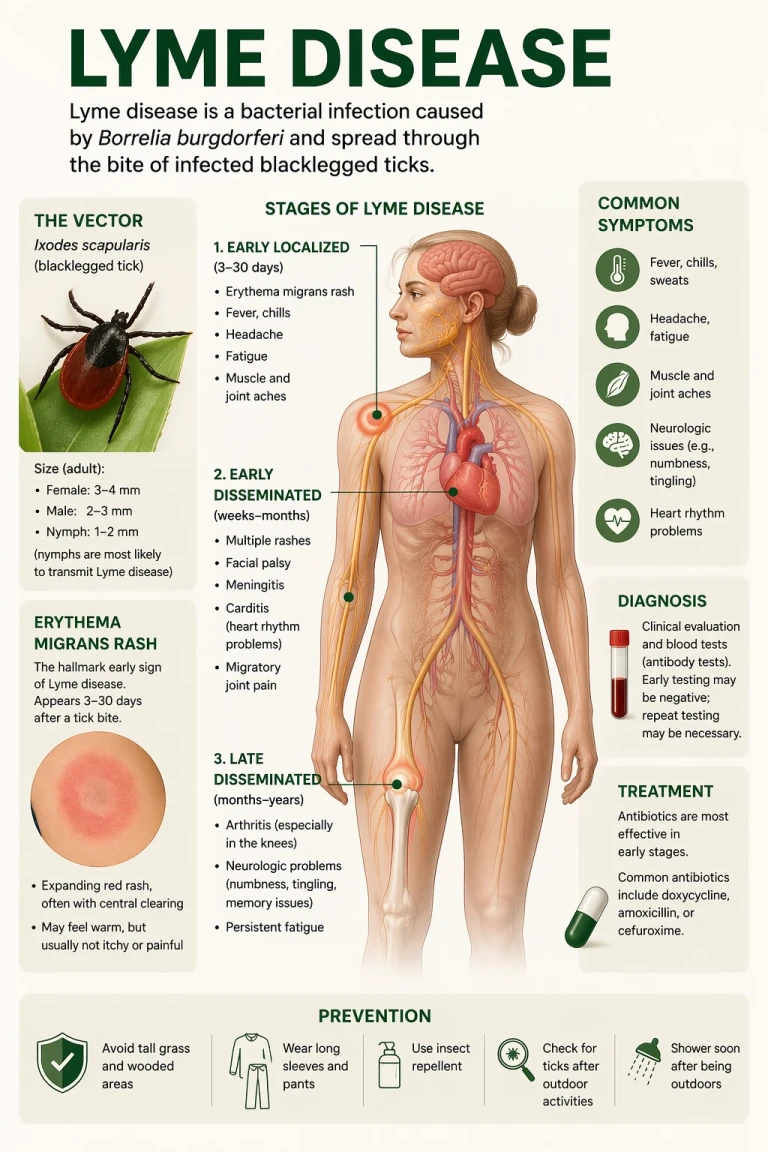
Lyme disease can be one of the most frustrating and complex health challenges a person faces. For many, it’s not just about an infection—it’s about ongoing symptoms that seem to affect the entire body:
Fatigue that won’t go away
Brain fog and difficulty concentrating
Joint and muscle pain
Headaches and neurological symptoms
Sleep disturbances and mood changes
Schedule Your Appointment
Schedule appointment
If you’re dealing with Lyme disease, you’ve likely explored multiple approaches—medical, natural, and integrative. And one important realization often emerges:
It’s not just about the bacteria—it’s about how your body responds to it
This is where understanding the immune system and nervous system connection—known as neuroimmunology—becomes critical.
Understanding Lyme Disease
Lyme disease is caused by the bacterium Borrelia burgdorferi, transmitted through the bite of an infected tick.
Once in the body, it can:
Spread through tissues
Evade immune detection
Trigger widespread inflammation
For some individuals, the immune system effectively manages the infection.
For others, symptoms persist—sometimes long after the initial exposure.
Why the difference?
A major factor is how well the immune system is functioning and regulated
Your Immune System: Your Body’s Defense System
Your immune system is a complex network of:
Cells
Tissues
Organs
All working together to:
Identify harmful invaders
Destroy bacteria and viruses
Regulate inflammation
Restore balance
When functioning optimally, the immune system:
Responds appropriately to threats
Avoids overreaction (chronic inflammation)
Clears infections efficiently
But when it’s dysregulated:

It may become overactive or underactive
Inflammation can persist
Infections may linger
Neuroimmunology: The Nervous System Controls the Immune System
One of the most important concepts in modern health science is neuroimmunology—the study of how the nervous system and immune system interact.
Your brain and nervous system are constantly communicating with your immune system.
They help regulate:
Inflammation levels
Immune cell activity
Cytokine production
Healing and repair processes
The autonomic nervous system, controlled by the brainstem, plays a major role in this regulation.
When this system is balanced:
The immune system responds efficiently
Inflammation is controlled
Healing is optimized
But when the nervous system is under stress or not functioning properly:
Immune function can become compromised
The Brainstem: A Key Player in Immune Regulation
The brainstem, located at the base of your skull, is responsible for:
Regulating the autonomic nervous system
Controlling inflammation responses
Coordinating communication between the brain and body
One of the most important pathways involved is the vagus nerve, which:
Helps regulate immune responses
Controls inflammation through the “inflammatory reflex”
Communicates between the brain and major organs
When brainstem function is optimal:
The immune system is well-regulated
The body can respond more effectively to infections like Lyme disease
How Upper Cervical Misalignment Can Interfere
The top two bones in your neck—C1 (atlas) and C2 (axis)—surround and protect the brainstem.
This area is known as the craniocervical junction, and it is one of the most neurologically sensitive regions in the body.
When there is an upper cervical misalignment, it can:
Irritate or stress the brainstem
Disrupt autonomic nervous system balance
Interfere with nerve signaling
Related article
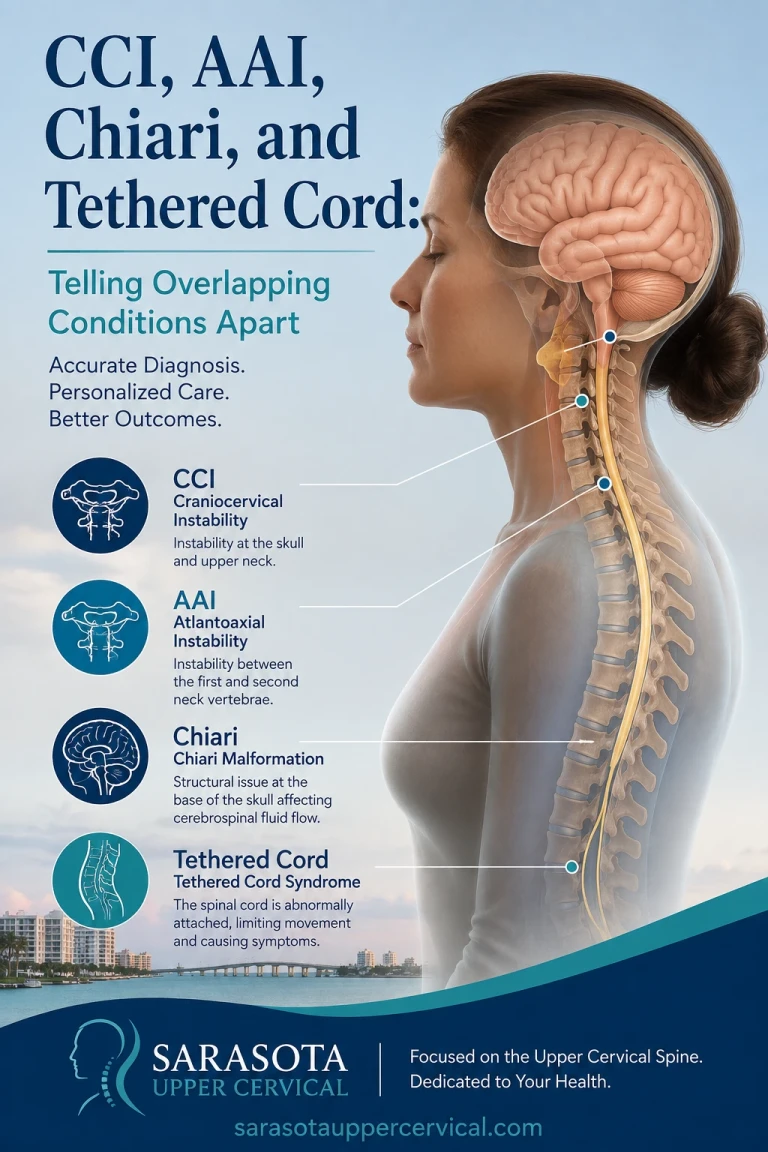
CCI, AAI, Chiari, and Tethered Cord: Telling Overlapping Conditions Apart | Sarasota
Aug 01, 2026
What Does This Mean for the Immune System?
Reduced ability to regulate inflammation
Altered immune cell communication
Decreased efficiency in fighting infections
In the context of Lyme disease, this can make it harder for the body to handle the infectious agent effectively
The Connection to Chronic Lyme Symptoms
When the nervous system is not functioning optimally:
The immune system may become overwhelmed
Inflammation may persist
Symptoms may linger or fluctuate
This can contribute to:
Chronic fatigue
Brain fog
Joint and muscle pain
Sensitivity to stress
The issue is not just the presence of bacteria—it’s the body’s ability to respond
Upper Cervical Care: Supporting the System, Not Replacing It
It’s important to be clear:
Upper cervical chiropractic care is not a cure for Lyme disease
However, it can play a valuable role as part of a comprehensive approach.
The goal is to:
Restore proper alignment at the top of the neck
Reduce interference to the brainstem
Support optimal nervous system function
When the nervous system functions better:
The immune system can respond more effectively
The body may handle infection more efficiently
Overall resilience improves
Precision Matters: CBCT Imaging
Upper cervical care relies on precision, not guesswork.
Using CBCT (Cone Beam CT) imaging, practitioners can:
See the upper cervical spine in 3D
Identify exact misalignments
Measure direction and degree
Every correction is:
Customized to your anatomy
Based on objective data
Designed for accuracy
Gentle, Specific Corrections
Upper cervical adjustments are very different from traditional chiropractic approaches.
Related article
They are:
Gentle
Precise
Controlled
There is:
No twisting
No cracking or popping
No forceful manipulation
The goal is not to force the body—it’s to remove interference so the body can function as it was designed
A More Complete Approach to Lyme Disease
If you’re dealing with Lyme disease, it’s important to think beyond just:
Killing bacteria
Managing symptoms
And start considering:
Nervous system function
Immune system regulation
Whole-body balance
A comprehensive approach may include:
Medical care
Nutritional support
Detoxification strategies
Stress management
Nervous system optimization
Final Thoughts
Lyme disease is complex—and so is the body’s response to it.
While there is no single solution, one thing is clear:
The nervous system plays a central role in how the immune system functions
When that system is disrupted—especially at the level of the brainstem and upper cervical spine—immune efficiency can decline.
By restoring proper alignment and reducing interference, the body may be better equipped to:
Regulate inflammation
Support immune function
Respond to infection
Looking for Natural Lyme Disease Support in Sarasota?
If you’re navigating Lyme disease and looking for a more comprehensive, supportive approach, it may be worth evaluating your upper cervical spine and nervous system function.
Through precise CBCT imaging and objective analysis, it’s possible to determine whether this is a contributing factor in your health.

Leave a comment