

Bell’s Palsy often comes on suddenly and without warning.
You may wake up and notice facial weakness.
One side of your smile doesn’t move.
Your eye won’t fully close.
Speech feels slightly slurred.
Your face feels numb or heavy.
Schedule Your Appointment
Schedule appointmentIf you are searching for Bell’s Palsy treatment in Sarasota, Bradenton, or Lakewood Ranch, it is important to understand something that is rarely discussed:
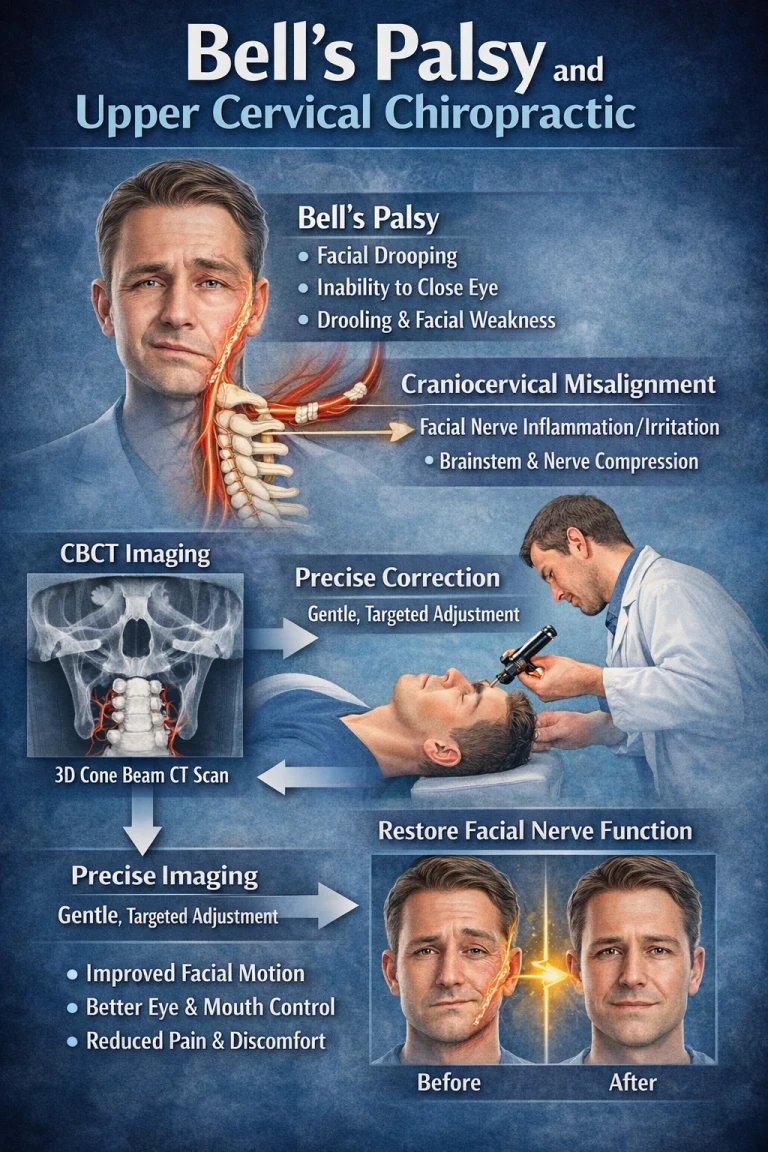
The facial nerve originates in the brainstem — and the brainstem sits directly above the upper cervical spine.
Structural instability in the upper neck may influence how that nerve functions.
👉 Call 941-259-1891 to schedule your FREE consultation
Or click here to book online.
What Is Bell’s Palsy?
Bell’s Palsy is a condition involving sudden weakness or paralysis of the muscles on one side of the face. It affects the facial nerve (cranial nerve VII).
Common symptoms include:
• Facial drooping
• Difficulty smiling or frowning
• Inability to close one eye
• Dry or watering eye
• Drooling
• Altered taste
• Ear pain or pressure
• Sensitivity to sound
Many cases are labeled “idiopathic,” meaning no clear cause is identified. Viral inflammation is often suspected. While viral triggers may play a role, many patients are never evaluated for mechanical or structural stress affecting the nerve at its origin.
To understand the possible connection, we must look at the facial nerve and the brainstem.
The Facial Nerve and the Brainstem
The facial nerve originates in the pons region of the brainstem. From there, it travels through the internal acoustic canal and exits the skull through a narrow bony opening before branching across the face.
The brainstem regulates:
• Cranial nerve function
• Autonomic nervous system balance
• Muscle tone
• Sensory integration
• Blood flow to the head and neck
Because the facial nerve begins in the brainstem, anything that irritates or stresses this region may influence its function.
👉 Call 941-259-1891 to schedule your FREE consultation
Or click here to book online.
The Atlas (C1) and Brainstem Relationship
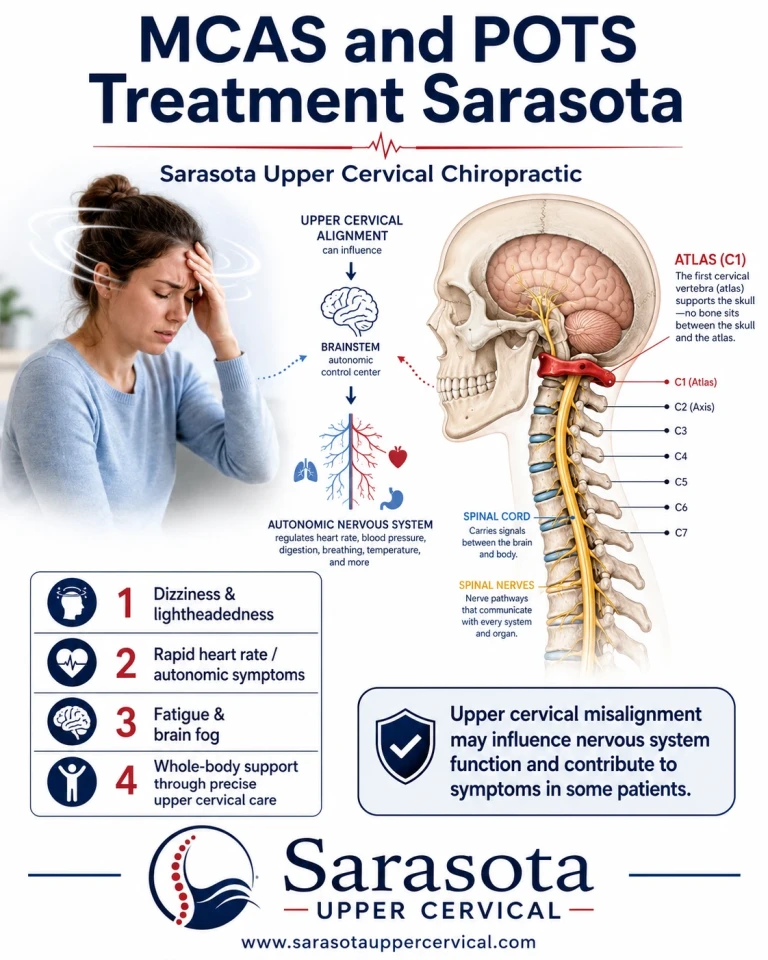
The atlas (C1) is the top bone of the spine. It supports the skull and surrounds the lower portion of the brainstem.
This region is unique because:
• It has high mobility
• It depends heavily on ligament stability
• It contains dense neurological connections
• It sits directly beneath cranial nerve centers
Related article
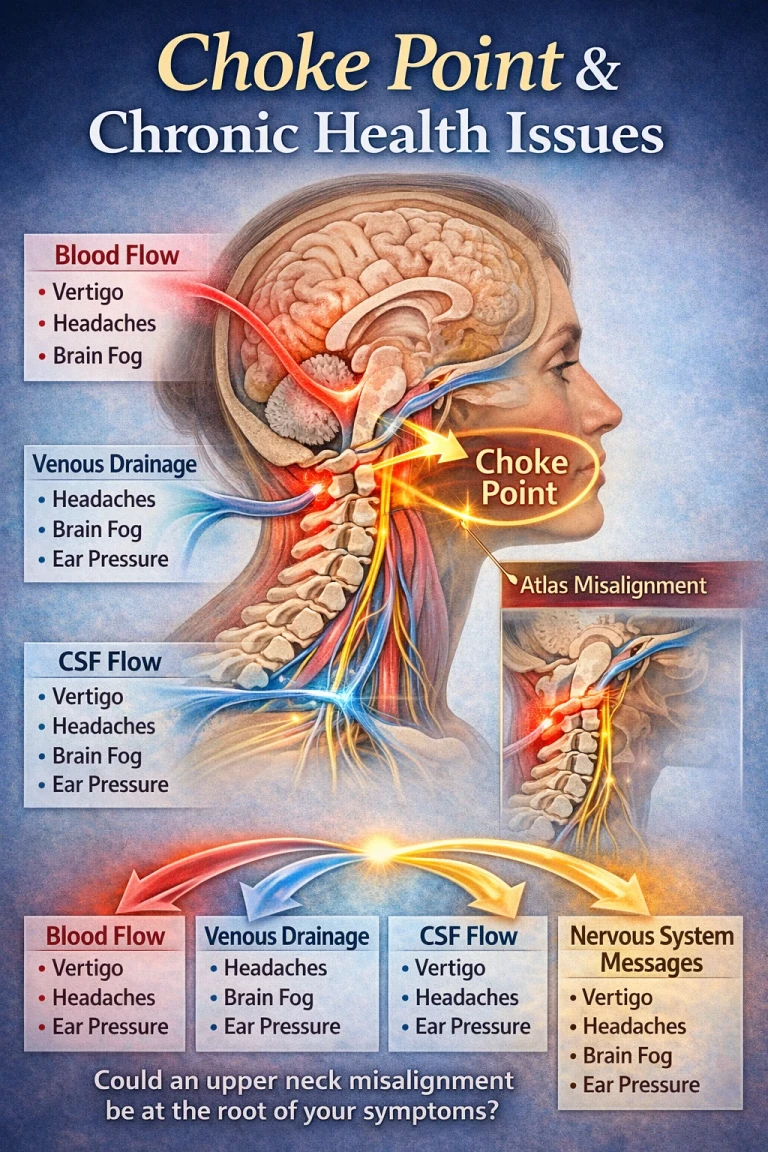
The Upper Neck as a Choke Point: Vertigo, Headaches, Brain Fog, and Ear Pressure
Apr 21, 2026When properly aligned, the atlas allows balanced neurological communication.
When misaligned, however, it may create:
• Mechanical tension beneath the skull
• Altered proprioceptive signaling
• Increased muscle guarding
• Subtle brainstem irritation
Even small misalignments can have amplified neurological effects due to the density of nerve tissue in this region.
How Trauma Can Lead to Upper Cervical Misalignment
Many patients with Bell’s Palsy have a history of prior neck trauma, including:
• Car accidents
• Whiplash injuries
• Slip and falls
• Sports injuries
• Concussions
• Chronic forward head posture
Whiplash injuries are especially important. When the head snaps forward and backward, it can injure the joint capsule surrounding C1 and C2.
This may lead to:
• Inflammation
• Ligament laxity
• Restricted motion
• Muscle spasm
• Instability
The body compensates, but subtle misalignment may persist for years.
If structural imbalance exists beneath the brainstem, it may increase stress on cranial nerve nuclei — including the facial nerve nucleus.
Brainstem Irritation and Facial Nerve Dysfunction
The brainstem is not just a passive structure. It is a command center.
If mechanical stress exists at the upper cervical spine, it may contribute to:
• Altered blood flow regulation
• Increased inflammatory signaling
• Disrupted autonomic balance
• Heightened nerve sensitivity
The facial nerve passes through tight anatomical spaces after exiting the brainstem. Even mild inflammation or altered nerve conduction may affect facial muscle control.
In some individuals, a viral trigger combined with structural stress may overwhelm the system.
While upper cervical misalignment may not be the sole cause of Bell’s Palsy, it may be a contributing factor in some cases — particularly when symptoms follow trauma.
Why Addressing Structural Alignment Matters
Traditional Bell’s Palsy treatment typically includes:
• Steroids
• Antiviral medications
• Eye lubrication
• Facial exercises
These approaches may reduce inflammation and protect the eye while the nerve heals.
However, if mechanical stress remains at the upper cervical spine, optimal neurological recovery may be delayed.
Upper cervical chiropractic focuses on restoring alignment at C1 and C2 to reduce structural irritation and support nervous system balance.
The goal is not to treat Bell’s Palsy directly.
The goal is to create an environment where the nervous system can function efficiently.
The Importance of 3D CBCT Imaging
Every person’s anatomy is unique.
No two atlas misalignments are identical.
That is why advanced 3D Cone Beam CT (CBCT) imaging is critical in upper cervical care.
CBCT allows us to measure:
• Exact rotational displacement
• Lateral deviation
• Angular misalignment
• Skull-to-atlas relationship
• Structural asymmetry
Without imaging, adjustments are generalized.
With CBCT imaging, the correction is custom-tailored to your precise misalignment pattern.
When working near the brainstem and cranial nerves, precision is essential.
Gentle, Specific Correction — No Twisting or Cracking
Many patients are concerned about neck manipulation, especially when dealing with neurological symptoms.
Upper cervical chiropractic is different.
There is:
• No forceful twisting
• No aggressive cracking
• No yanking or pulling
Adjustments are:
• Low-force
• Highly specific
• Based on imaging data
• Designed to restore alignment with minimal stress
This gentle approach is especially important when the nervous system is already sensitive.
Objective Testing: When and When Not to Adjust
Upper cervical care relies on objective findings rather than routine manipulation.
We use tools such as:
Leg Balance Analysis
Subtle neurological imbalance may appear as asymmetry in leg length patterns.
Infrared Thermography
Thermal scanning detects heat differences along the spine, indicating nervous system irritation.
Adjustments are performed only when objective indicators show misalignment.
This helps support stability and long-term healing.
Signs You May Benefit from Upper Cervical Evaluation
You may want an evaluation if:
• Bell’s Palsy occurred after a car accident
• You have chronic neck stiffness
• You experience frequent headaches
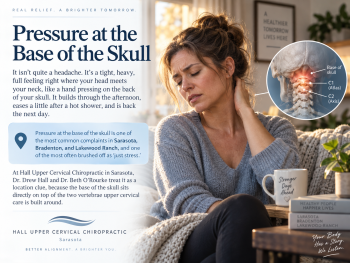
• You feel tension at the base of your skull
• You have recurring facial weakness
• Recovery seems slower than expected
Even if trauma happened years ago, structural instability may persist.
The nervous system functions best when the foundation beneath it is stable.
Bell’s Palsy Treatment in Sarasota & Bradenton
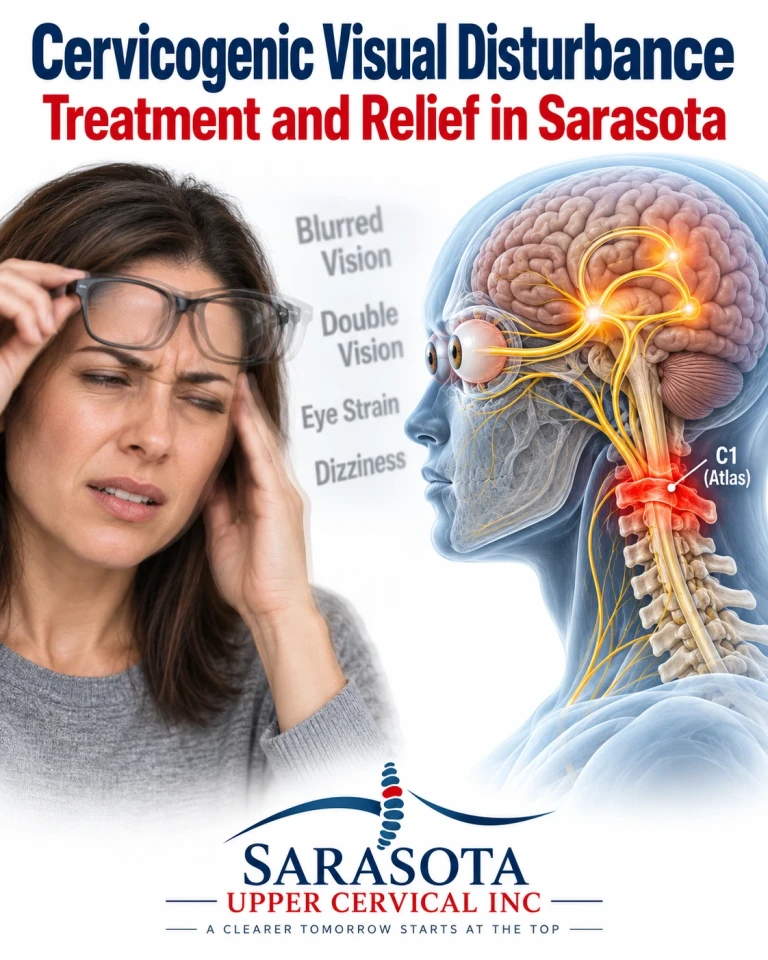
If you are navigating Bell’s Palsy and looking for a structural, nervous system-focused approach in Sarasota, Bradenton, or Lakewood Ranch, upper cervical care may be worth exploring.
We focus on:
• Precision 3D CBCT imaging
• Gentle, specific correction
• Objective neurological testing
• Supporting brainstem balance
• No twisting, cracking, or pulling
👉 Call 941-259-1891 to schedule your FREE consultation
Or click here to book online.
Your facial nerve begins in the brainstem.
The brainstem sits directly above the atlas.
When alignment at the top of the spine is restored, the nervous system may function more efficiently.
If you are searching for Bell’s Palsy treatment in Sarasota or Bradenton and want to explore whether upper cervical misalignment could be contributing to facial nerve irritation, we are here to help you take the next step toward clarity and recovery.
Leave a comment