

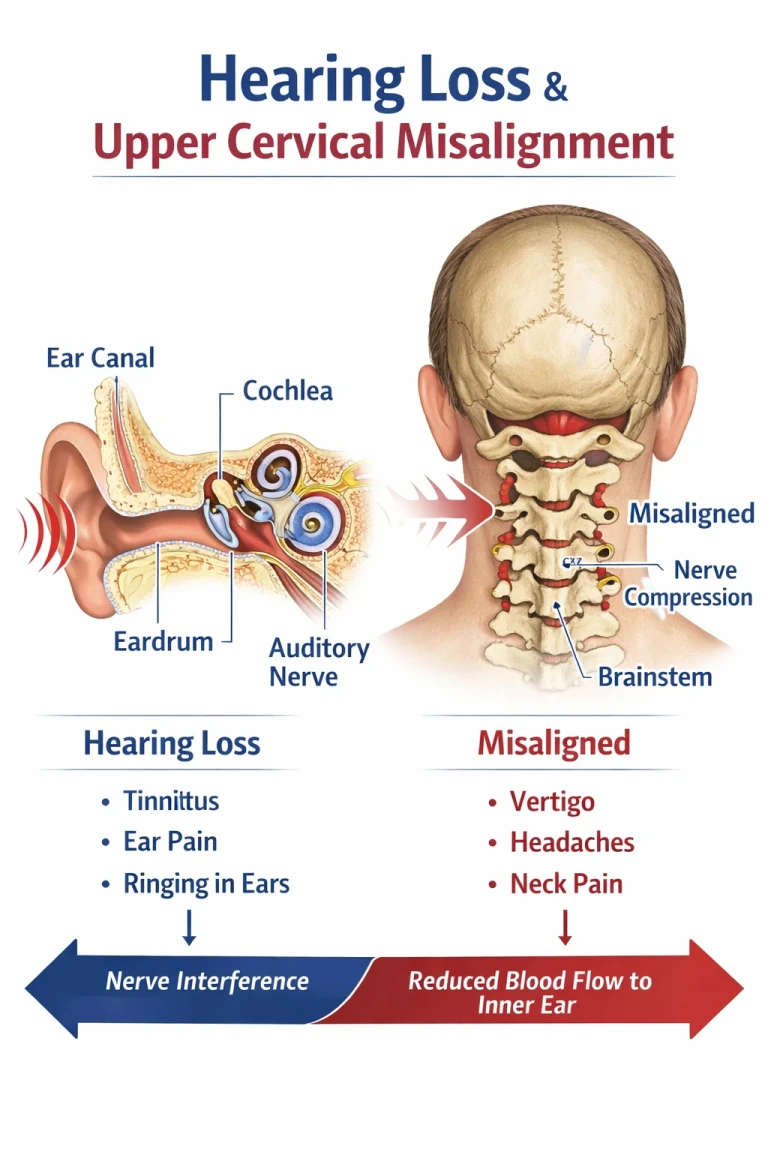
Hearing changes can be frustrating and confusing. Many people in Sarasota experience symptoms like muffled hearing, ear pressure, popping sounds, or a sensation that their ears will not “clear.” These symptoms are often linked to Eustachian Tube Dysfunction, a condition where the small passage that helps regulate ear pressure does not open properly.
While many people focus only on the ear itself, an important factor is often overlooked—the upper neck and its connection to the brainstem. The alignment of the top vertebrae in the neck plays a key role in how the nervous system communicates with the muscles that control the Eustachian tube. When this area is not functioning properly, it can contribute to persistent ear pressure and hearing changes.
Schedule Your Appointment
Schedule appointmentUpper cervical care focuses specifically on restoring balance to this critical area of the spine, which may help the body regulate ear pressure more naturally.
Book a FREE consultatio by clicking here.
Understanding the Eustachian Tube
The Eustachian tube is a narrow passage that connects the middle ear to the back of the throat. Its job is to keep pressure balanced inside the ear so that sound can travel clearly.
Under normal circumstances, the tube opens briefly when you swallow, yawn, or chew. This allows air to move in and out of the middle ear and keeps the ear comfortable and balanced.
However, sometimes the muscles lining the Eustachian tube become tight or spastic, preventing the tube from opening the way it should. When that happens, pressure can build inside the ear, leading to symptoms such as:
A feeling of fullness in the ear
Muffled hearing
Popping or crackling sounds
Pressure that won’t go away
Sensation that the ear needs to “pop”
When the tube remains closed for long periods of time, hearing may seem reduced simply because the ear cannot regulate pressure correctly. This is very common with eustachian tube dysfunction.
The Brainstem Connection
The muscles that open and close the Eustachian tube are not controlled directly by the ear. They are regulated by nerves that originate in the brainstem, the part of the nervous system located at the base of the brain.
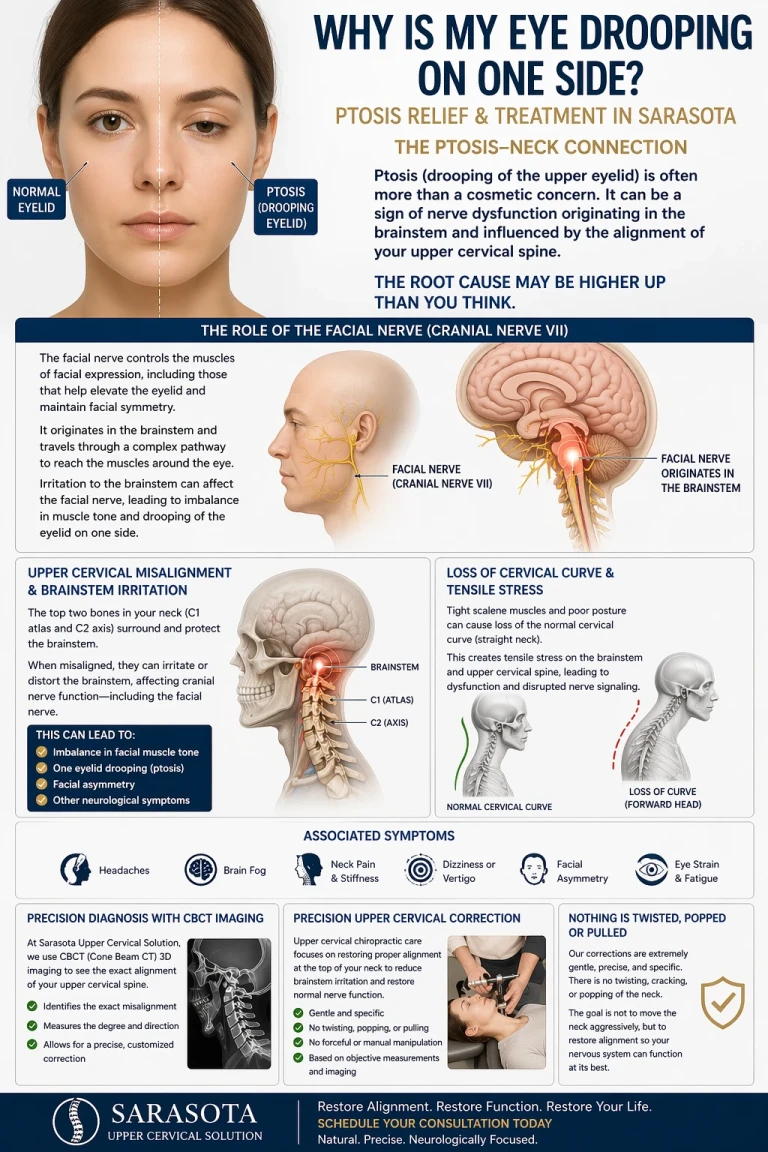
The brainstem acts as a communication center between the brain and the body. It helps coordinate many automatic functions such as swallowing, balance, and muscle coordination in the head and neck.
Because the Eustachian tube muscles rely on signals from this area, any disruption in communication from the brainstem can affect how well the tube opens and closes.
When the signals become unbalanced, the muscles lining the Eustachian tube may tighten or spasm, which can keep the tube closed and create persistent ear pressure.
How the Upper Neck Influences the Brainstem
The brainstem sits directly above the upper cervical spine, which is made up of the top two bones in the neck. These vertebrae support the head and protect the delicate structures that connect the brain to the rest of the body.
Because of this close relationship, the position of the upper neck can influence how the brainstem functions.
If the upper neck becomes misaligned—whether from an old injury, poor posture, or everyday stress—it can place tension on the surrounding structures. This tension may interfere with normal communication between the brainstem and the muscles of the head and neck.
When that communication is disrupted, muscles that should function smoothly—like those that control the Eustachian tube may become tight or uncoordinated.
For some people, this can contribute to ongoing ear pressure, popping sensations, and hearing changes.
Upper Cervical Care and Its Precision
Upper cervical care focuses specifically on the alignment of the top bones of the neck. This approach recognizes that even small shifts in this area can affect the balance of the nervous system.
What makes upper cervical care unique is its precision. Our office uses 3-d CBCT imaging. This allows the doctor to know exactly how the upper neck has misaligned from normal.
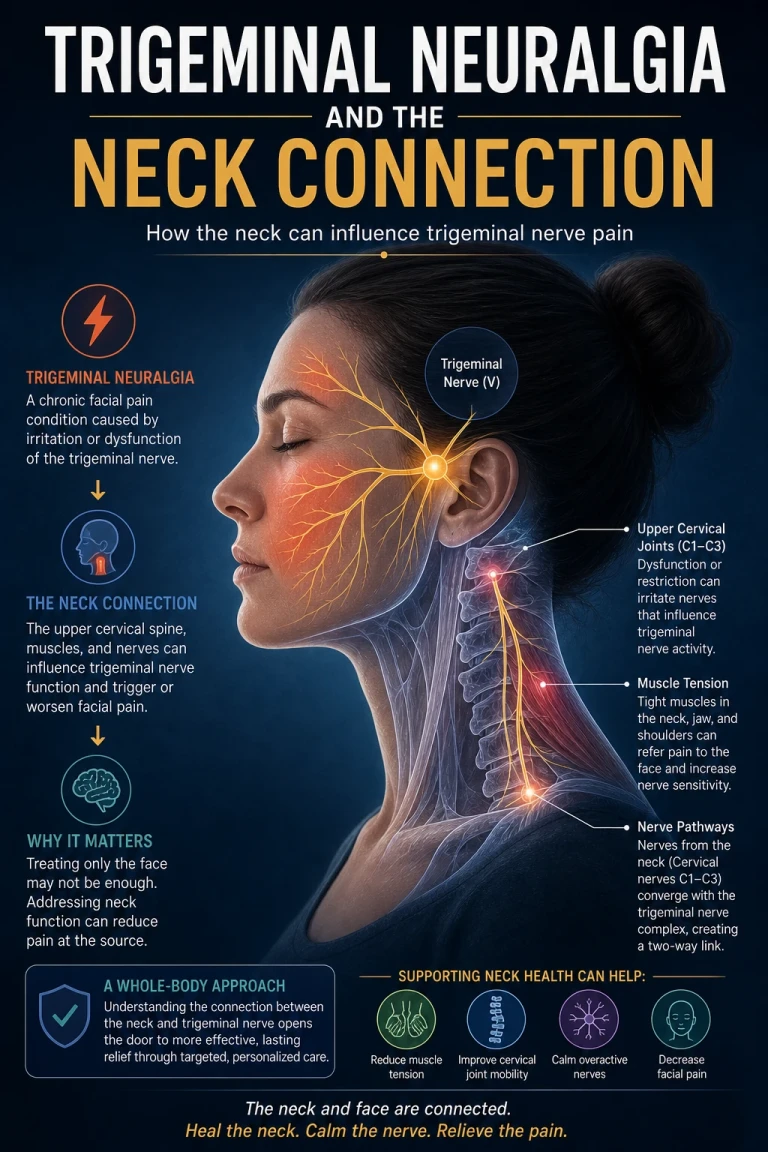
Rather than using broad or forceful adjustments, upper cervical techniques use extremely gentle and specific corrections designed to restore the natural alignment of the upper neck.
Practitioners carefully analyze the position of the upper cervical spine and apply a precise correction that encourages the body to return to a more balanced state.
Because this area sits so close to the brainstem, restoring proper alignment may help reduce interference in the communication between the brain and the body.
When the nervous system functions more efficiently, the muscles that control the Eustachian tube may begin to work more naturally.
Book a FREE consult here.
Why Some Hearing Problems Are Not Truly “Ear” Problems
When people notice hearing changes, they often assume something is wrong with the ear itself. But not all hearing problems originate in the ear.
Some hearing issues are related to the inner ear or nerve pathways that transmit sound to the brain. These types of hearing problems are often called neural hearing loss.
However, when the Eustachian tube is not opening properly, the issue is often mechanical. The ear simply cannot balance pressure correctly, which makes sounds seem muffled or distant.
In these cases, hearing may improve when the Eustachian tube begins functioning normally again.
Understanding this distinction is important because it highlights why addressing nervous system balance—especially near the brainstem—may be helpful for some individuals experiencing ear pressure and hearing changes.
The Role of Neck Alignment in Ear Pressure
Related article

Does the room feel like its moving while you are walking? | Oscillopsia treatment Sarasota
Sep 17, 2026
Many people with persistent ear pressure also report tightness or discomfort in the neck. This is not surprising when you consider how closely the upper neck and brainstem work together.
If the upper cervical spine is not aligned properly, it can affect the delicate balance of signals traveling between the brain and the muscles of the head and neck.
This imbalance may contribute to:
Eustachian tubes that remain closed
Pressure in the ears
Repeated popping sensations
Hearing that feels muffled or blocked
By restoring proper alignment to the upper neck, upper cervical care aims to reduce this interference and allow the nervous system to function more smoothly.
Hearing Loss Treatment in Sarasota with Upper Cervical Care
In Sarasota, more people are exploring upper cervical care as part of a holistic approach to hearing and ear pressure issues.
Rather than focusing only on the ear, this approach looks at how the nervous system, brainstem, and upper neck work together to regulate important functions like ear pressure and muscle coordination.
When the upper neck is properly aligned, the body may be better able to regulate the muscles surrounding the Eustachian tube. This can help the tube open and close more normally, which may relieve pressure and improve the clarity of hearing.
For individuals who have struggled with persistent ear symptoms, addressing the alignment of the upper cervical spine can provide a new perspective and potential path toward relief.
A Different Way to Think About Ear Health
The body functions as an interconnected system. The ears, muscles, nerves, and spine all work together to maintain balance and clear hearing.
When the upper cervical spine is aligned and the nervous system is functioning without interference, the body has a greater ability to regulate pressure, coordinate muscles, and maintain healthy communication between the brain and the ears.
For those experiencing ongoing ear pressure, muffled hearing, or symptoms of Eustachian tube dysfunction, exploring upper cervical care may offer a natural and precise approach to restoring balance.



Leave a comment