

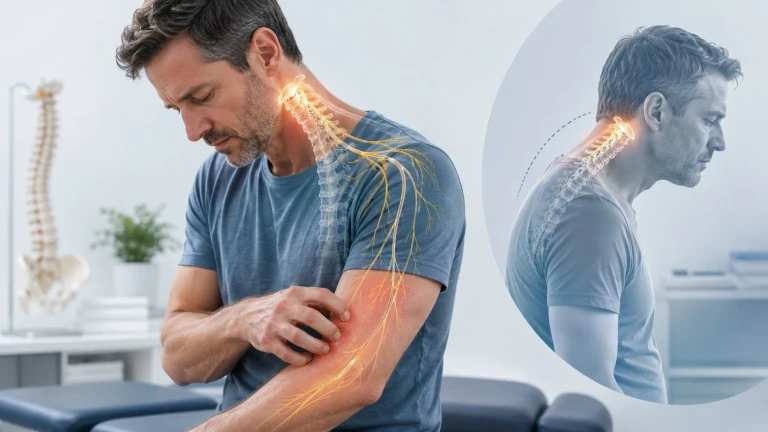
A relentless itch, burning, or tingling on the outer forearms, with no rash to explain it, and one strange giveaway: it calms the moment you put ice on it, then returns as soon as the ice comes off. If that describes you, you may have brachioradial pruritus (BRP), and you may have spent months being treated for a skin problem that was never really about the skin. BRP is a nerve problem, and the nerves in question start in your neck. This guide explains the pathway, from a misalignment at the top of the neck, through altered posture, down to the cervical nerve roots that feed the itch, and where upper cervical care fits.
One boundary up front: BRP can be linked to serious cervical pathology, and it requires proper medical evaluation. Upper cervical chiropractic does not diagnose or cure BRP. What it focuses on is a set of mechanical and postural contributors to the cervical nerve-root irritation that drives the condition, working alongside your medical care.
Schedule Your Appointment
Schedule appointmentWhat brachioradial pruritus actually is
BRP is a neuropathic itch, an itch generated by irritated nerves rather than by anything wrong with the skin itself. It's defined by its location and its behavior. The itch, burning, stinging, or tingling sits on the dorsolateral (outer) forearms, and clinically it maps to specific nerve territories: BRP is a focal neuropathic dysesthesia of the dorsolateral upper extremities arising from cervical nerve root irritation, with cervical spine pathology such as foraminal stenosis and degenerative changes frequently implicated. The telltale clinical sign is nearly unique to BRP: the ice-pack sign is considered pathognomonic, immediate relief when an ice pack is applied, with prompt return of the itch once it's removed. Most other itchy conditions don't behave that way, which is why the ice-pack response is such a useful clue.
Crucially, the skin is typically normal, BRP presents as itch without rash, and any marks that do appear are usually secondary, from scratching. That absence of a primary rash is the first hint that the problem lives in the nervous system, not the skin.
The key fact: BRP maps to cervical nerve roots
This is the anatomical anchor for everything that follows. The forearm skin where BRP itches is supplied by specific spinal nerves, and the research consistently localizes the problem to the same levels. Patients mark the itch on the C5 and C6 dermatomes — in one MRI study, 90% marked C5 and 100% marked C6, and 80% had stenosis of the intervertebral foramen or disc protrusion causing nerve compression. The irritation can involve the C5–C8 nerve roots, which travel from the neck down to the arms; when they're pinched or irritated, they send faulty "itch" signals to the brain. Nerve-conduction studies back this up: EMG abnormalities show up in the large majority of BRP patients, with up to 80–89% showing findings particularly at C6 or C7.
So BRP is, at its root, a cervical nerve-root problem that happens to express itself as an itch. That's the pathway the upstream neck factors have to travel through, and it's a different pathway from the arm-nerve compression of thoracic outlet syndrome, which we'll distinguish later.
Why this matters for finding relief: If the itch is generated by irritated nerve roots in the neck, then creams, antihistamines, and steroids aimed at the skin are working in the wrong place, which is exactly why they so often fail in BRP. The productive question isn't "what's wrong with my skin," it's "what's irritating my cervical nerve roots."
The upper cervical spine: control center for posture and the neck's mechanical environment
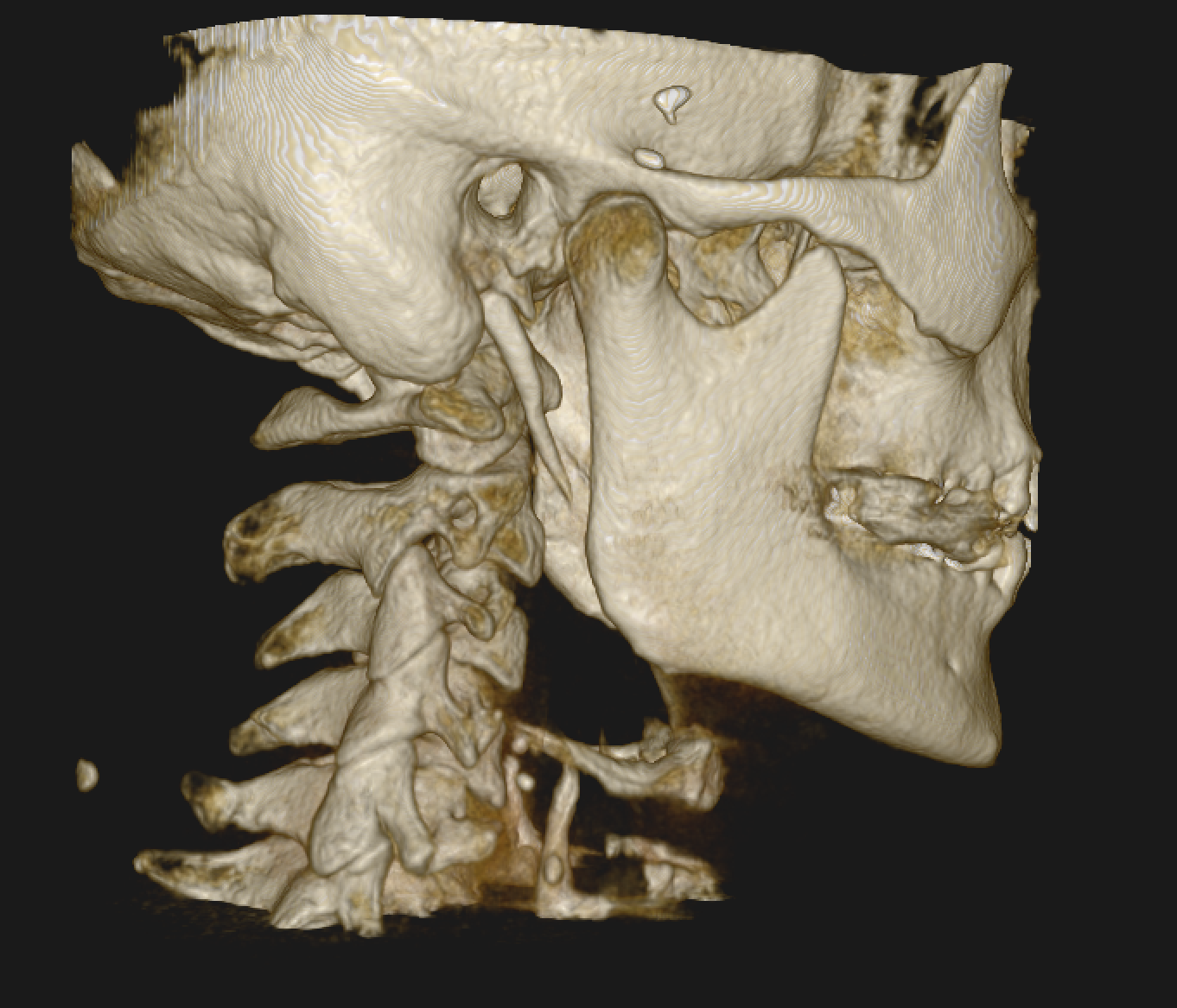
Here's where the top of the neck enters the picture. The upper cervical spine — the atlas (C1) and axis (C2) — is the control point for the muscle tone that holds your head and neck in position, and therefore for the posture that determines how the rest of the cervical spine is loaded.
The mechanism is well established. The suboccipital muscles at the base of the skull carry one of the highest densities of muscle spindles in the body, and the upper cervical spine holds one of the highest concentrations of proprioceptive receptors anywhere in the body, making it a key contributor to postural control and motor coordination. These position sensors feed reflexes — the cervico-collic and tonic neck reflexes — that set muscle tone throughout the neck. The top of the neck effectively programs the posture of everything below it.
The myodural bridge and brainstem irritation
Two anatomical details make the upper neck's influence direct. The myodural bridge is a band of connective tissue physically connecting the deep suboccipital muscles (chiefly the rectus capitis posterior minor) to the dura mater surrounding the spinal cord, and whiplash-type injuries transmit traction forces through this bridge to the cervical dura — one reason a past neck injury leaves a lasting imprint. And this region houses the brainstem; when the atlas or axis is misaligned it can alter that mechanical environment and distort the proprioceptive signaling the brainstem uses to set postural tone. Faulty input at the top produces faulty posture below.
The pathway: from atlas misalignment to the forearm itch
Now the chain connects, routed through the nerve roots the evidence actually supports. Here is the proposed mechanism, step by step.
Step 1 — Atlas misalignment distorts the control signal. After whiplash, a fall, concussion, or years of forward-head loading, the atlas and axis lose normal position and motion. The dense proprioceptors there — mechanically coupled to the dura via the myodural bridge and sitting at the brainstem's doorstep — begin sending distorted position information. In chronic cervical dysfunction, the cervical afferents transmit impaired proprioceptive signals, with these patients often having a history of neck pain, whiplash, or concussion.
Step 2 — Distorted input drives abnormal posture and muscle tone. The reflex system responds to the faulty signal by altering postural muscle tone, pulling the head forward and flattening the neck's natural curve. Higher suboccipital muscle tone is significantly associated with a more forward head posture — the faulty upper-cervical state and the abnormal posture travel together.
Step 3 — Altered posture changes loading at the lower cervical levels. A flattened or reversed curve concentrates mechanical stress on the lower cervical segments (C5–C7) — the very levels whose nerve roots supply the forearm. Over time, this altered loading is associated with degenerative change and foraminal narrowing at those segments, the same findings repeatedly documented in BRP.
Step 4 — Irritated lower cervical nerve roots generate the itch. When the C5–C8 roots are irritated or compressed, they misfire — and in BRP, that misfiring is experienced as itch, burning, and tingling in the corresponding forearm dermatome. The skin is fine; the signal is wrong.
Related article
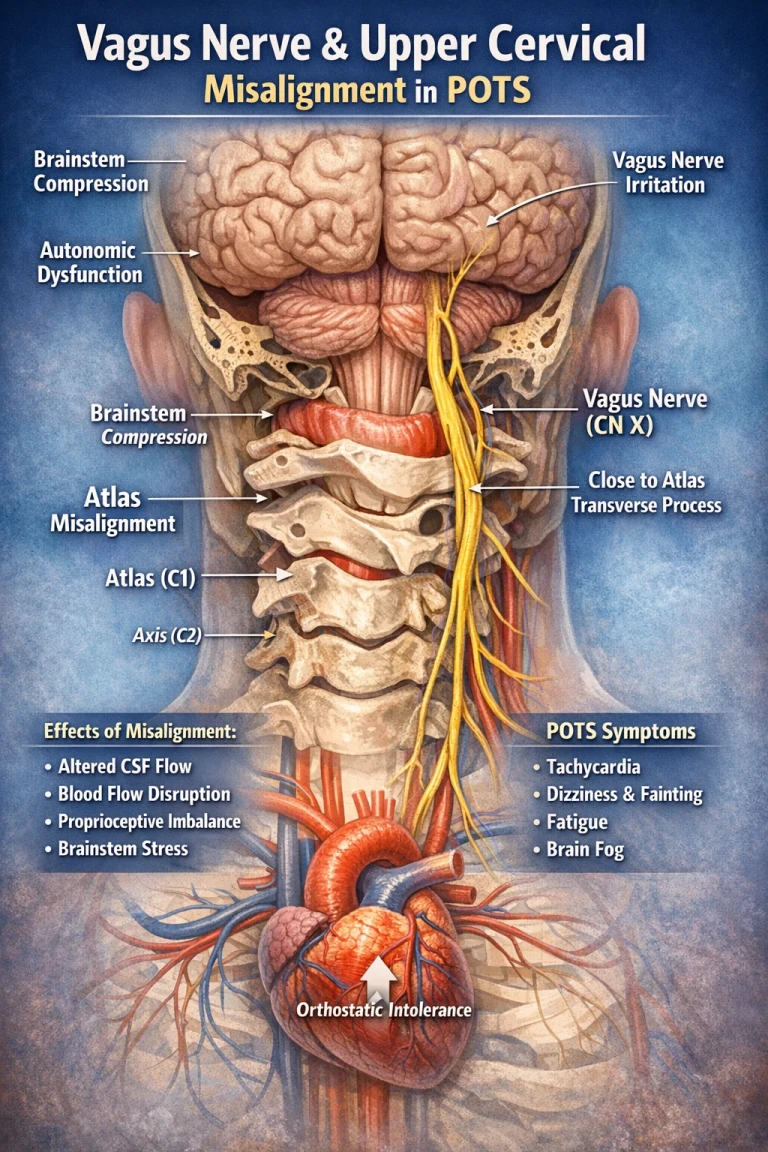
How the Vagus Nerve Drives POTS Symptoms: The Brainstem and Atlas Connection
Apr 09, 2026
In this model, the atlas misalignment isn't the direct pincher of the nerve root, it's the upstream driver of the abnormal posture and altered loading that contribute to nerve-root irritation at the lower cervical levels. That's why addressing only the forearm, or only the lower neck, can miss the postural driver setting up the whole pattern.
An important distinction: BRP is not thoracic outlet syndrome
It's worth separating two arm-symptom conditions that are easy to conflate. Thoracic outlet syndrome (TOS) is compression of the brachial plexus, the nerve bundle after the roots have merged and left the spine, between the scalene muscles and the first rib, producing numbness, tingling, and weakness. BRP is irritation of the cervical nerve roots themselves, higher up, producing a dermatomal itch. Poor posture can contribute to both, which is part of why the upper cervical spine is relevant to each — but they are different problems at different locations, and BRP's defining itch and ice-pack sign are not features of TOS. Getting the distinction right matters for aiming treatment correctly.
Why standard skin treatments so often fail
This pathway explains the frustration that brings most BRP patients to look deeper. Because the itch is generated by irritated nerve roots and not by the skin, topical steroids, antihistamines, and moisturizers tend to disappoint. The conditions that do respond are neuropathic-itch medications (gabapentinoids), and — tellingly, interventions aimed at the cervical spine itself. The literature reports refractory cases improving with cervical spine intervention, and conservative mechanical approaches directed at the underlying cervical pathology have shown strong symptom improvement in small studies. The common thread is that effective BRP care addresses the neck, not the forearm.
The UV/sunlight piece — a real second factor
One honest addition: sunlight matters too. BRP is classically worsened by UV exposure and flares in warmer months, and it was originally mistaken for a sun-related skin condition before its neuropathic origin was understood. The current understanding is a "two-hit" picture — an underlying cervical nerve-root vulnerability, with UV exposure acting as a precipitating or aggravating factor on already-sensitized nerves. That's why sun protection is a reasonable part of management, and why addressing the cervical contributor and reducing UV exposure aren't competing strategies but complementary ones.
Brachioradial Pruritus vs. Notalgia Paresthetica: Two Phantom Itches to learn more click here.
Where upper cervical care fits
Upper cervical chiropractic care focuses on the alignment and motion of the atlas and axis because that's the control point for the postural tone and cervical loading described above. The aim is to restore normal position and proprioceptive input so posture can rebalance, reducing the abnormal loading that contributes to nerve-root irritation at the lower cervical levels. For a BRP patient with a mechanical/postural contributor — particularly after neck trauma or with chronic forward-head posture — this is a reasonable, conservative avenue to evaluate alongside medical care.
Why CBCT imaging matters here
Related article
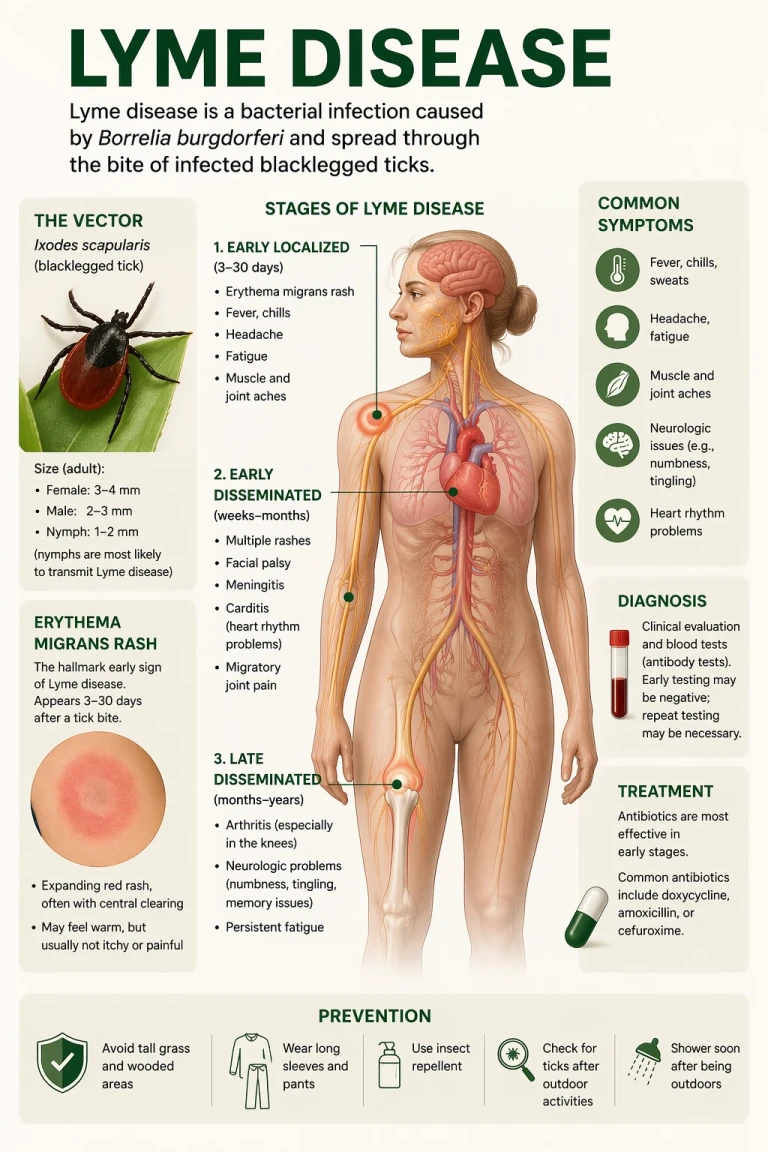
Because any upper cervical correction is precise, the analysis must be precise. We use cone beam computed tomography (CBCT) as a precision measurement tool to see the true three-dimensional position of the atlas and axis, so an assessment is tailored to the individual's anatomy. (CBCT is a measurement and analysis tool; it is not a substitute for the cervical MRI used to evaluate nerve-root compression or rule out serious pathology in BRP.)
Questions and Answers
Is brachioradial pruritus a skin condition or a nerve condition?
It's a nerve condition. BRP is a neuropathic itch — the skin is typically normal, and the itch is generated by irritated cervical nerve roots (usually C5–C6, sometimes extending to C8) that supply the forearm skin. That's why there's no rash to explain it, and why skin-directed treatments like steroids and antihistamines so often fail. The problem is in the signal, not the skin.
Why does ice relieve my forearm itch?
The ice-pack sign — immediate relief when ice is applied, with the itch returning once it's removed — is considered the hallmark of BRP and helps distinguish it from other itchy conditions. It reflects the neuropathic nature of the itch: cold temporarily quiets the misfiring nerves generating the signal. If ice reliably calms your forearm itch, it's a strong clue that the cause is neurological and worth a cervical-spine evaluation.
How can a problem at the top of my neck cause an itch in my forearm?
The top of the neck controls postural muscle tone and, through it, the posture and loading of the lower cervical spine. When the atlas is misaligned, distorted proprioceptive input drives forward head posture and flattens the curve, which concentrates stress on the lower cervical levels (C5–C7) whose nerve roots supply the forearm. Irritation of those roots produces the faulty itch signal. The atlas isn't pinching the nerve directly — it's the upstream driver of the posture and loading that contribute to the irritation.
Is brachioradial pruritus the same as thoracic outlet syndrome?
No. Thoracic outlet syndrome is compression of the brachial plexus (the merged nerve bundle) between the scalene muscles and first rib, causing numbness, tingling, and weakness. BRP is irritation of the cervical nerve roots higher up, causing a dermatomal itch with the characteristic ice-pack sign. Poor posture can contribute to both, which is why the upper cervical spine is relevant to each, but they're different problems in different locations and shouldn't be conflated.
Why haven't creams or antihistamines helped my BRP?
Because they treat the skin, and BRP isn't a skin problem — it's irritated cervical nerve roots sending a faulty itch signal. The treatments that tend to help are neuropathic-itch medications and, importantly, interventions directed at the cervical spine itself. Addressing the neck, where the signal originates, is the productive direction when skin-directed treatments have failed.
When do I need medical imaging or a specialist for BRP?
Cervical imaging matters in BRP because the cause can occasionally be serious — including significant disc or foraminal pathology and, rarely, a spinal cord tumor. Any BRP that is persistent, rapidly worsening, or accompanied by neurological signs such as weakness, numbness, or coordination changes warrants prompt medical evaluation and a cervical MRI. Upper cervical care addresses postural and mechanical contributors and works alongside that medical workup, not in place of it.
Brachioradial pruritus relief in Sarasota — addressing the neck, not just the skin
If you have an unexplained forearm itch that eases with ice and hasn't responded to creams — especially after a neck injury or with forward-head posture — a focused upper cervical evaluation can help determine whether a postural, mechanical contributor is part of your picture, working alongside your medical care.
This article is for general educational purposes only and is not medical advice, a diagnosis, or a treatment recommendation for any individual. Brachioradial pruritus is a neuropathic condition associated with cervical spine pathology; its causes can occasionally be serious, including significant nerve compression and, rarely, spinal cord tumors, and it requires evaluation by qualified medical providers, often including cervical MRI. Upper cervical chiropractic does not diagnose or cure brachioradial pruritus and is not a substitute for medical care; it focuses on mechanical and postural contributors to cervical nerve-root irritation as a complement to appropriate medical evaluation and treatment. Upper cervical chiropractic is an area of focus within chiropractic; it is not a board-recognized specialty, and no claim of specialization or superiority is made or implied. Cone beam CT is used as a precision measurement and analysis tool, not as a diagnostic device for brachioradial pruritus and not a substitute for cervical MRI. The postural mechanism described connects established findings but is presented for education rather than as proof of causation or treatment outcomes; individual results vary, and no specific outcome is guaranteed. Seek prompt medical attention for persistent, worsening, or neurologically accompanied symptoms. Always consult a qualified healthcare provider regarding diagnosis and treatment of brachioradial pruritus.

Leave a comment